
An organization is updating its code of conduct to strengthen its internal reporting mechanisms and encourage employees to report suspected financial misconduct. Which of the following is an indispensable component of an effective whistleblower protection program?
Select an answer to reveal the explanation.
Short Explanation
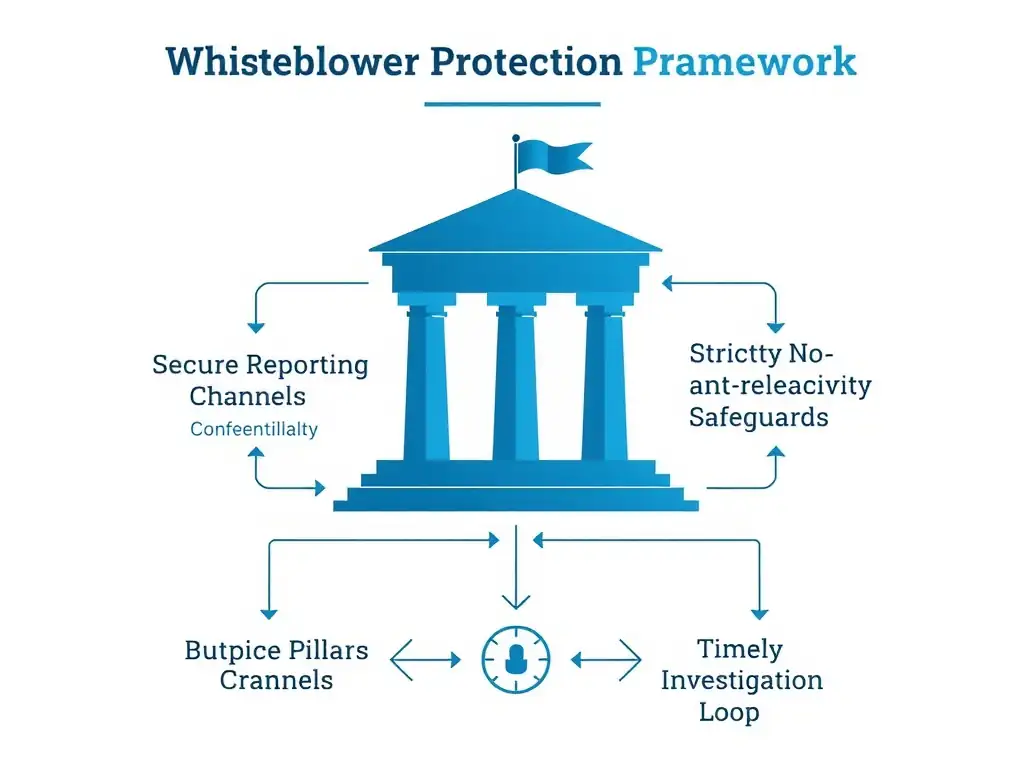
Here's the deal: if your employees fear retaliation, they will stay quiet and let misconduct continue. You need a clear, confidential, secure reporting channel that protects them. Without trust, the program is just paperwork.
Full Explanation
A successful whistleblower protection program is designed to foster a culture of transparency and accountability where employees feel safe reporting suspected misconduct. Regulatory bodies, such as the U.S. Securities and Exchange Commission and the Department of Justice, emphasize that an effective compliance program must include publicized, accessible, and trusted reporting channels. The correct component is ensuring employees have access to a well-publicized, confidential, and secure reporting channel that prevents retaliation. This approach highlights the core pillars of any reporting system: clarity about how and where to report, confidentiality to protect the reporter's identity and reduce retaliation risk, and security to preserve the integrity of the data and communication. The approach limiting the scope of the program so that only external consultants and contractors are permitted to file reports is incorrect because restricting reports to external parties defeats the primary purpose of whistleblower programs, which is to capture inside knowledge of misconduct from employees who witness it firsthand. The approach keeping the program's existence entirely secret from the general staff, known only to the chief compliance officer, is incorrect because a whistleblower program cannot serve as a deterrent or an effective reporting channel if it is kept secret from the workforce. Employees must be regularly trained on how to access and use the reporting hotline. The approach requiring all reporters to disclose their full legal identity and department before their complaint can be investigated is incorrect because requiring employees to provide their personal information can discourage reporting due to fear of retaliation. While some systems allow self-identification, offering anonymous or strictly confidential reporting options is essential to protect whistleblowers and encourage reports. In conclusion, organizations must not only establish secure channels like third-party hotlines, but also back them up with strict non-retaliation policies and visible support from executive leadership to build long-term trust in the program.