
A multinational corporation is onboarding a foreign logistics provider to handle customs clearance in a region known for high corruption risks. Why should the compliance officer conduct a comprehensive third-party risk assessment before finalizing the contract?
Select an answer to reveal the explanation.
Short Explanation
Check this out: when you hire a third-party vendor, their mistakes can become your compliance nightmares. A third-party risk assessment helps you figure out whether their actions could drag your company into a regulatory mess, so you protect the organization before signing the contract. Got it?
Full Explanation
A third-party risk assessment is a critical component of an effective compliance program. Under major regulatory frameworks such as the Foreign Corrupt Practices Act (FCPA) and the UK Bribery Act, organizations can be held directly liable for the corrupt activities of their agents, consultants, and suppliers. Therefore, the primary objective of assessing third-party risk is to proactively identify, evaluate, and mitigate the potential legal, financial, and reputational exposures that a vendor's misconduct could bring to the company.
The correct answer is the option that says to evaluate the likelihood that the vendor's activities could expose the hiring firm to regulatory violations and legal liabilities. It correctly identifies the core risk management objective: identifying compliance violations, such as bribery, money laundering, or data privacy breaches, that a third party might commit while acting on the company's behalf.
The option about verifying the vendor's financial stability and ensuring prompt payment scheduling is incorrect because financial stability and timely payment, while important for general supply chain management and procurement, are not the primary focus of a compliance-focused third-party risk assessment.
The option about identifying the lowest-cost service provider to maximize operational budget efficiency is incorrect because finding the cheapest provider is a commercial or sourcing objective, not a compliance or risk-management goal. In fact, selecting the lowest-bid vendor without proper vetting often increases compliance risks rather than reducing them.
The option about auditing the vendor's internal payroll processes for alignment with international wage standards is incorrect because auditing internal payroll processes is an administrative function of the human resources and finance departments, completely unrelated to evaluating the compliance risk posed by external third-party relationships.
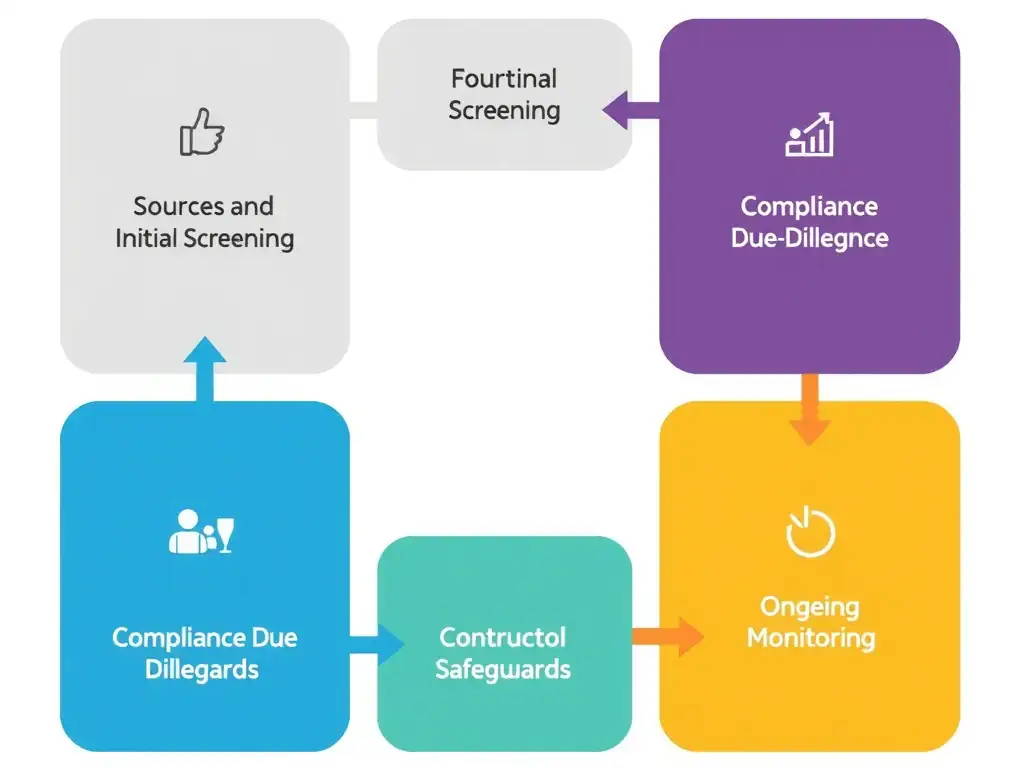
In practice, a robust third-party risk management program involves initial screening, detailed due diligence questionnaires, database searches for politically exposed persons (PEPs) or sanctions, contractual compliance clauses, and ongoing monitoring to ensure the vendor continues to operate ethically.