
A company publishes a formal disciplinary matrix that outlines the specific consequences for various levels of policy violations. What is a primary benefit of establishing and communicating a clear, standardized disciplinary process within an organization?
Select an answer to reveal the explanation.
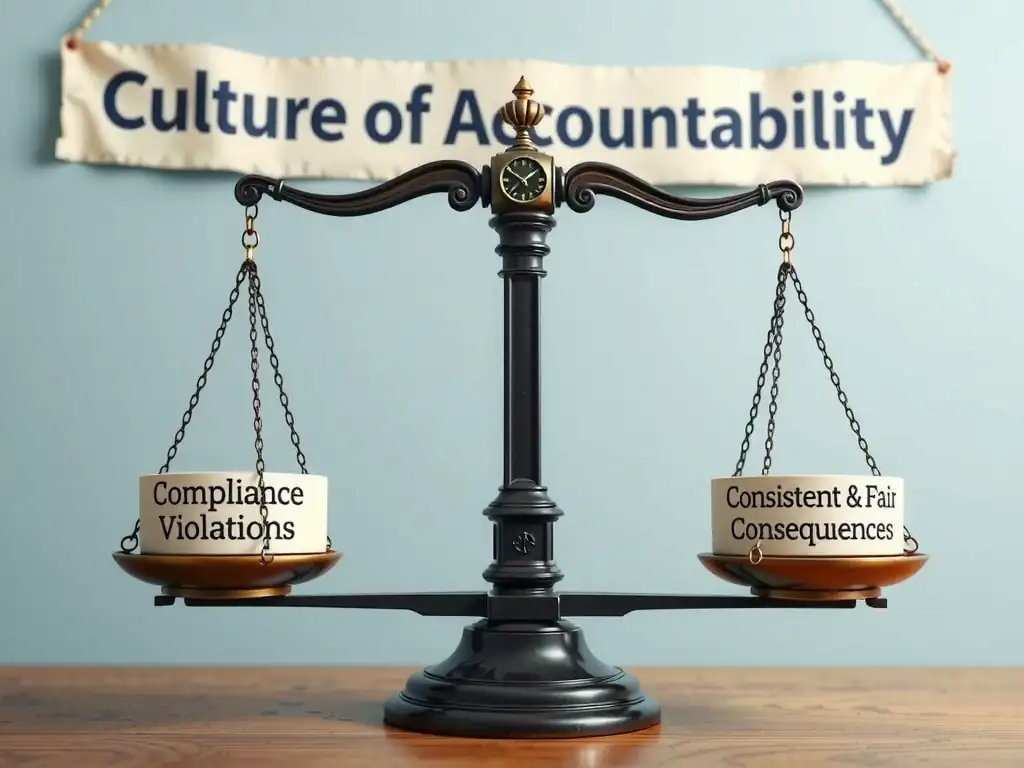
Short Explanation
Nobody likes discipline, but it's essential—when one employee gets fired for a policy breach and another gets a free pass, your culture falls apart. Clear, standardized disciplinary processes keep things fair, apply rules equally, and build trust and accountability. It's not about being a dictator—it's about being fair and consistent.
Full Explanation
Transparent and consistent disciplinary processes are a critical component of any effective compliance program. Regulatory bodies, such as the U.S. Department of Justice, evaluate whether a company's compliance program is implemented in good faith and enforced fairly across the organization, regardless of an employee's title, tenure, or performance.
When employees see that rules are enforced consistently and that violations carry predictable, fair consequences, it establishes organizational justice. This fairness fosters a culture of compliance and accountability, as employees understand that the company takes its policies seriously. Conversely, inconsistent enforcement breeds cynicism, reduces compliance reporting, and increases legal exposure from potential discrimination claims.
Let's dissect why the other options are incorrect: - The claim that it gives the human resources department legal authority to terminate employees at will without establishing cause is incorrect because disciplinary processes are designed to establish cause and ensure due process, rather than enabling arbitrary, at-will terminations. - The claim that it guarantees a zero-rate of compliance infractions and policy violations is incorrect because no policy or process can guarantee that zero violations will ever occur. Human error and intentional misconduct can still happen; the goal is to minimize occurrences and handle violations effectively when they do. - The claim that it serves primarily as a public relations tool to enhance the company's brand image in the eyes of external regulators is incorrect because disciplinary processes must be functional internal controls, not superficial public relations gestures. Regulators will audit actual enforcement records to ensure the process is operational, not just promotional.
In conclusion, clear disciplinary processes build internal trust and accountability by ensuring that all employees face fair and consistent consequences for policy deviations.