
A global corporation is rolling out an updated anti-corruption policy to its workforce across fifteen countries. To maximize the effectiveness and adoption of this policy, how should the document be structured and distributed?
Select an answer to reveal the explanation.
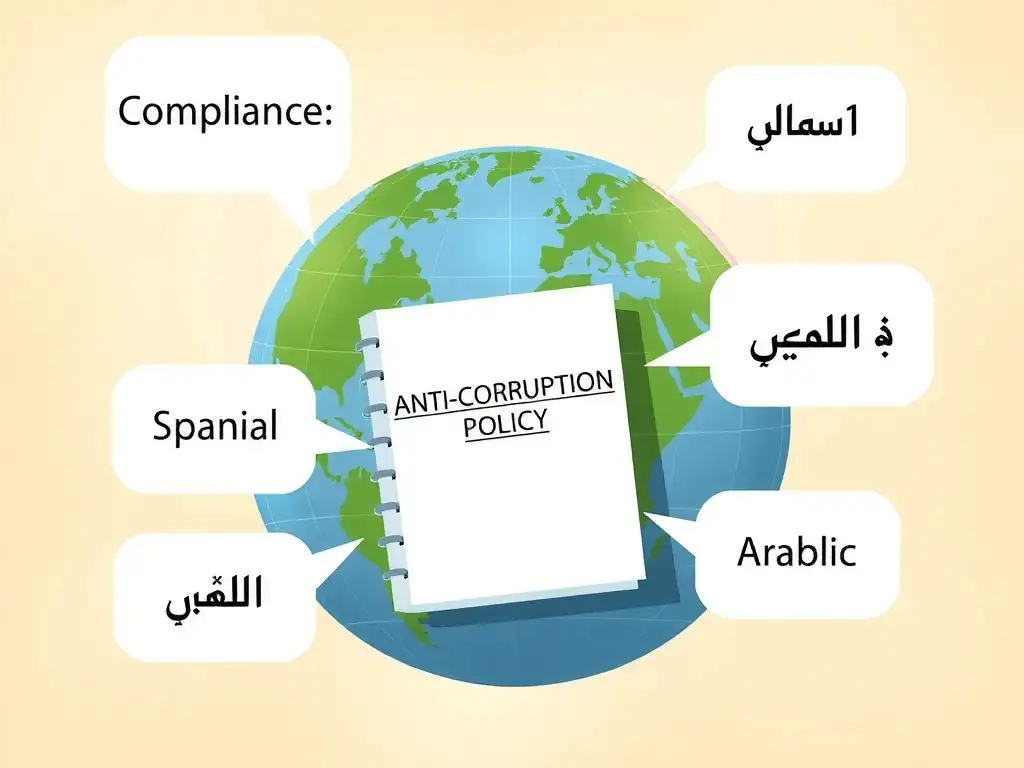
Short Explanation
Here's the deal: if you bury your anti-corruption policy in legalese or publish it only in English, you're setting yourself up for failure. Policies have to be clear, concise, and translated so everyone actually knows the rules. Think of it like a map—if your team can't read it, they're going to get lost.
Full Explanation
For any corporate policy to be effective, it must be comprehensible and accessible to the employees who are expected to follow it. This is especially true for anti-corruption policies, which apply to a wide range of employees, from senior executives negotiating major contracts to field agents dealing with customs officials. Writing a policy in overly complex legal jargon prevents average employees from understanding their obligations.
Furthermore, in multinational organizations, language barriers can severely compromise policy compliance. Translating the policy into the local languages of all operational regions is not just a best practice; it is a critical regulatory expectation. Guidelines from the U.S. Department of Justice and the UK Serious Fraud Office emphasize that policies must be accessible, understandable, and actively communicated in the local languages of the workforce.
Let's evaluate the incorrect choices: - The confidential senior-executive-only approach is incorrect because keeping an anti-corruption policy confidential defeats its primary purpose. Frontline employees, who face the highest bribery risks in daily operations, must have full access to the policy to guide their conduct. - The direct-cash-bribe-only approach is incorrect because bribery is rarely limited to direct cash payments. Anti-corruption policies must address all forms of value, including gifts, travel, entertainment, and charitable contributions, as these are common channels for bribery. - The dense legal-text approach is incorrect because legalese creates a barrier to comprehension. Policies must be written in plain, actionable language that can be easily applied in real-world scenarios.
Thus, ensuring policies are clear, concise, and translated into the native languages of all countries where the company operates is vital for achieving organizational compliance.