
An organization is planning to implement a Compliance Management System (CMS). What is the primary purpose and strategic objective of establishing a CMS within a corporate environment?
Select an answer to reveal the explanation.
Short Explanation
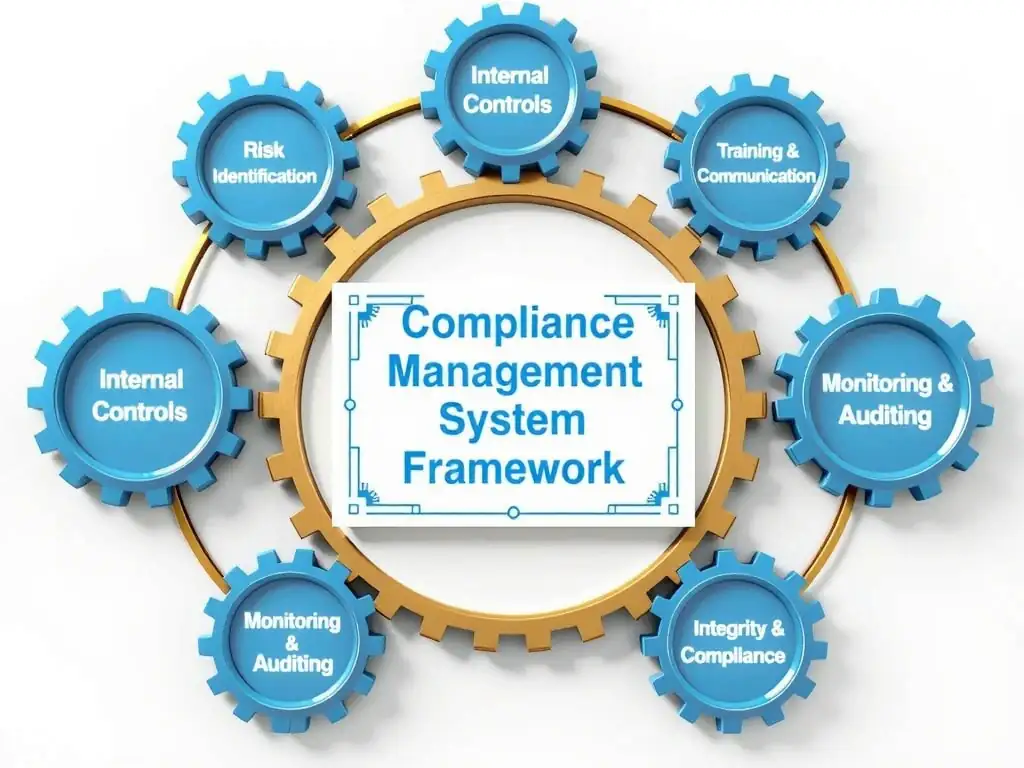
Check this out: some folks think this kind of system is just software that lets you fire your compliance officer, but not a chance. It's a structured, end-to-end framework that helps you identify regulatory risks, manage them with controls, and prove your program works. Think of it like a high-performance jet's dashboard—it gives you the tools and metrics to fly safely.
Full Explanation
The Compliance Management System is an integrated, structured framework designed to help an organization comply with laws, regulations, and internal standards. It is not just a software package; it is a holistic combination of processes, policies, controls, technology, and governance. According to international standards like ISO 37301, a functioning system allows an organization to proactively identify compliance obligations, assess the risks of non-compliance, implement preventive and detective controls, and continuously monitor program performance. Furthermore, during regulatory audits or investigations, having a robust system provides documented evidence that the company is committed to ethical behavior and has taken systematic steps to prevent violations.
Let's evaluate the incorrect choices: - The choice that proposes eliminating the operational requirement for a designated compliance officer and corporate legal team is incorrect because the system does not replace those roles. In fact, a compliance officer is necessary to oversee, run, and update the system, and corporate legal support remains necessary. The system is a tool used by the compliance officer, not a substitute. - The choice that proposes optimizing the corporate sales funnel and tracking quarterly revenue targets across international divisions is incorrect because managing the sales process is the responsibility of sales and customer relationship management systems. While the compliance system may oversee compliance within sales, such as anti-corruption checks, it does not run the sales funnel. - The choice that proposes fully automating all operational and strategic business decisions using artificial intelligence algorithms is incorrect because corporate decision-making requires human judgment, ethical deliberation, and business strategy. The compliance system governs the compliance aspects of decisions but cannot automate the entire spectrum of business activities.
In summary, the correct choice provides the structured architecture that enables an organization to stay compliant and prove its program's effectiveness to regulators and stakeholders.