
Which characteristic is a critical design feature of a highly effective corporate compliance training program?
Select an answer to reveal the explanation.
Short Explanation
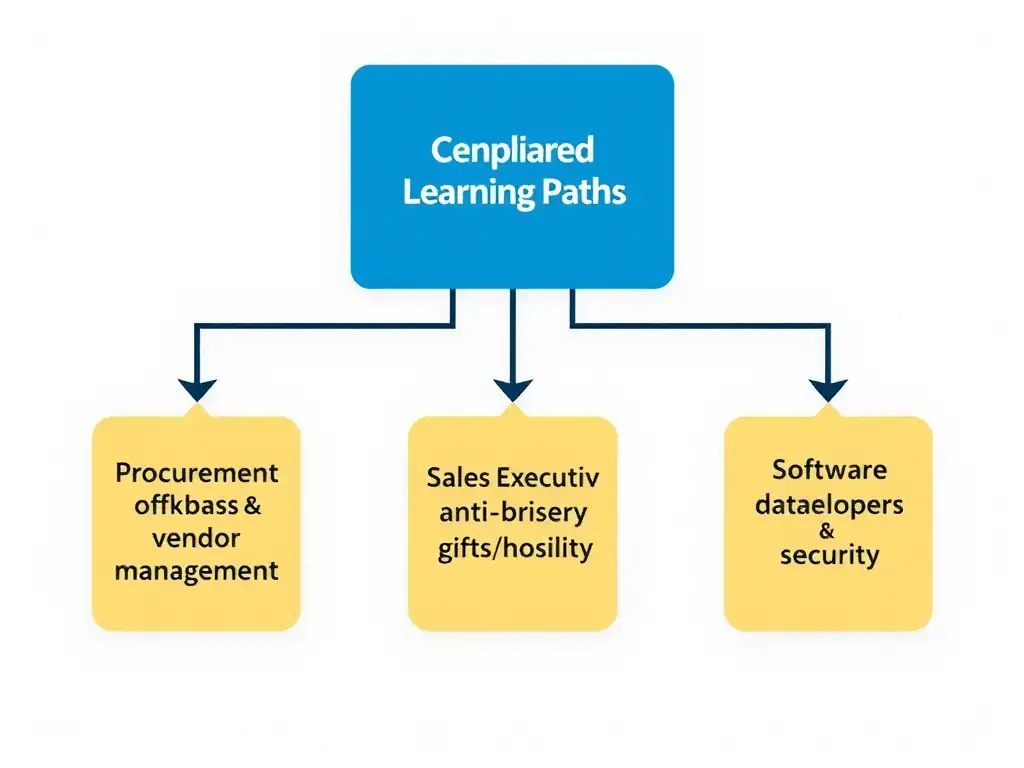
You need training that changes as risks change and actually matches what people do. Finance workers need wire fraud guidance, not customs rules, and sales reps in risky markets need anti-bribery help. One-size-fits-all, voluntary, or one-time onboarding won't cut it.
Full Explanation
To satisfy regulatory expectations and achieve real compliance efficacy, training programs must move beyond static, universal curricula. The Department of Justice guidelines for evaluating compliance programs explicitly ask whether companies have tailored training to audience size, sophistication, or subject matter expertise, and whether training is updated dynamically to reflect lessons learned from past compliance issues.
The correct characteristic is continuous updating based on emerging risks with customization to job functions and risk exposures. This means content is regularly updated to address new regulatory requirements, internal audit findings, or industry trends. Furthermore, it is customized so employees receive instruction relevant to specific roles and risks. For example, procurement employees receive deep training on anti-bribery, conflict of interest, and anti-kickback statutes, while IT personnel receive training on data privacy and cybersecurity.
The standardized, 'one-size-fits-all' curriculum delivered uniformly to all corporate employees, from administrative staff to executive leadership, is incorrect because it is inefficient and fails to address specific, high-risk scenarios encountered by different job roles, leading to low retention and poor compliance control.
The voluntary, self-paced professional development opportunity that employees can complete at their own discretion is incorrect because compliance training must be mandatory, not voluntary, to ensure enterprise-wide alignment and satisfy regulatory oversight standards.
The single, comprehensive onboarding seminar completed once during employee's first week of employment is incorrect because that single onboarding event does not account for ongoing regulatory changes, new organizational risks, or need for periodic reinforcement to keep compliance top-of-mind.