To satisfy regulatory expectations for governing authority oversight, how should a board of directors demonstrate active commitment and exercise effective oversight of the company's compliance program?
Select an answer to reveal the explanation.
Short Explanation and Infographic
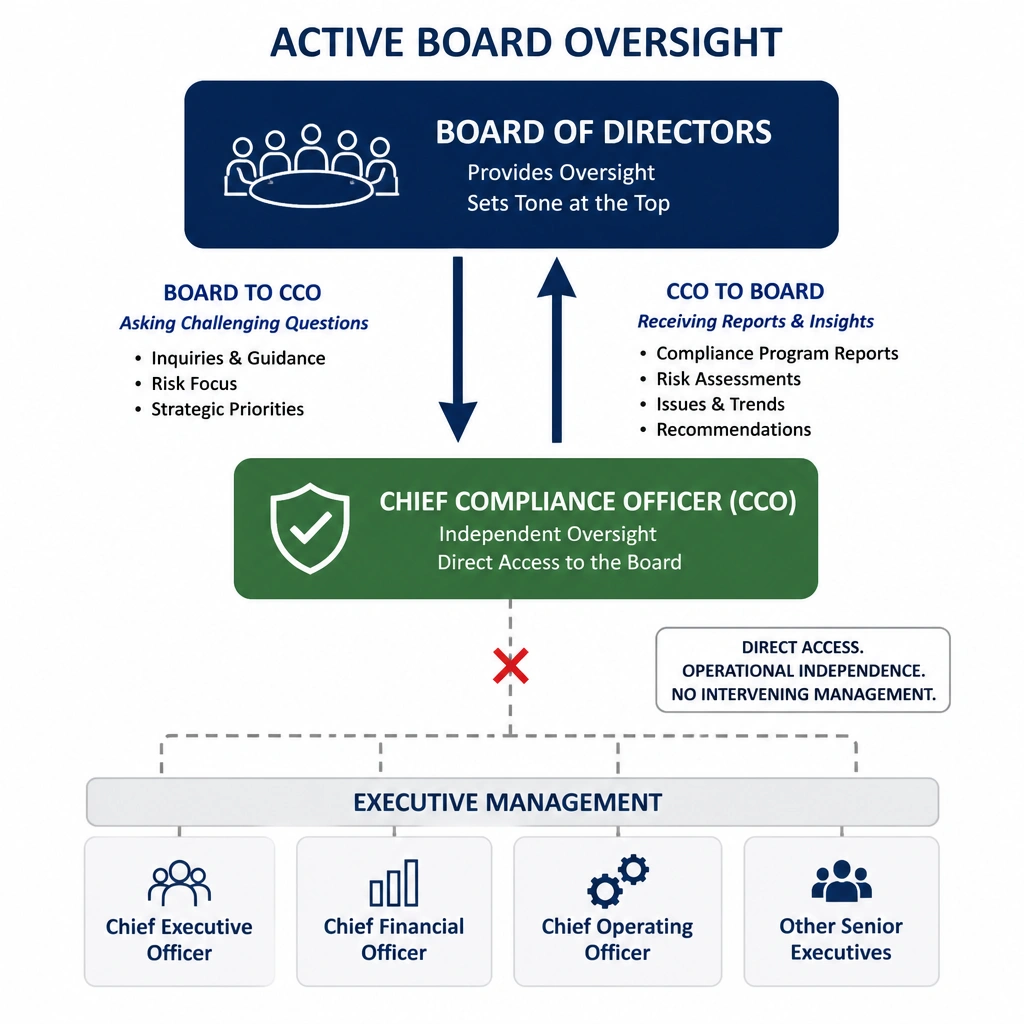
Think of the board of directors as the ultimate captains of the ship. If they're just asleep in their cabins, the ship is going to hit an iceberg. Regulators expect the board to be awake, alert, and active. They can't just check a box by sitting through a slide deck once a year and nodding their heads. They need to roll up their sleeves, ask the hard questions—like "Are we actually testing this?" or "Do we have enough headcount to monitor these risks?"—and make sure the Chief Compliance Officer has the authority and budget to get the job done. That's real oversight, and it's what keeps a company out of hot water.
Full explanation below image
Full Explanation
The governing board of an organization plays a pivotal role in the design and success of a compliance program. Under the U.S. Federal Sentencing Guidelines for Organizations (USSG) and similar global standards, the board must be knowledgeable about the content and operation of the compliance and ethics program and exercise reasonable oversight. This oversight cannot be passive or administrative.
Option B is correct because effective oversight requires active engagement. Board members must dedicate sufficient time to compliance topics, ask challenging questions of management and the Chief Compliance Officer (CCO), and ensure that the compliance department has adequate resources, authority, and direct access to the board. By doing so, the board demonstrates a genuine commitment to compliance and helps foster an ethical culture throughout the organization.
Option A is incorrect because reviewing compliance reports only once a year is insufficient and represents a passive "check-the-box" approach that fails to meet modern regulatory expectations for continuous governing oversight.
Option C is incorrect because merely receiving weekly emails does not equal engagement, especially if there is no active review, discussion, or structured feedback loop.
Option D is incorrect because the board cannot delegate its ultimate oversight responsibility. While the legal department may assist with compliance functions, the board must retain active, direct oversight of the compliance officer and the program to maintain independence and accountability.