
An organization's compliance policy prohibits employees from accepting business gifts or entertainment valued over $50. A major vendor offers a project manager a ticket to a high-profile sporting event valued at $150. What is the most appropriate action for the project manager to take?
Select an answer to reveal the explanation.
Short Explanation
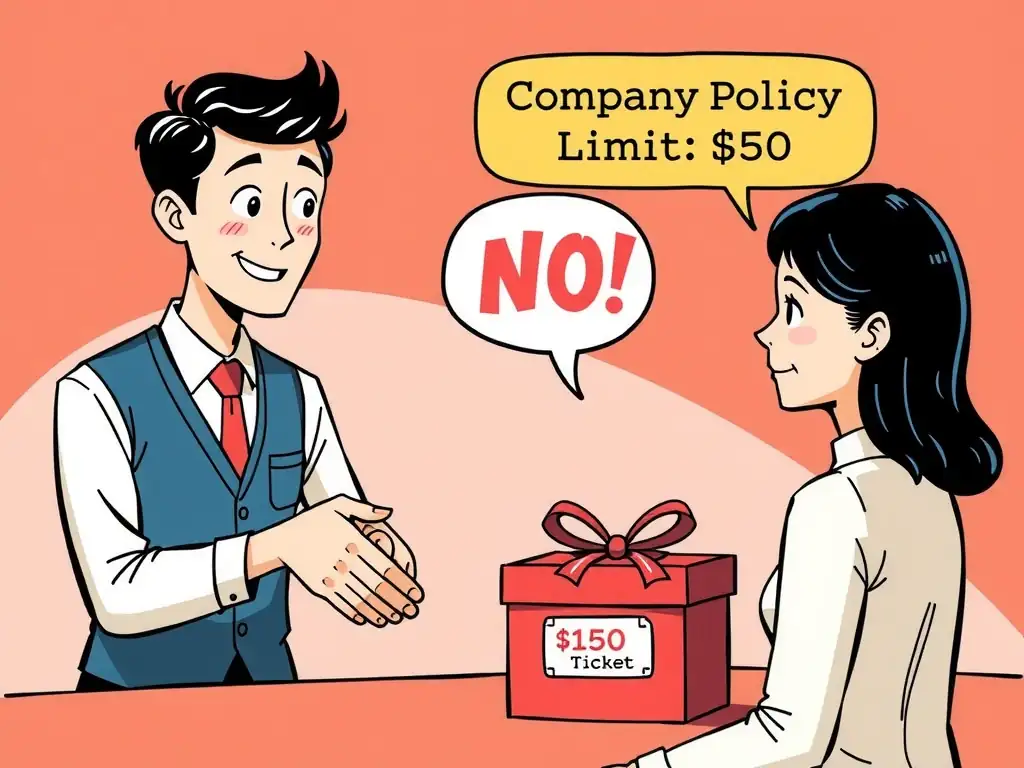
Imagine you're managing a big project, and a key vendor drops a $150 sports ticket on your desk. It's tempting, but your company policy caps gifts at $50, so accepting it is a clear breach. You have to politely decline and explain the policy; vendors usually respect a clean, company-wide boundary.
Full Explanation
The correct choice is politely declining the ticket and explaining the company's policy limitations regarding gifts. Gifts and entertainment policies are established to prevent conflicts of interest, where an employee's business judgment could be compromised—or appear to be compromised—by personal benefits received from clients, vendors, or partners. When a policy sets a specific threshold, such as $50, it is a hard rule. If a gift exceeds this limit, the employee must refuse it. Politely declining the gift and referencing the company's policy is the standard professional response; it preserves the business relationship while upholding the company's ethical standards.
Let's review why the other choices are incorrect: - Accepting the ticket but purchasing the vendor a dinner of equal value is incorrect because exchanging a gift of equal value does not negate the initial policy violation of accepting an over-limit gift. It also introduces double-spending issues. - Accepting the ticket and paying the vendor the $100 difference out of pocket is incorrect because paying the difference in value is an unauthorized self-remedy that does not comply with standard policy rules. It creates administrative confusion and does not resolve the appearance of a conflict of interest. - Accepting the ticket and keeping it confidential is incorrect because accepting and concealing the gift is a deliberate policy violation and an ethical breach, which can lead to disciplinary action, including termination.
Establishing clear boundaries for gifts and entertainment helps protect employees from compromising situations and ensures that business decisions are made solely on the merits of cost, quality, and service.