
While both documents are crucial components of a corporate compliance program, how does a Code of Ethics primarily differ from a Code of Conduct?
Select an answer to reveal the explanation.
Short Explanation
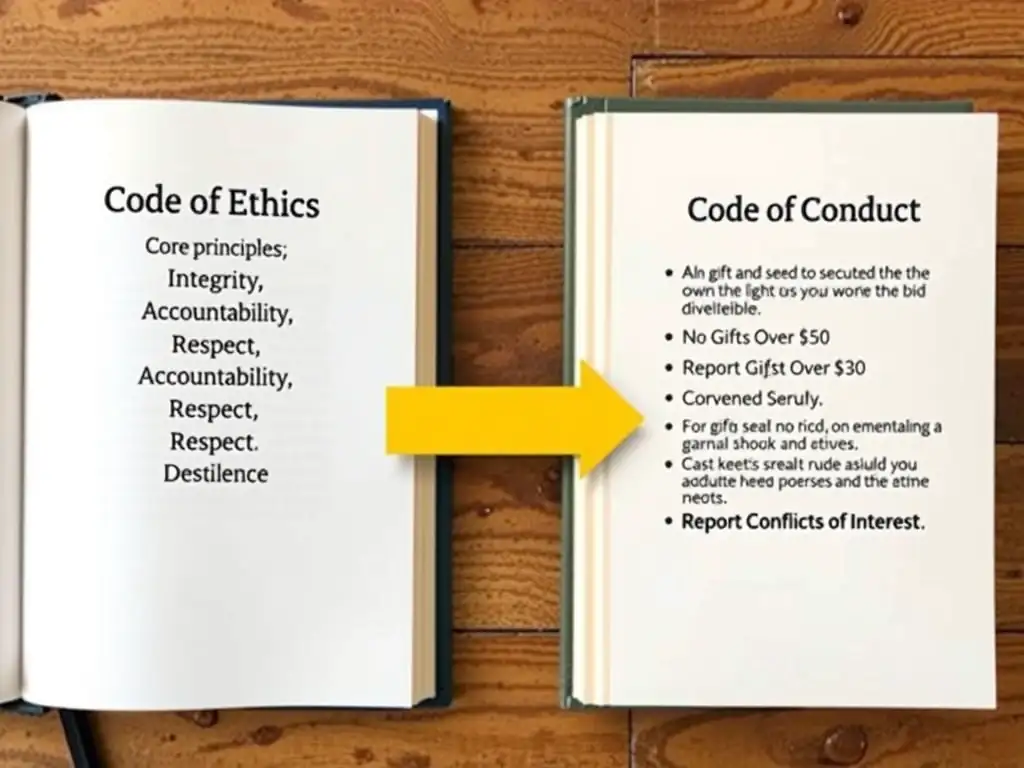
Think of the Code of Ethics as your company's North Star: high-level, aspirational values like integrity and respect. The Code of Conduct is the playbook with concrete rules for day-to-day behavior, like gifts and conflict-of-interest reporting. You need both the values and the street-level rules to run a clean shop.
Full Explanation
The correct answer is the distinction that the Code of Ethics defines the company's high-level aspirational values, whereas the Code of Conduct provides specific rules and guidelines for employee behavior. In corporate compliance, the Code of Ethics and the Code of Conduct serve complementary but distinct purposes. The Code of Ethics is typically a value-based, high-level document that outlines the organization's core moral commitments, core values, and aspirational principles (such as honesty, fairness, and accountability). It serves as a philosophical framework for decision-making. In contrast, the Code of Conduct is a rule-based document that translates those values into specific, actionable instructions, policies, and standards of behavior for employees (such as guidelines on gifts, conflict of interest reporting, harassment, and confidential information).
The claim that the Code of Ethics is legally binding for all levels of employees, whereas the Code of Conduct serves only as an optional set of best practices, is incorrect because the Code of Conduct is not optional; both documents are mandatory standards of behavior within the organization, and violating either can result in disciplinary action.
The claim that the Code of Ethics is designed exclusively for the executive board, whereas the Code of Conduct applies only to hourly and contract employees, is incorrect because both codes apply to everyone in the organization, from entry-level workers to the Board of Directors. In fact, regulatory frameworks place high emphasis on the 'tone from the top,' meaning executives must lead by example under both codes.
The claim that the Code of Ethics and the Code of Conduct are identical in scope, and their terms are completely interchangeable under regulatory guidelines, is incorrect because although they are closely related and sometimes combined into a single document, they are not identical in scope, as one is value-focused (ethics) and the other is rule-focused (conduct).
By utilizing both documents effectively, an organization ensures that its employees understand both the ethical reasoning behind corporate policies and the specific operational requirements they must follow.