
An organization operating in international markets wants to implement a critical preventive control to mitigate the risk of corrupt payments to foreign public officials. Which of the following controls is most appropriate?
Select an answer to reveal the explanation.
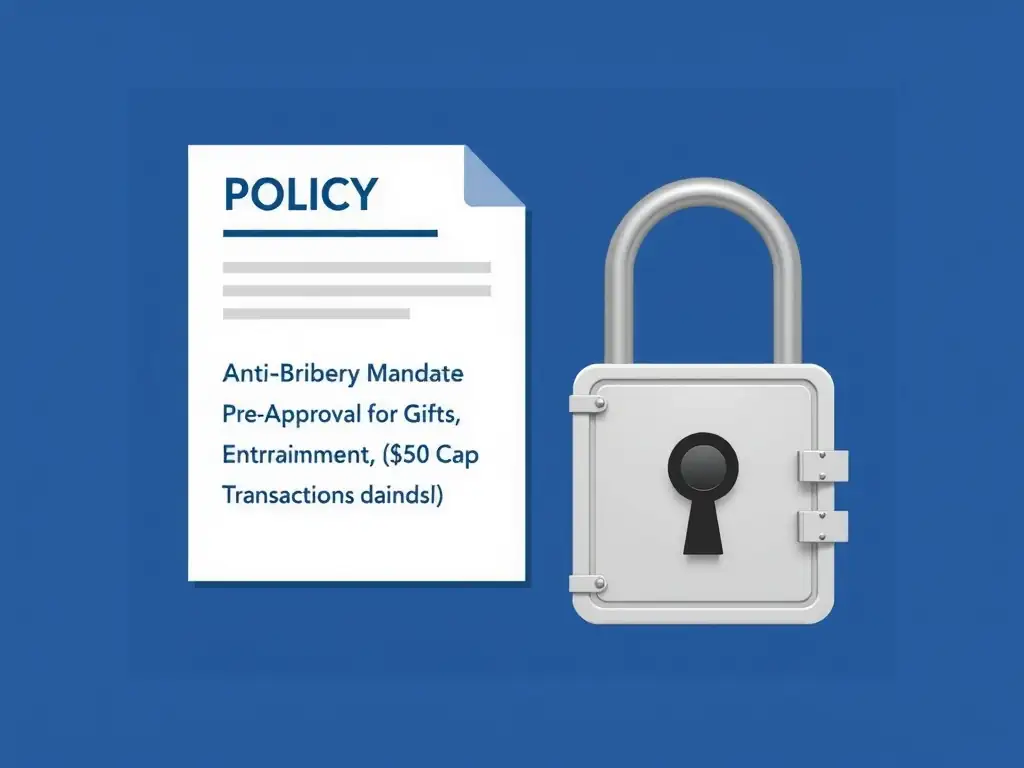
Short Explanation
You need a crystal-clear, rock-solid anti-corruption policy that bans illicit payments and tells your team exactly what they can and can't do with gifts and meals. If you don't, someone will cross the line. Facilitation payments, third-party intermediaries, and unchecked regional approvals just hand people a blank check for bribery.
Full Explanation
Preventive controls are designed to stop compliance violations before they occur. Establishing a comprehensive anti-corruption policy that explicitly prohibits all forms of bribery—direct or indirect—and defines strict guidelines for corporate hospitality, gifts, and entertainment is a foundational preventive control. This policy must be supported by clear thresholds, pre-approval workflows, and regular training. Under laws like the US Foreign Corrupt Practices Act (FCPA) and the UK Bribery Act, having these clear rules and pre-clearance procedures prevents employees from inadvertently or intentionally committing acts of corruption.
Permitting facilitation payments under a formal policy is incorrect because, while the FCPA has a narrow exception for facilitation payments, many national anti-corruption laws (such as the UK Bribery Act and domestic laws in host countries) ban them entirely. Permitting facilitation payments increases bribery risk significantly.
Relying on localized third-party intermediaries to execute payments to foreign officials on the company's behalf is incorrect because third-party intermediaries are one of the most common vectors for bribery. Outsourcing payments to them without due diligence is a severe compliance failure, not a control.
Granting sole authorization for foreign transactions to regional sales representatives without corporate oversight is incorrect because delegating approvals to regional sales managers without centralized corporate oversight removes critical checks and balances, leading to unchecked corruption risk.
Ultimately, a clear anti-corruption policy combined with regular training and compliance oversight forms the core of an effective anti-bribery framework.