
An internal compliance audit reveals that a company's controls for approving large third-party payments are severely deficient. What should be the compliance department's primary course of action in response to this finding?
Select an answer to reveal the explanation.
Short Explanation
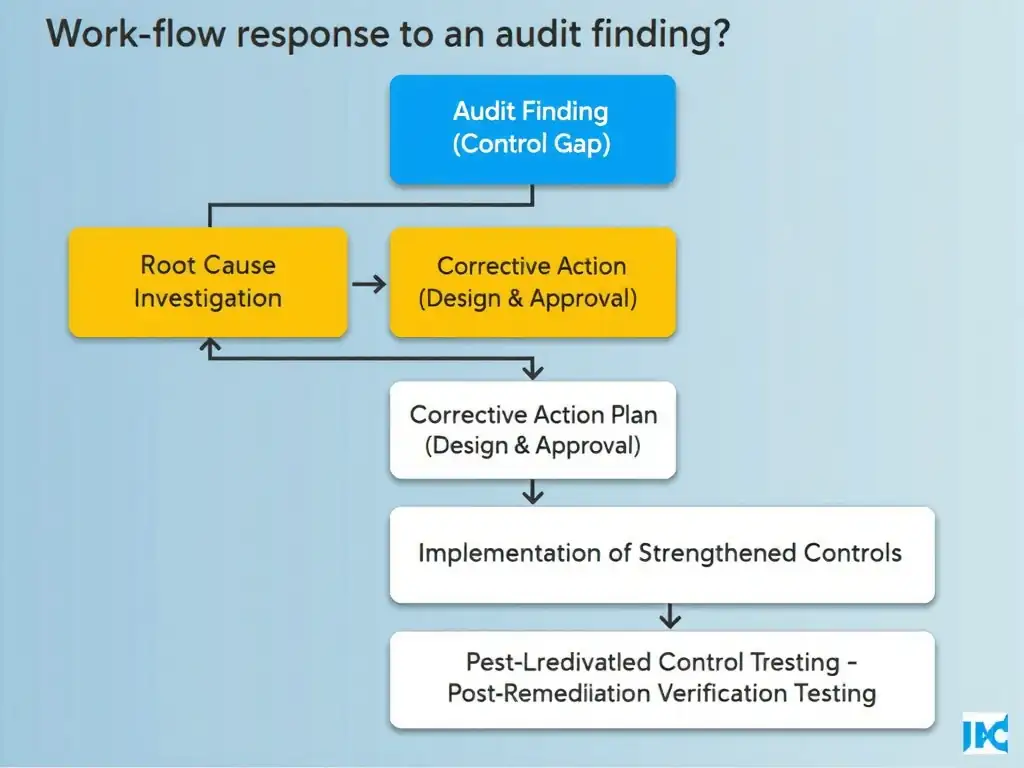
When an audit shows your payment approvals are weak, you don't ignore it or shoot the messenger. You put a corrective action plan in place, fix the controls, and prove the gap is closed.
Full Explanation
When a significant control deficiency or compliance vulnerability is identified through an internal audit, the organization must act swiftly to remediate the issue. Regulatory bodies, such as the US Department of Justice, place substantial weight on an organization's response to detected weaknesses. Failing to act on internal audit findings indicates a systemic compliance failure and can significantly increase legal liability if a regulatory violation occurs due to the unaddressed gap. The compliance department should develop and execute a structured corrective action plan to strengthen the payment controls and prevent future issues. A corrective action plan should outline specific remediation steps, assign owners, set deadlines, and establish follow-up testing to verify that the control gap has been successfully closed.
Disregarding the audit findings as a minor, isolated operational issue that requires no modification is incorrect because ignoring audit findings exposes the company to severe legal, financial, and regulatory risks, especially in third-party payments, which are a primary vector for bribery and corruption. Terminating the internal auditors who identified the vulnerability to protect the department's reputation is incorrect because penalizing or redirecting the audit team undermines the independence of the internal audit function, creating a culture of fear and suppressing future reporting of critical risks. Publicly disclosing the payment control weakness immediately before investigating or formulating a plan is incorrect because while public disclosure might eventually be legally required, such as in public filings for material weaknesses, doing so immediately without a remediation plan or investigation is premature and commercially damaging.
By establishing a robust corrective action plan, the compliance team demonstrates to the board and regulators that the organization has a functioning detective control and is committed to continuous improvement and risk reduction.