
Which of the following best describes the primary objective of a corporate sanctions compliance program (SCP)?
Select an answer to reveal the explanation.
Short Explanation
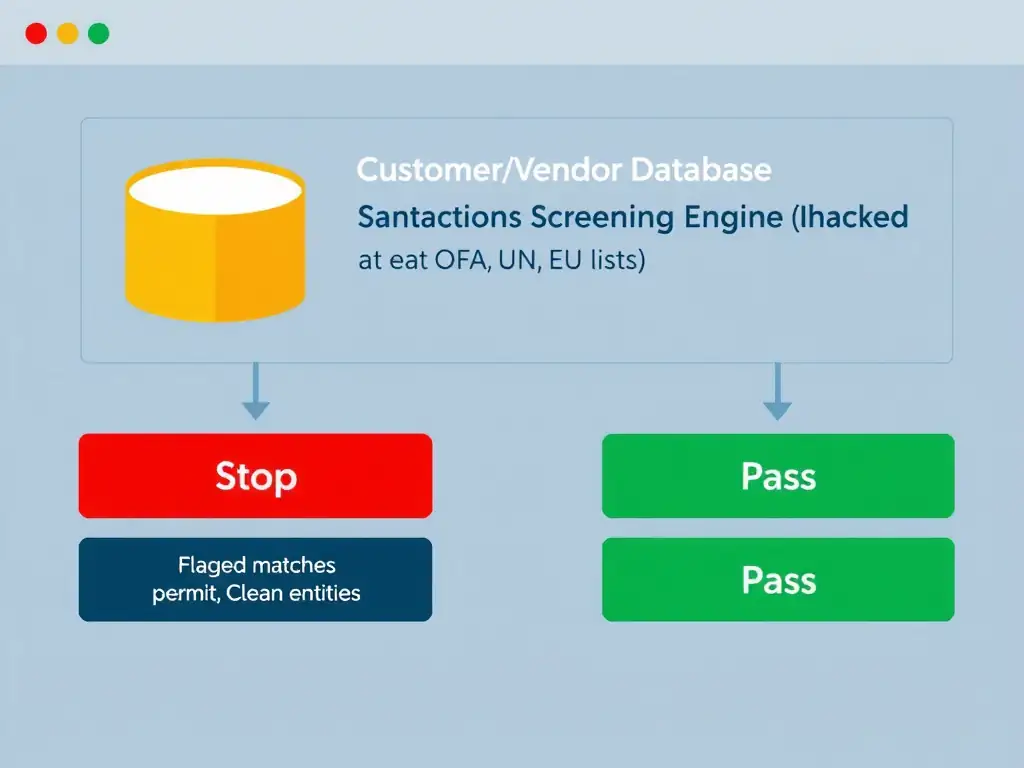
Here's the deal: governments sanction countries, companies, and people to stop money funding terrorism, war, or abuses. Your sanctions compliance program screens partners and transactions so your business doesn't violate trade and financial sanctions. Doing business only with embargoed jurisdictions, chasing public relations after fines, or boosting foreign product popularity isn't the point.
Full Explanation
The best description is the one that says the program verifies and guarantees that all business operations and transactions adhere to international trade and financial sanctions. A sanctions compliance program is a set of internal policies, procedures, and systems designed to prevent an organization from engaging in prohibited trade or financial transactions with sanctioned countries, regions, entities, or individuals. Sanctions are imposed by government bodies, such as the United States Office of Foreign Assets Control, the United Nations, and the European Union, to advance foreign policy and national security objectives. An effective program typically involves screening customers, vendors, and transactions against active sanctions lists, conducting risk assessments, and training employees.
The wrong descriptions fail for these reasons: - The description about conducting transactions exclusively with companies operating within embargoed jurisdictions is incorrect because actively seeking to do business only with entities in embargoed jurisdictions directly violates international sanctions laws and would result in severe civil and criminal penalties. - The description about coordinating public relations campaigns to improve corporate brand reputation after a regulatory fine is incorrect because while public relations departments manage reputation, the primary goal of a sanctions compliance program is legal and regulatory adherence to national and international sanctions laws, not managing public relations. - The description about confirming that products and services achieve maximum popularity and distribution in foreign markets is incorrect because expanding product distribution and sales popularity is a commercial business development function, whereas a compliance program serves as a risk-mitigation and control framework.
Failing to implement an effective sanctions compliance program can lead to catastrophic financial penalties, loss of export privileges, and criminal prosecution for both the corporation and its executives.