
When structuring an international compliance program under a limited budget, what core principle should guide the allocation of resources and monitoring efforts?
Select an answer to reveal the explanation.
Short Explanation
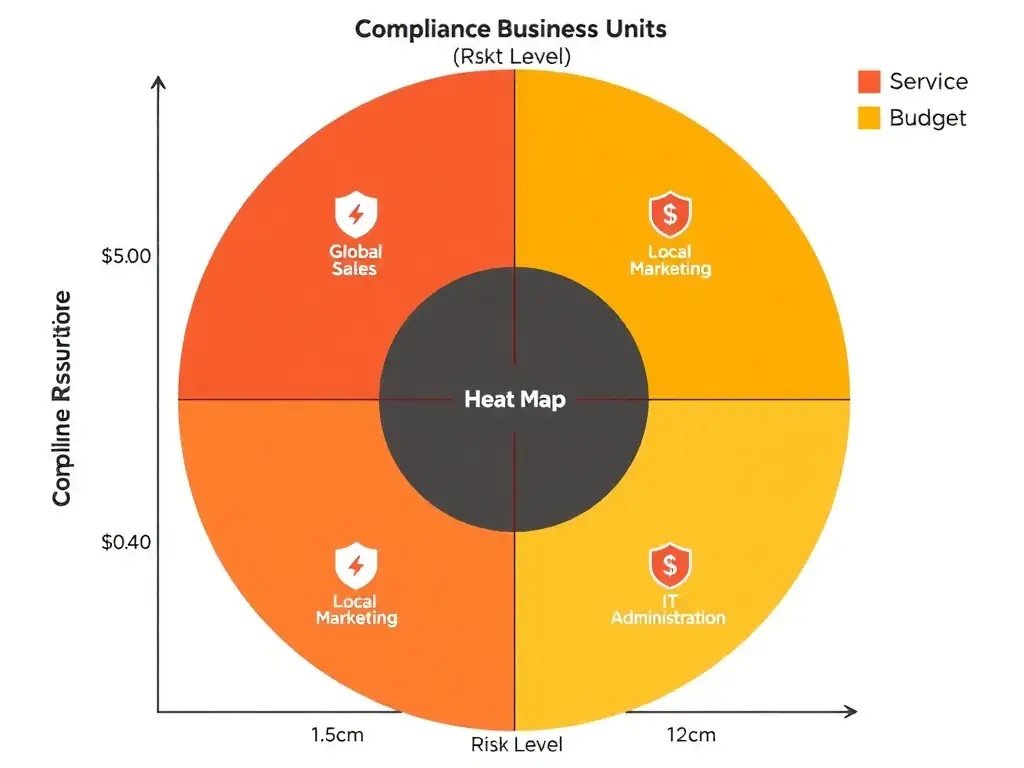
Imagine you're running security for a large resort. You don't put the same number of guards on quiet garden paths as you do at the main cash vaults and high-traffic entrance gates. In compliance, you put your resources where the regulatory danger is highest, like high-risk international sales or third-party procurement, and you don't waste effort on one-size-fits-all controls or template shortcuts.
Full Explanation
The correct approach is concentrating compliance resources and controls on the specific areas and business units that present the highest risk of regulatory breach. A key element of any effective compliance program is the adoption of a risk-based approach to resource allocation. Regulatory bodies, such as the US Department of Justice (DOJ) in its Evaluation of Corporate Compliance Programs guidelines, explicitly state that compliance programs should be customized and scaled to focus resources where the risks are greatest. By identifying high-risk areas through a formal assessment, compliance officers can deploy specialized training, enhanced transaction monitoring, and rigorous auditing where they will have the most impact on preventing misconduct. The approach of applying identical compliance monitoring and audit controls across all business units, regardless of their operational focus, is wrong because it ignores differences in risk exposure. This leads to operational inefficiency, compliance fatigue, and security gaps in high-exposure areas such as international sales or third-party procurement. The approach of eliminating the initial risk assessment phase to accelerate the rollout of policy templates is wrong because bypassing the risk assessment phase makes it impossible to design a risk-based compliance program, leaving the organization unaware of its actual operational vulnerabilities. The approach of establishing a generic, untailored compliance program to maintain administrative uniformity across all departments is wrong because it fails to address the unique regulatory, operational, and geographic challenges that the organization actually faces, rendering the compliance controls ineffective in practice. Ultimately, a risk-based program ensures that limited compliance resources are deployed in a proportionate, defensible manner that maximizes protection against potential legal and regulatory violations.