
Which of the following measures represents a key preventive control designed to identify and manage potential conflicts of interest before they result in actual misconduct or financial loss?
Select an answer to reveal the explanation.
Short Explanation
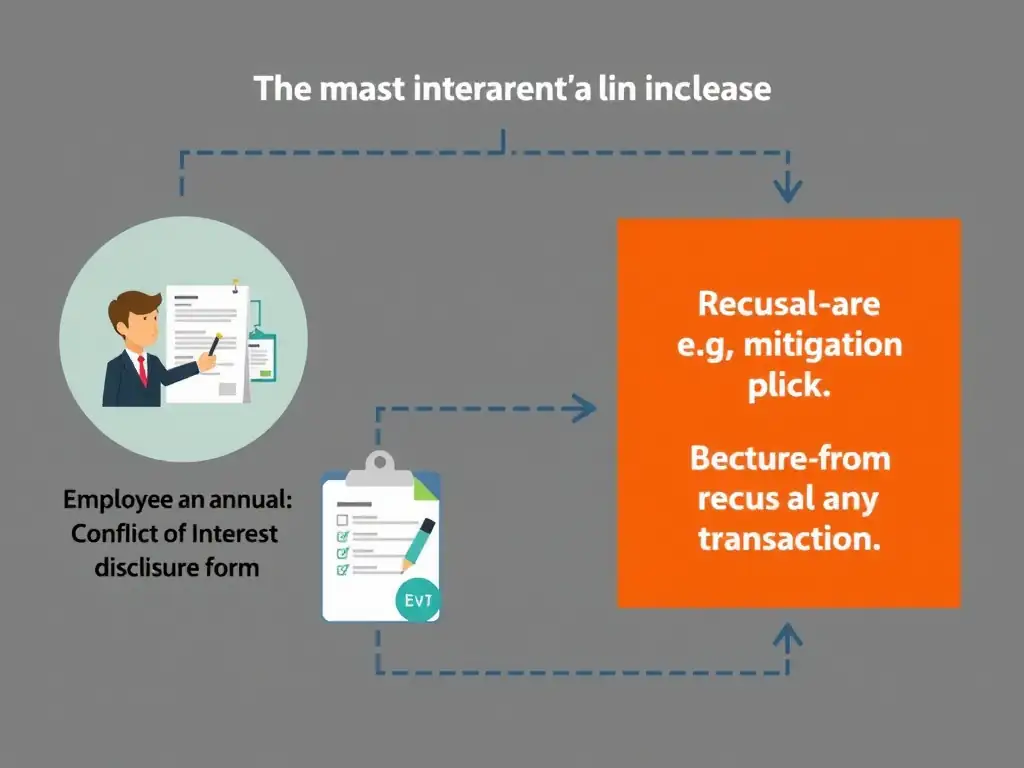
Here's the deal: preventive controls stop trouble before it starts, like locking your front door. You need to know about a side business or vendor relationship before it turns into misconduct, so an annual conflict-of-interest disclosure form gives you a proactive way to review and manage it. That’s the key preventive control here.
Full Explanation
The correct measure is requiring employees to complete and submit a comprehensive conflict of interest disclosure form on an annual basis. Preventive controls are designed to prevent a risk event or policy violation from occurring in the first place. In the context of conflict of interest management, requiring employees to proactively disclose potential conflicts of interest—such as outside employment, family relationships with vendors, or financial investments in competitors—on an annual basis allows the compliance department to evaluate, approve, or mitigate these conflicts before they lead to actual misconduct, bias, or financial harm. Once a conflict is disclosed, the organization can implement a management plan, such as recusing the employee from specific purchasing decisions.
The automated transaction monitoring system that flags unusual corporate expenditures after they occur is incorrect because it is a detective control. It flags suspicious transactions after the transaction has already occurred, meaning the violation has already taken place. Conducting a mandatory background and personal life investigation of all employees without cause is incorrect because intrusive, warrantless investigations into employees' personal lives are unethical, violate privacy rights, and do not represent a standard, systematic compliance control. Convening a disciplinary committee to determine sanctions after a conflict of interest has been uncovered is incorrect because disciplinary action is a reactive/corrective control that occurs after a violation has already been detected and verified. It does not prevent the initial occurrence of the conflict. An effective conflict-of-interest program combines annual disclosures, which are preventive, with automated auditing of vendor files against employee records, which is detective, to create a comprehensive defense.