A compliance officer is reviewing the company's third-party due diligence program. Which of the following describes a key characteristic of an effective, defensible due diligence process?
Select an answer to reveal the explanation.
Short Explanation and Infographic
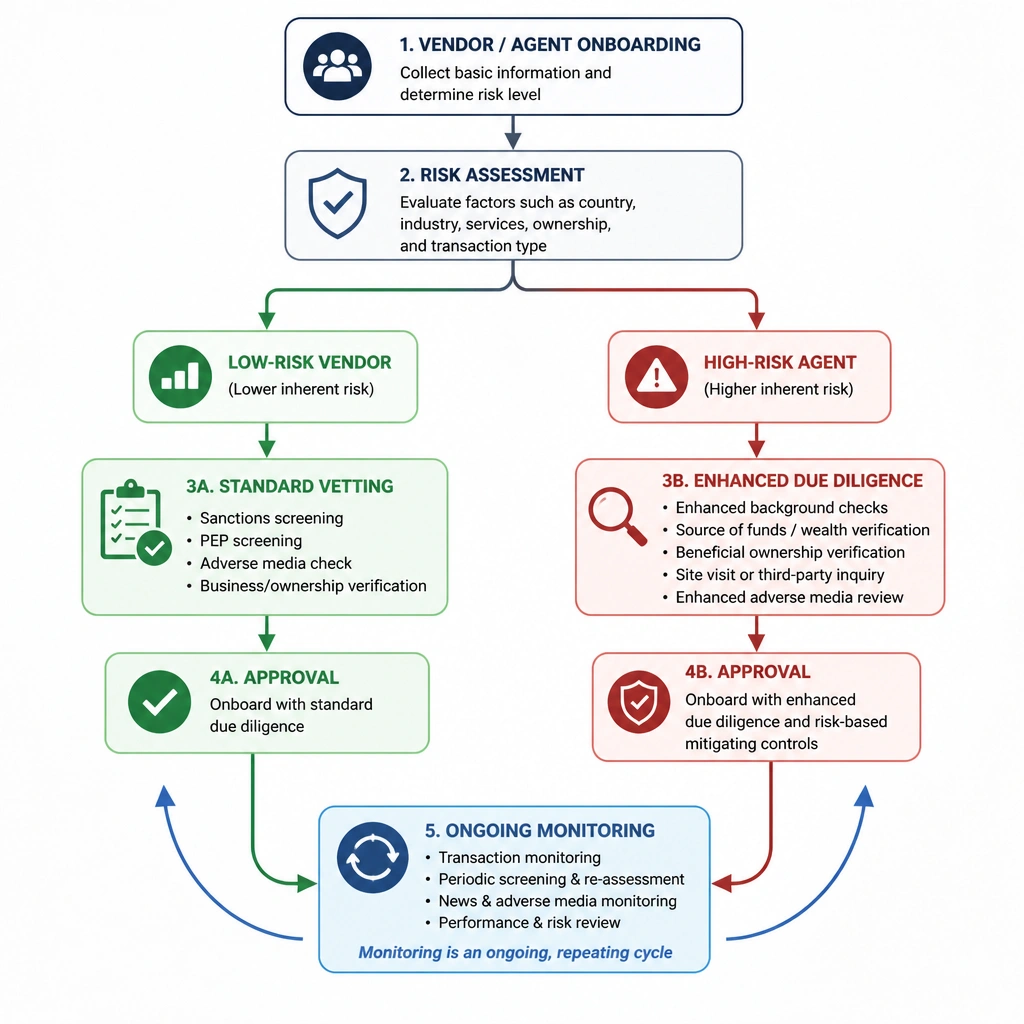
Check this out: you can't just run a quick Google search on a partner when you sign the contract and then call it a day. That's a "one-and-done" approach, and it doesn't work. An effective due diligence process has to be two things: tailored to the specific risk of the partner, and ongoing. A local office supply vendor doesn't need the same deep-dive audit as a foreign customs agent. And because risks change over time, you have to keep monitoring them. Distractors like applying the same rule to everyone, looking only at credit scores, or doing it just once are huge mistakes. Keep it tailored and keep it continuous. Got it? Sweet.
Full explanation below image
Full Explanation
An effective third-party due diligence process must be dynamic and risk-based. A static or rigid process that treats all third parties identically is considered ineffective by regulatory bodies, such as the US Department of Justice (DOJ). Due diligence must be proportional to the risk level. A high-risk third party (e.g., a distributor in a country with a high corruption index) requires a deep-dive investigation, including background checks, ownership verification, and ongoing monitoring. A low-risk vendor requires less intense vetting. Furthermore, due diligence cannot be a single, one-time event; it must be an ongoing, continuous process because a vendor's risk profile can change due to new owners, new government contracts, or allegations of misconduct. A one-size-fits-all approach is inefficient and fails to apply appropriate controls where they are most needed. Financial stability is a commercial concern; compliance due diligence must focus on regulatory, ethical, and legal risks. Finally, a "one-and-done" onboarding check fails to detect compliance issues that arise during the course of the business relationship, leaving the company exposed to subsequent misconduct. By building a scaled and continuous process, the compliance team ensures that resources are deployed where they are needed most, while maintaining a robust audit trail for regulators.