Before onboarding a foreign sales agent, a compliance team performs a comprehensive third-party risk assessment. What is the primary purpose of this assessment?
Select an answer to reveal the explanation.
Short Explanation and Infographic
Here's the deal: when you hire outside partners, their mess-ups can quickly become your mess-ups. Regulators do not care if a third party was the one paying the bribe; they will hold you responsible if you didn't do your homework. A third-party risk assessment is all about looking at the partner and asking, "Is this relationship going to drag us into court?" It's not about getting a cheap deal, paying invoices, or checking your internal payroll. It's about protecting your company from the liability that third parties can bring through the back door. Pay attention to this, because it's a huge focus on the exam. Let's keep rolling.
Full explanation below image
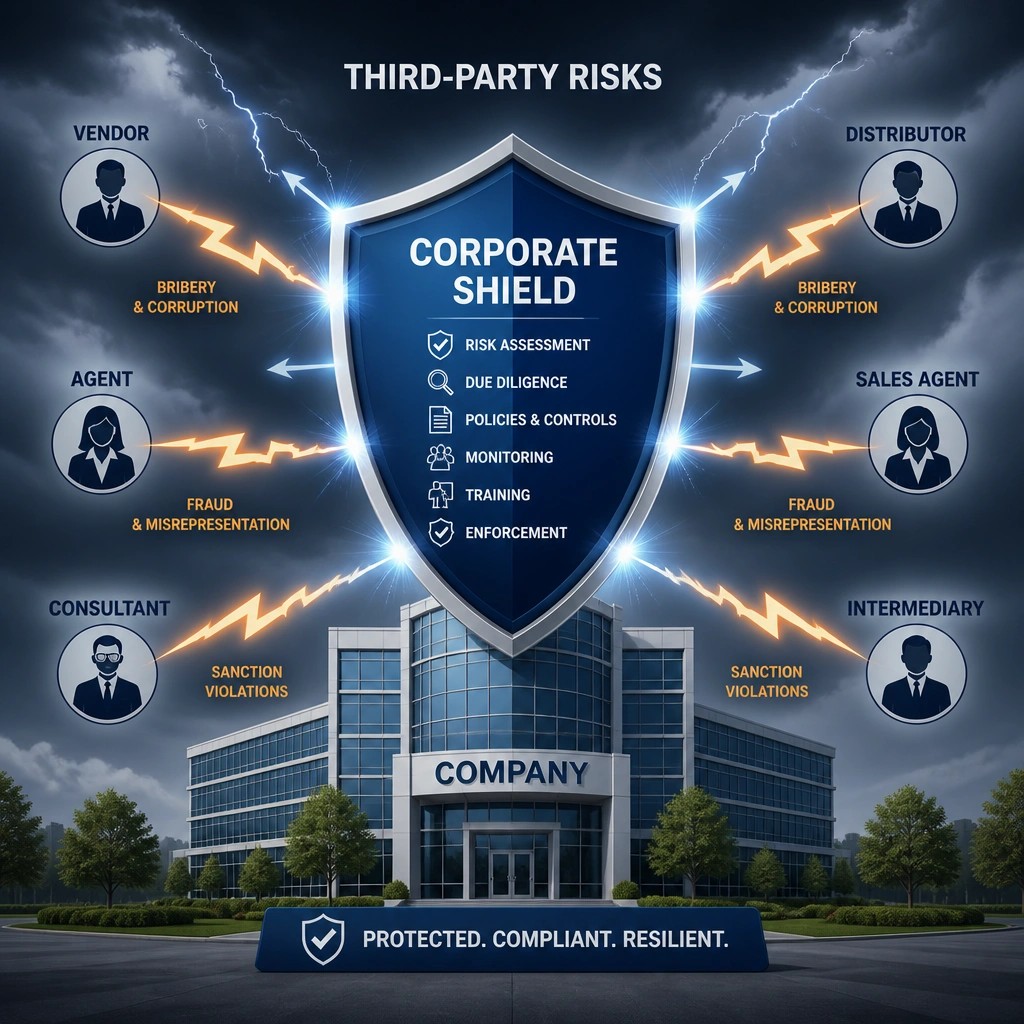
Full Explanation
Third-party risk management (TPRM) is a critical component of corporate compliance, particularly for companies operating globally or subject to anti-bribery regulations like the Foreign Corrupt Practices Act (FCPA) or the UK Bribery Act. Under these laws, companies can be held civilly and criminally liable for the corrupt actions of their agents, distributors, and vendors. The primary goal of a third-party risk assessment is to identify, analyze, and mitigate the compliance risks associated with external business relationships. By assessing factors such as the geographic location of the partner, their relationship with government officials, and their historical compliance record, the company can determine the level of due diligence required and decide whether to proceed with the relationship. Finding the cheapest provider is a procurement and finance function, not a compliance risk assessment goal. Internal payroll management is a human resources and accounting function, entirely separate from third-party risk assessments. Finally, ensuring timely payments to third parties is an accounts payable function and does not address the regulatory risks posed by the third party's external activities. Vetting third parties ensures that the company does not inadvertently participate in bribery or sanction violations. This proactive defense is vital because regulatory bodies view the failure to monitor third parties as a critical weakness in a company's internal controls.