An organization implements automated tools to track transactions and policy adherence in real-time. What is the primary goal of this continuous monitoring effort within the compliance program?
Select an answer to reveal the explanation.
Short Explanation and Infographic
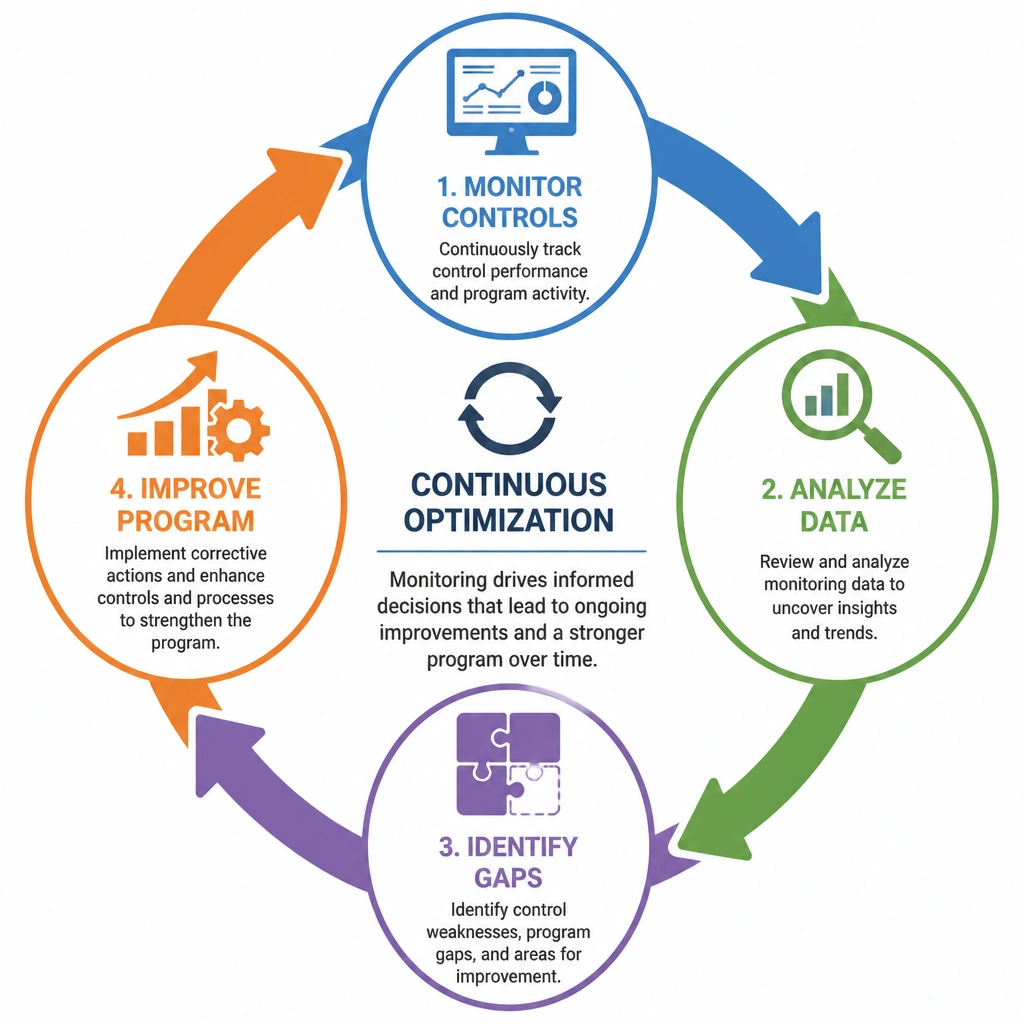
Here's the deal: compliance is not a static project you finish and walk away from. It's a living, breathing system. That's why continuous monitoring is so vital. It acts like a network feedback loop, telling you in real-time if your policies are actually working or if they're failing in production. It isn't about setting traps to punish people for minor typos, and it isn't just about watching the budget. It's about getting the data you need to adjust your controls and make the system stronger. Got it? Let's keep rolling.
Full explanation below image
Full Explanation
Continuous monitoring is a proactive compliance mechanism designed to review transactions, behaviors, and systems in real-time or near-real-time. It differs from a point-in-time audit by providing ongoing visibility into the operational health of the compliance program. The primary role of continuous monitoring is to establish a continuous feedback loop. This loop allows the compliance team to see whether controls are working as intended, detect patterns of non-compliance early, and make immediate adjustments. This aligns with regulatory expectations, such as those from the US Department of Justice (DOJ), which emphasize that compliance programs must be dynamic, responsive, and capable of self-correction. Using monitoring as a punitive tool to punish minor mistakes is a common misstep; it destroys employee trust and discourages transparency, which are critical for self-reporting. Managing the compliance department's budget is a separate administrative function, not the goal of operational compliance monitoring. Finally, no monitoring system can guarantee freedom from regulatory scrutiny or promise zero future risk, as business environments and regulations are constantly changing. The real objective is to build resilience and agility into the compliance framework.