The Chief Compliance Officer of a healthcare organization prepares a quarterly report for the board of directors. What is the fundamental objective of this recurring reporting requirement?
Select an answer to reveal the explanation.
Short Explanation and Infographic
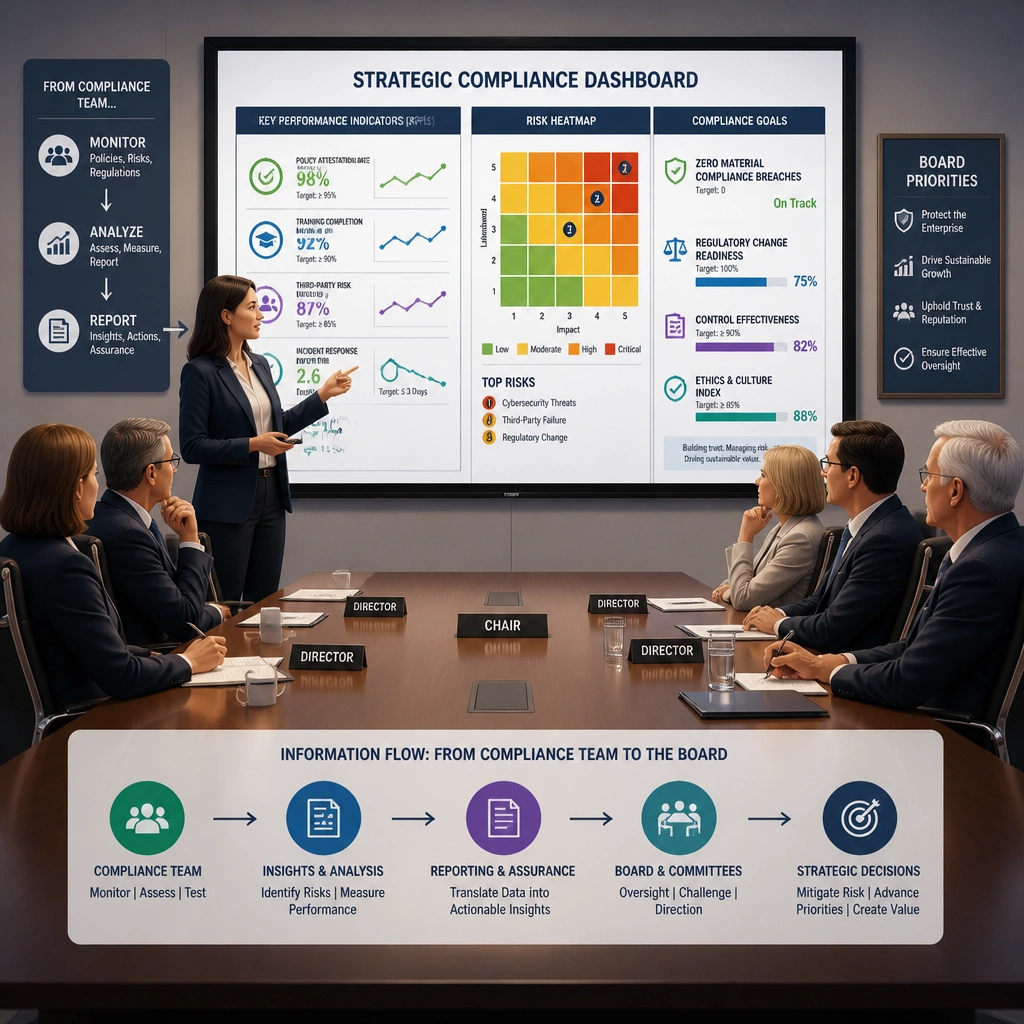
Here's the deal: the board is legally responsible for overseeing the company, but they aren't down on the floor checking files. They need high-level, accurate intelligence to do their job. That's why the CCO sends quarterly reports. It's not about making them feel good or showing off how busy the compliance staff is. And it's definitely not so the board can start running daily operations. It's about giving them a clear picture of the risks the company faces and how the program is holding up against its strategic goals. Keep the board informed, keep them engaged, and they can steer the ship safely. Let's keep rolling.
Full explanation below image
Full Explanation
Regular reporting from the compliance department to the board of directors is essential for maintaining effective corporate governance. Under legal standards (such as the Caremark doctrine in US corporate law), board members have a fiduciary duty to exercise active oversight over the company's compliance risk management systems. The board cannot execute its oversight role effectively without timely, accurate, and comprehensive information. Quarterly or regular reports must detail program performance, highlight emerging or existing key risks, and show progress toward strategic compliance objectives. This enables the board to make informed decisions regarding resource allocation, assess the company's risk appetite, and hold executive management accountable for compliance failures. The board's role is oversight, not management. They should never take charge of day-to-day operations, which is the role of management and the compliance officer. Presenting reports merely to justify headcount or demonstrate busyness is an administrative activity, not the governance-driven objective of board reporting. Additionally, no compliance program can guarantee zero violations, and reporting should focus on realistic risk management rather than providing false reassurance of absolute safety. By establishing structured, consistent reporting, the board remains informed without interfering in operations, ensuring that the company maintains its integrity and complies with external regulators.