A multinational bank restructures its organizational chart and proposes that the Chief Compliance Officer (CCO) report directly to the Chief Financial Officer (CFO). Why is this reporting structure problematic under compliance best practices?
Select an answer to reveal the explanation.
Short Explanation and Infographic
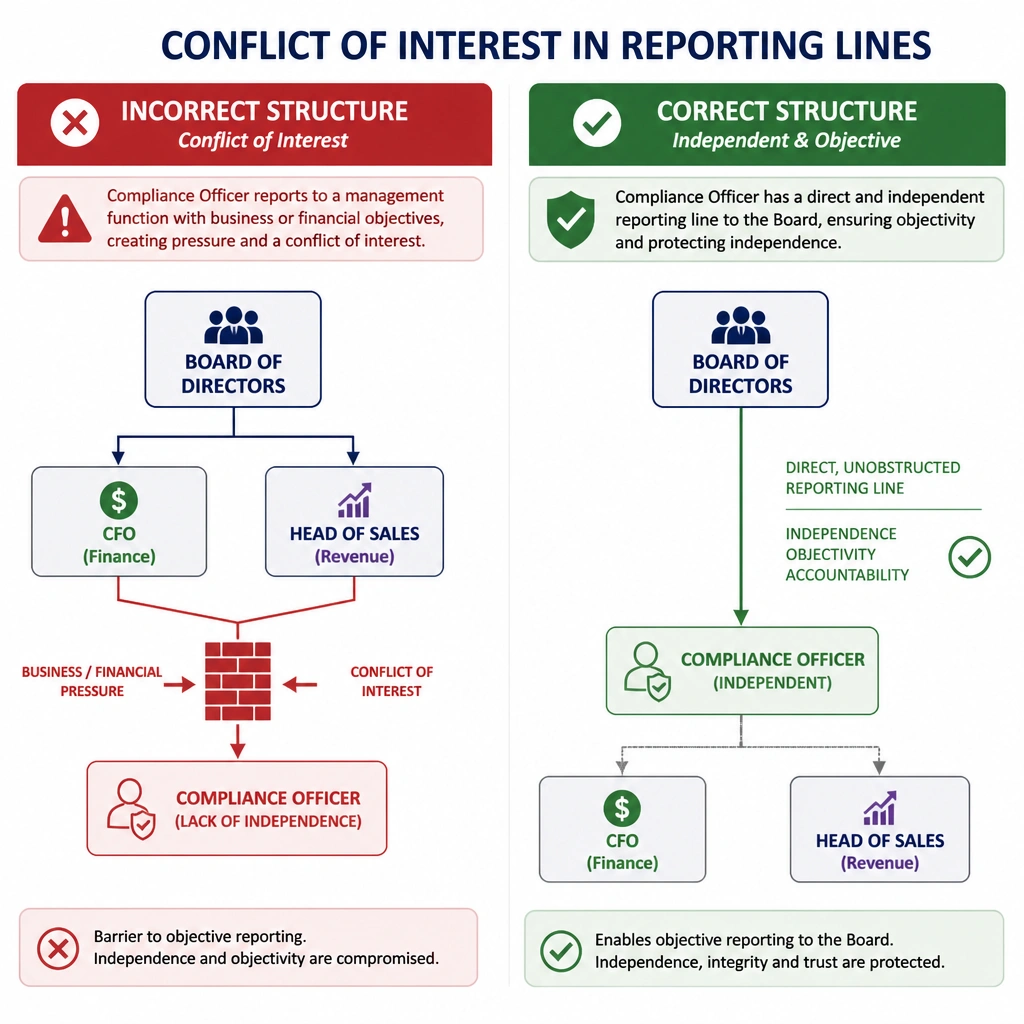
Trust me on this: compliance independence is huge. If the compliance officer reports to the CFO or the head of sales, you've got a serious conflict of interest. The sales guy wants to close deals; the compliance guy needs to make sure those deals are clean. If compliance is under the thumb of business units driving revenue, guess who wins that fight? Independence gives compliance a direct line to the board so they can speak truth to power without fearing for their job. Distractors about vetoing every decision or making the CCO the highest paid executive are just noise. Keep compliance separate, keep it objective. Got it? Sweet.
Full explanation below image
Full Explanation
Independence of the compliance function is a cornerstone of an effective corporate compliance program. Regulators, such as the U.S. Department of Justice (DOJ) and the Securities and Exchange Commission (SEC), look closely at whether the compliance department has sufficient stature, authority, and autonomy within the organization. This structural independence prevents conflicts of interest and enables objective monitoring because it ensures that compliance personnel are not pressured by operational or financial management to overlook issues or approve risky transactions. If the compliance function is subordinate to departments focused on revenue generation, cost cutting, or financial reporting, the objective assessment of risks is compromised. A direct reporting line to the board of directors or the audit committee provides the necessary leverage to raise issues without fear of retaliation or suppression from executives. Furthermore, high compensation is not the primary purpose of structural independence, nor is it a requirement for a compliant program. While independence drastically improves detection and prevention, no reporting structure can guarantee that mistakes will never occur. Finally, compliance functions generally act as advisory and monitoring bodies rather than holding an absolute veto over all business decisions, which would stifle operational flexibility and is not their standard mandate. Maintaining separate reporting lines ensures that compliance can monitor operations objectively.