
An organization structures its compliance department so that the Chief Compliance Officer (CCO) reports directly to the General Counsel, who also controls the compliance budget. What is the primary governance vulnerability created by this reporting structure?
Select an answer to reveal the explanation.
Short Explanation
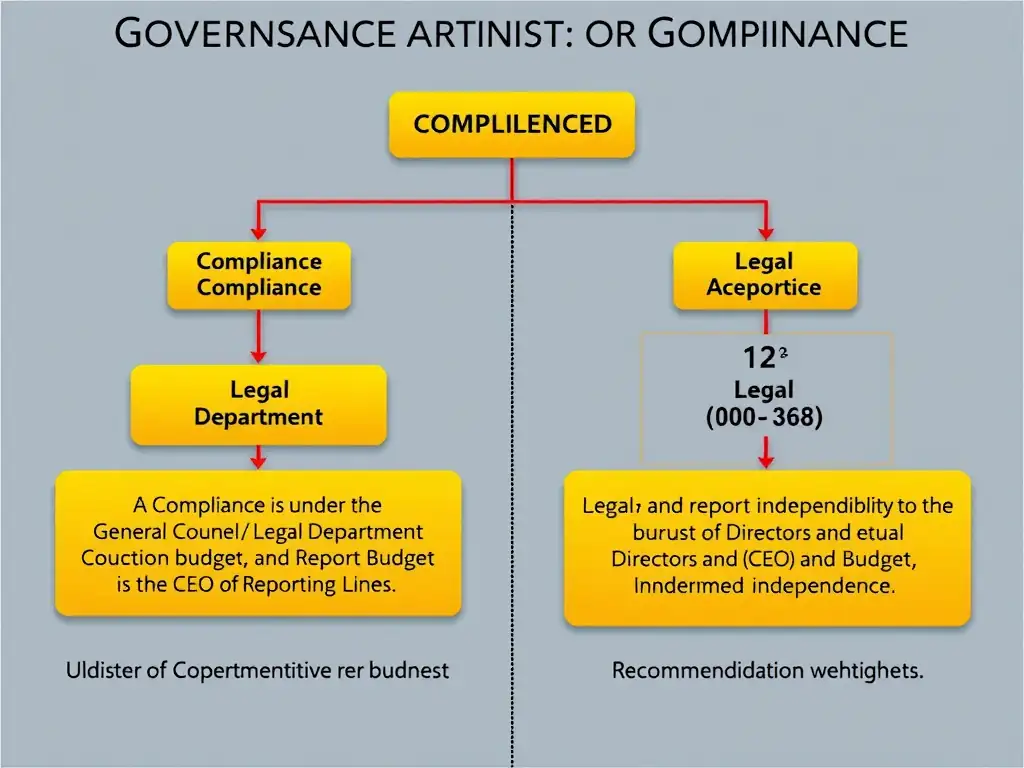
Trust me on this: when the chief compliance officer reports to the general counsel and the legal department controls the budget, the compliance function loses independence. Legal can starve compliance of resources or bury reports to protect the firm from litigation. You need a chief compliance officer who can raise problems without legal's permission.
Full Explanation
The primary vulnerability is that the independence and authority of the chief compliance officer may be compromised because of structural subordination to the legal department. The relationship between the legal and compliance departments is a critical aspect of corporate governance. While both functions aim to protect the organization, they have distinct mandates. The legal department, led by the general counsel, focuses on protecting the company from legal liability, defending its interests in litigation, and managing legal risk, often using attorney-client privilege. The compliance department is focused on operationalizing ethical standards, monitoring internal controls, identifying violations, and ensuring transparency. When the chief compliance officer reports to the general counsel and relies on them for budget approval, the compliance function's independence and authority are structurally compromised. Legal may prioritize litigation defense or risk containment over internal transparency and disclosure, potentially stifling compliance investigations. The option suggesting the chief compliance officer is highly likely to develop direct personal conflicts of interest with the general counsel is incorrect because while professional friction may arise, the primary risk is structural and organizational, namely lack of independence and resource control, not personal conflicts of interest between the individuals. The option asserting the board of directors will be legally blocked from accessing compliance information without general counsel approval is incorrect because the board is not legally blocked from accessing compliance information; even if the chief compliance officer has direct access to the board, that theoretical access is ineffective if the chief compliance officer is structurally subordinated and resource-constrained by the legal function. The option saying the chief compliance officer will be unable to acquire sufficient legal training to understand regulatory obligations is incorrect because the chief compliance officer's role is administrative, operational, and ethical; they do not need extensive legal expertise or a law degree to manage an effective compliance program, as they can consult legal experts when necessary. The U.S. Department of Justice and the Department of Health and Human Services Office of Inspector General advocate for a direct reporting line from the chief compliance officer to the chief executive officer and/or the board, with independent control over the compliance budget to prevent conflicts of interest.