
A logistics firm appoints "compliance champions" across its regional distribution centers. What is the primary responsibility of a compliance champion in this context?
Select an answer to reveal the explanation.
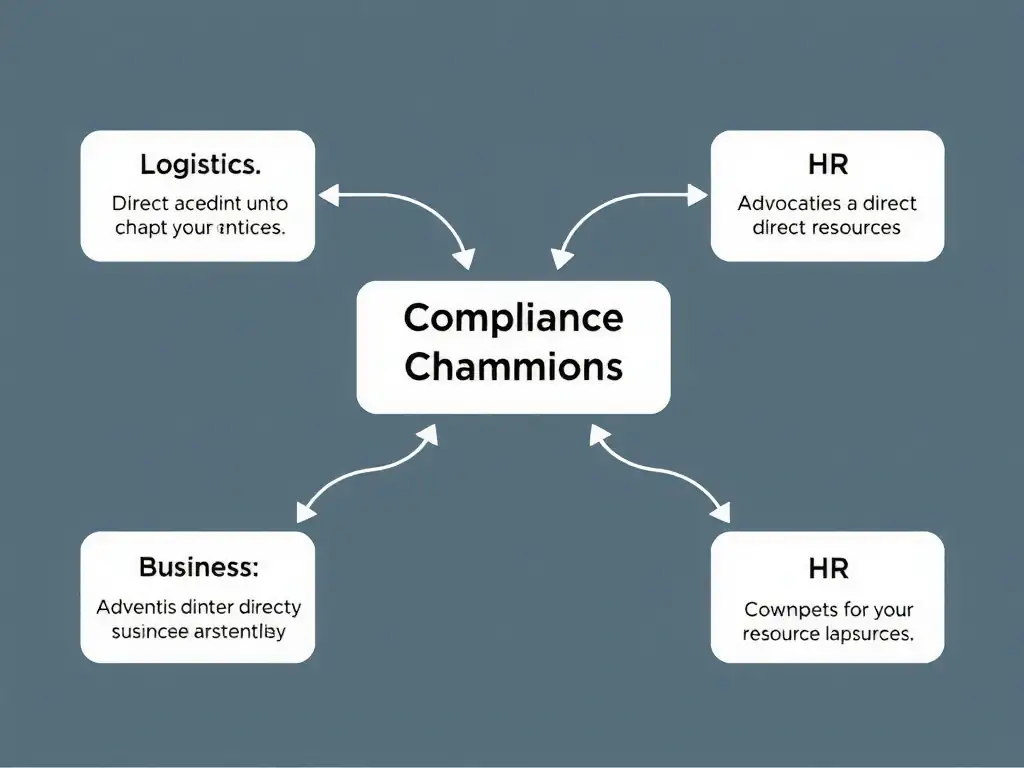
Short Explanation
A compliance champion is a regular team member who acts as a local advocate and peer resource for compliance. You use them to bridge headquarters and the frontline, not to run the global program, spy on coworkers, or lead investigations.
Full Explanation
The correct answer is the localized advocate and peer resource who promotes compliance initiatives within their business unit. A compliance champion, sometimes called a compliance ambassador or liaison, is an employee within a business unit who, in addition to their primary operational role, serves as a point of contact and advocate for the compliance and ethics program. They help embed compliance into the daily culture of their teams by answering basic questions, publicizing compliance policies, and steering colleagues toward formal reporting channels when necessary. Since they work side-by-side with their peers, they are often perceived as more accessible and less intimidating than a centralized compliance department located at headquarters.
The executive-control option is incorrect because managing the global compliance program is the responsibility of the Chief Compliance Officer and the dedicated compliance team, not local champions who are operational staff.
The peer-monitoring option is incorrect because compliance champions are not corporate monitors or spies tasked with reporting every employee interaction. Promoting such a role would damage trust and create a hostile workplace culture.
The investigation-leading option is incorrect because conducting compliance investigations requires specialized legal, forensic, and investigative skills. Allowing untrained compliance champions to lead investigations could compromise evidence, violate privacy rights, and expose the company to legal liability.
By leveraging compliance champions, organizations can establish a decentralized support network that reinforces a strong compliance culture throughout different regions and departments.