Under the U.S. Sentencing Guidelines for Organizations (USSGO), what major benefit can a company secure if it voluntarily self-reports a compliance violation to federal authorities immediately upon discovery?
Select an answer to reveal the explanation.
Short Explanation and Infographic
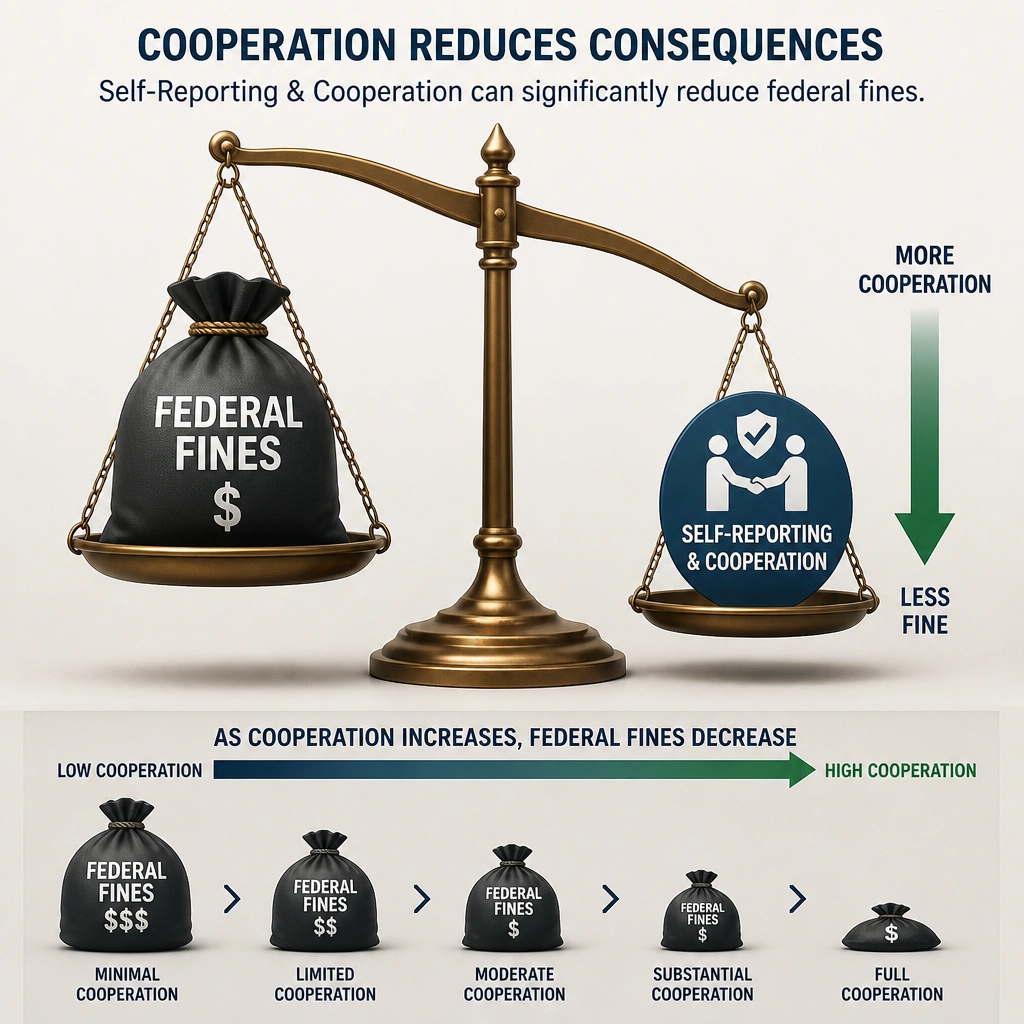
Here's the deal: if your company uncovers a major violation—say, some systemic billing fraud—you have a tough choice. Do you sweep it under the rug and hope nobody finds out, or do you call the authorities and tell them yourself? Under the sentencing guidelines, self-reporting is huge. If you voluntarily report the mess before the government catches wind of it, they will significantly slash your culpability score. That means your potential fines go way down. It's not a free pass, and it's not immunity, but it saves your company millions and shows you are serious about fixing the issue. Trust me on this.
Full explanation below image
Full Explanation
The U.S. Sentencing Guidelines for Organizations (USSGO) outline specific mitigating factors that can decrease an organization's culpability score during sentencing. One of the most significant factors is whether the organization voluntarily disclosed the misconduct to government authorities before it became known outside the organization or was imminent. Under the guidelines, prompt self-reporting, combined with full cooperation and acceptance of responsibility, can result in a dramatic reduction in the organization's final fine range. This incentive aligns with DOJ policies (such as the Corporate Enforcement Policy), which encourage transparency and immediate disclosure to facilitate the prosecution of individual wrongdoers and prompt corporate remediation.
Option B is correct because voluntary self-reporting reduces the culpability score under USSGO Section 8C2.5(g), which directly translates to lower financial and probation-related penalties.
Option A is incorrect because self-reporting does not guarantee absolute immunity. While it may lead to a declination of prosecution in some cases (particularly under specific DOJ programs), immunity is never a guaranteed right and is subject to prosecutorial discretion.
Option C is incorrect because self-reporting does not relieve the company of maintaining a compliance program. In fact, an ongoing effective program is typically required as part of the resolution, and failing to maintain one could trigger a court-mandated corporate monitor.
Option D is incorrect because organizations are still required to fully remediate the root causes of the violation and pay appropriate restitution to victims; self-reporting does not excuse them from corrective actions.