In compliance program administration, what is the primary objective of implementing a "risk-based" compliance framework?
Select an answer to reveal the explanation.
Short Explanation and Infographic
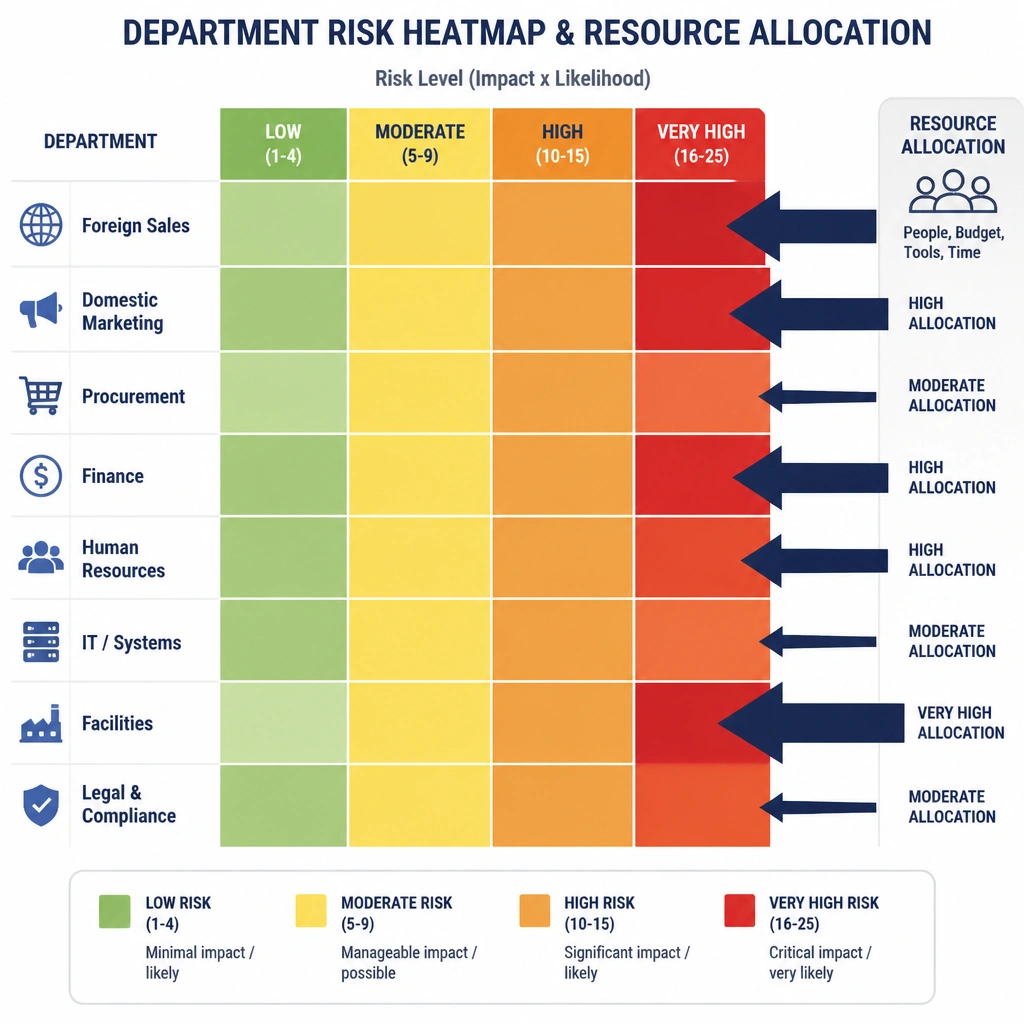
Check this out: your compliance team does not have a blank check or an infinite budget. You have limited time and limited people. So, does it make sense to spend the exact same amount of energy auditing the office supply closet as you do auditing your overseas sales agents who deal with foreign officials? No way! A risk-based approach is about putting your guards where the bad guys are most likely to attack. You assess where the company is most vulnerable—whether that's bribery, data privacy, or safety—and throw your heaviest compliance resources at those high-risk zones. It's smart, efficient, and it's what regulators expect.
Full explanation below image
Full Explanation
A "risk-based" compliance approach is the standard methodology recommended by regulatory bodies worldwide, including the DOJ and the SEC. It recognizes that organizations operate under resource constraints and that not all business operations carry the same level of compliance risk. Under a risk-based model, an organization first performs a thorough risk assessment to identify and analyze its specific risk profile (based on factors like geography, industry, transaction types, and customer bases). The company then concentrates its compliance resources, monitoring, training, and auditing efforts on those areas identified as high-risk. This approach ensures that compliance efforts are both effective and efficient, avoiding the waste of resources on low-risk activities while leaving major vulnerabilities unmonitored. A risk-based approach must be dynamic, adapting as the company's business activities, geographic footprint, or regulatory environments change.
Option B is correct because the primary goal of a risk-based framework is the strategic allocation of resources to address the areas of greatest exposure to legal, financial, or reputational harm.
Option A is incorrect because applying identical controls everywhere is a "one-size-fits-all" approach, which is the opposite of a risk-based approach and is highly inefficient.
Option C is incorrect because a risk assessment is the essential starting point for a risk-based approach. You cannot focus resources on high-risk areas if you haven't identified them first.
Option D is incorrect because a risk-based approach must cover all relevant compliance risks, including operational, legal, environmental, and reputational risks, not just financial ones.