What is the fundamental, overarching purpose of implementing a compliance and ethics program within a corporate organization?
Select an answer to reveal the explanation.
Short Explanation and Infographic
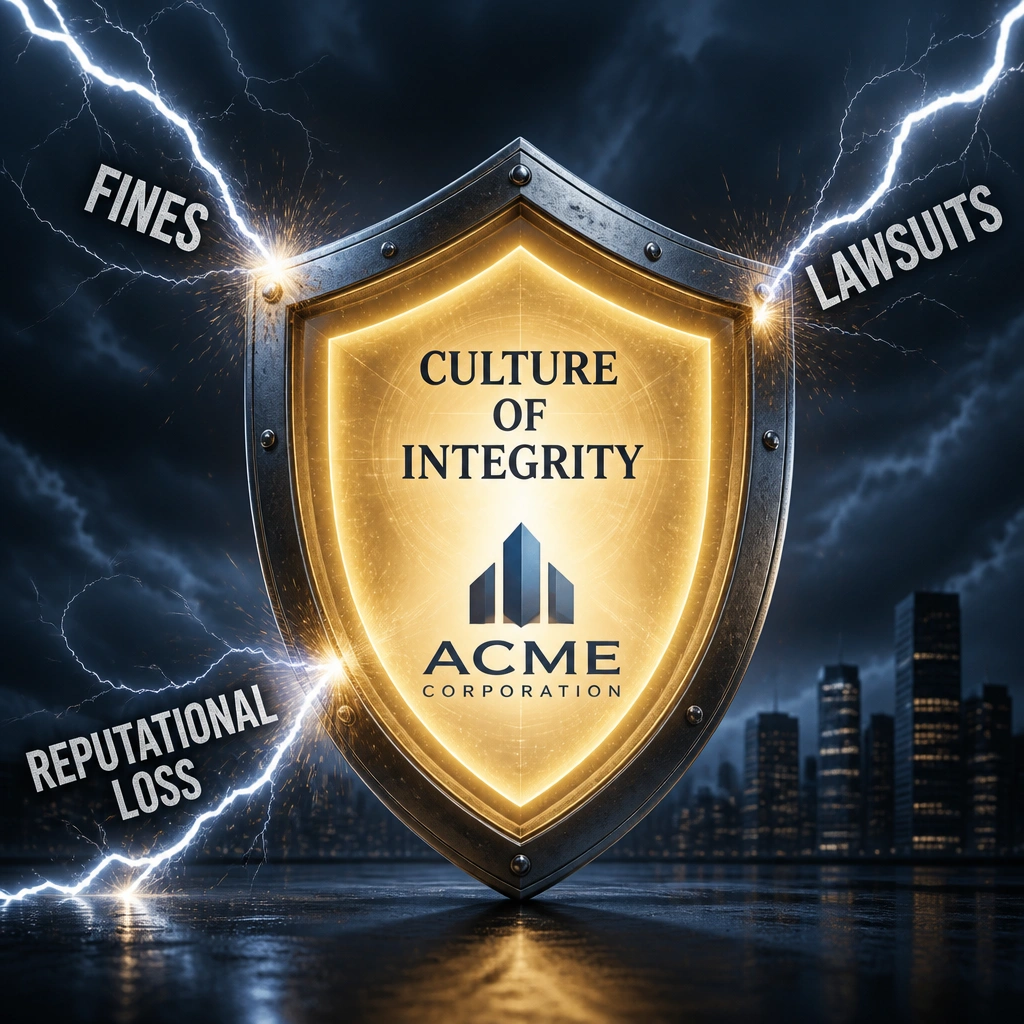
Think of a compliance program like the brake system on a high-performance sports car. The brakes aren't there to stop you from driving; they're there to let you drive fast safely! A solid compliance and ethics program isn't about making sales calls or generating revenue, nor is it a PR stunt. The real goal is to create a culture where people do the right thing because it's the right thing, and to catch bad behavior before it derails the entire train. It's about preventing trouble, spotting it if it happens, and fixing it fast.
Full explanation below image
Full Explanation
The fundamental purpose of a compliance and ethics program is to establish an organizational infrastructure that prevents and detects violations of law, regulations, and internal policies. Beyond mere legal adherence, a mature program aims to cultivate a corporate culture of integrity. In such a culture, employees understand their ethical responsibilities and feel empowered to make decisions aligned with the organization's values. By systematically identifying risks, establishing policies, training employees, and monitoring operations, the compliance program deters wrongdoing and ensures that if misconduct does occur, it is quickly detected, investigated, and corrected. Ultimately, the program functions as a governance safeguard, fostering sustainable business practices and mitigating structural risks before they escalate.
Option C is correct because the dual mandate of preventing/detecting wrongdoing and building an ethical culture represents the core definition and objective of compliance under all major regulatory standards (e.g., USSGL, DOJ guidance).
Option A is incorrect because compliance is generally a cost center rather than a direct revenue generator. Its value lies in protecting the organization from catastrophic losses, fines, and operational disruptions.
Option B is incorrect because general employee disputes (e.g., interpersonal friction, performance management) fall under human resources, not the compliance department, although compliance does handle reports of systemic policy violations or discrimination.
Option D is incorrect because using the program primarily as a public relations tool represents "window dressing" rather than an effective, operationalized program. Regulators look past marketing campaigns to evaluate the actual integration of compliance in operations.