
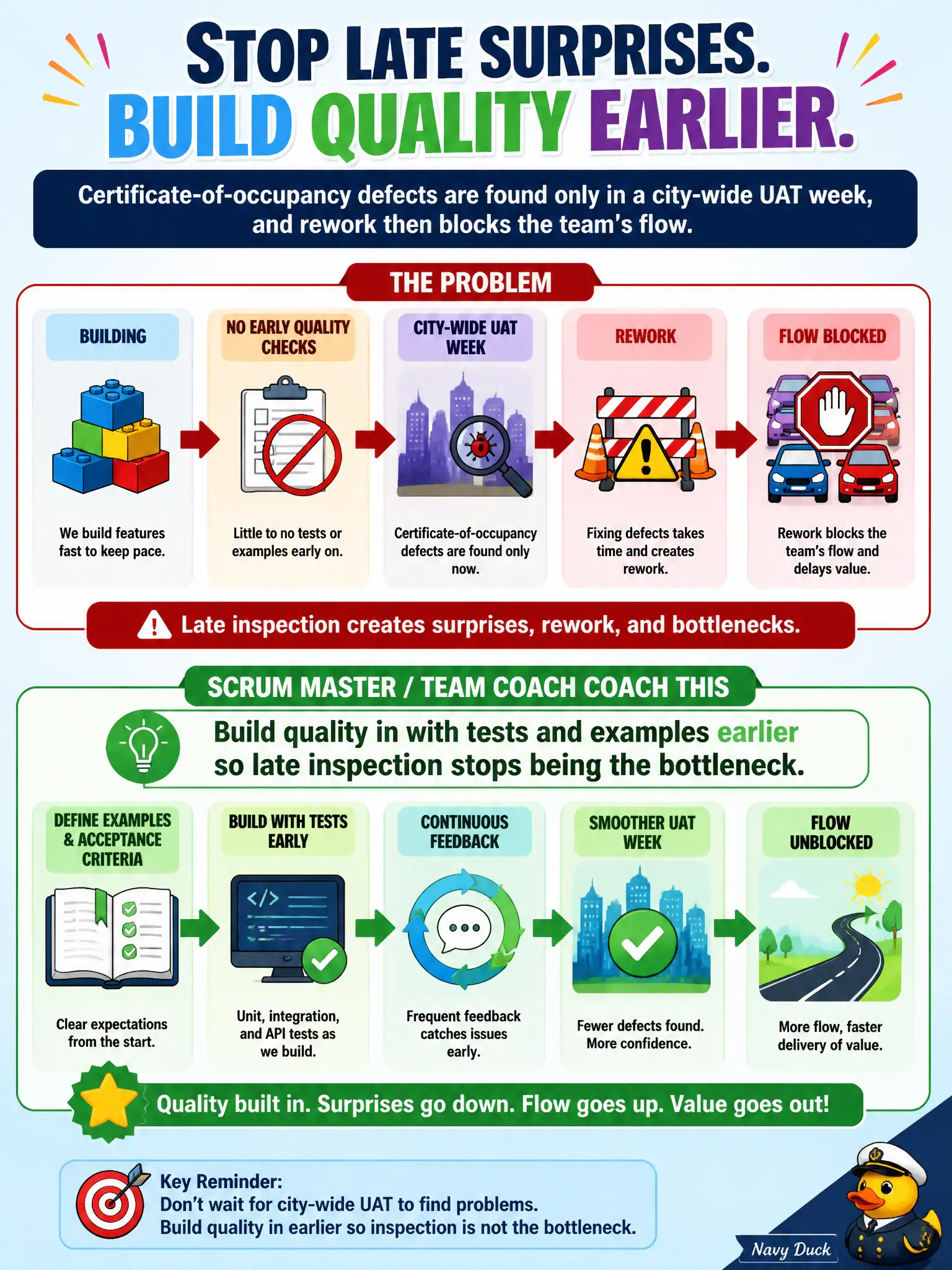
Certificate-of-occupancy defects are found only in a city-wide UAT week, and rework then blocks the team's flow. What should the Scrum Master/Team Coach coach?
Select an answer to reveal the explanation.
Short Explanation
Finding occupancy bugs in a city-wide UAT week is like inspecting the roof after the housewarming. Late inspection does not add quality; it adds a traffic jam of rework. Bake tests and examples in earlier so the bottleneck never forms.
Full Explanation
Quality built in earlier removes late-inspection bottlenecks. Certificate-of-occupancy defects found only in a city-wide UAT week create a rework flood that blocks flow exactly when the civic program needs throughput. The Scrum Master/Team Coach should coach tests, examples, and incremental validation earlier so late UAT stops being the place where occupancy quality is first discovered.
Lengthening UAT week fails by concept: more end-stage inspection finds more late defects without preventing them. Moving UAT after go-live fails by concept by shifting discovery into production and onto residents or inspectors after release. Adding a separate defect team that only works during UAT fails by concept because it institutionalizes a rework specialty instead of building quality into the delivering team’s flow.
Exam caveat: SAFe built-in quality and shift-left testing are flow strategies, not optional ceremony; late big-bang UAT as the primary quality gate is a classic anti-pattern. Some regulated acceptance remains, but it should confirm quality already built—not invent it.
Operational check: add acceptance examples and automated checks for occupancy rules inside the iteration, run thin vertical slices past inspectors earlier, measure defects found in UAT versus earlier, and shrink UAT’s role from discovery factory to confirmation.