
The benefits portal team skips automated tests to go faster and then drowns in production patches. What should the Scrum Master/Team Coach link to flow?
Select an answer to reveal the explanation.
Short Explanation
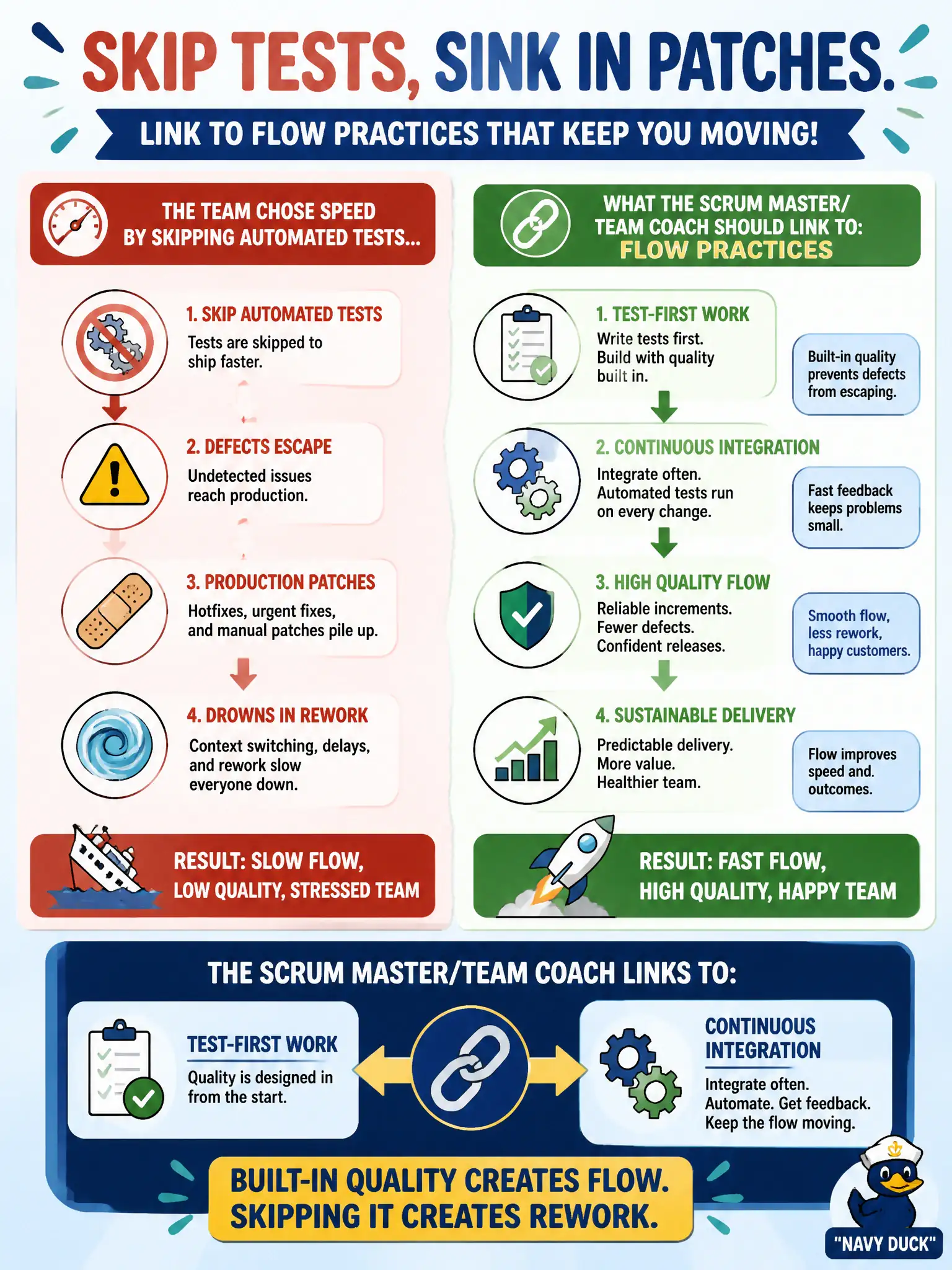
Skipping tests to go faster is like skipping the inspection sticker to get the bus out of the yard. It rolls, then it lives in the shop. Test-first and CI are how the benefits portal stays on the road instead of drowning in patches.
Full Explanation
Skipping automated tests to go faster usually slows the system through production rework. On the benefits portal team, drowning in patches after skipping tests shows that built-in quality is a flow practice, not a tax. The Scrum Master/Team Coach should link test-first work and continuous integration to flow: they keep citizen benefits changes releasable and prevent the shop-time spiral that follows untested releases.
Treating skipped tests as a valid accelerator if the Product Owner accepts production risk fails by concept: accepting chronic production failure is not a sustainable flow strategy for a benefits portal. Using manual production patches as a substitute Definition of Done fails by concept because reactive patching is rework inventory, not done. Freezing all portal changes until every historical patch is documented fails by concept by stopping value delivery instead of installing the quality practices that prevent new patch debt.
Exam caveat: SAFe associates built-in quality and CI with faster, more predictable flow; speed without tests is a false economy especially on public-facing eligibility and benefits systems. Test-first does not require perfect coverage on day one, but it does require stopping the habit of shipping untested civic changes as the default.
Operational check: restore a minimal automated test and CI gate for benefits portal stories, include test evidence in Done, track production patch count and flow time for a few iterations, and show leadership that rework decline—not test skipping—is what recovers speed.