
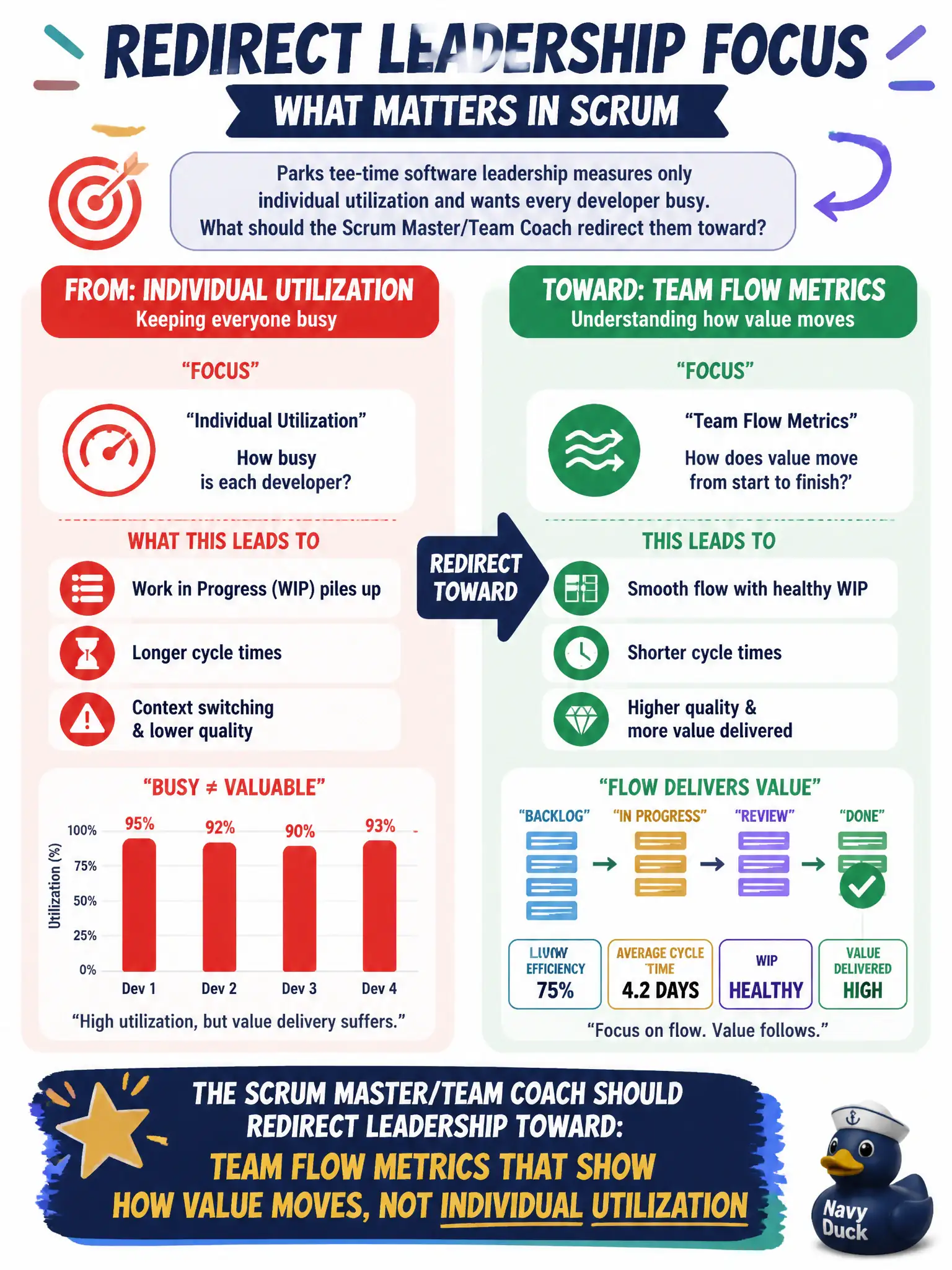
Parks tee-time software leadership measures only individual utilization and wants every developer busy. What should the Scrum Master/Team Coach redirect them toward?
Select an answer to reveal the explanation.
Short Explanation
A fully booked ranger desk still fails if nobody ever issues a tee time. Busy people are not the same as finished resident value. Point leadership at team flow, not at how occupied each developer looks.
Full Explanation
Leadership that measures only individual utilization optimizes for busyness, not for resident value moving through the system. Parks tee-time software needs team flow metrics—throughput, flow time, WIP, and predictability—so coaches and managers see how tee-time value advances. The Scrum Master/Team Coach should redirect attention from how occupied each developer looks to how finished park-reservation outcomes flow.
Personal utilization dashboards tied to performance reviews fail by concept: they incentivize starting work, hoarding expertise, and local optimization over finishing team outcomes. Story-point targets per person fail by concept by turning estimates into productivity quotas that distort planning and ignore wait states. Overtime tracking as the primary speed indicator fails by concept because unpaid or extended hours can mask broken flow while burning out civic delivery staff.
Exam caveat: SAFe explicitly prefers flow metrics over utilization as the guide for improving delivery systems; utilization can still inform capacity conversations but must not be the north-star score for a tee-time or other public-service product team.
Operational check: replace or demote individual utilization as the primary leadership chart, introduce a small set of team flow metrics on the parks tee-time board, review them in sync events, and coach one improvement when flow time or WIP signals delay in resident booking value.