
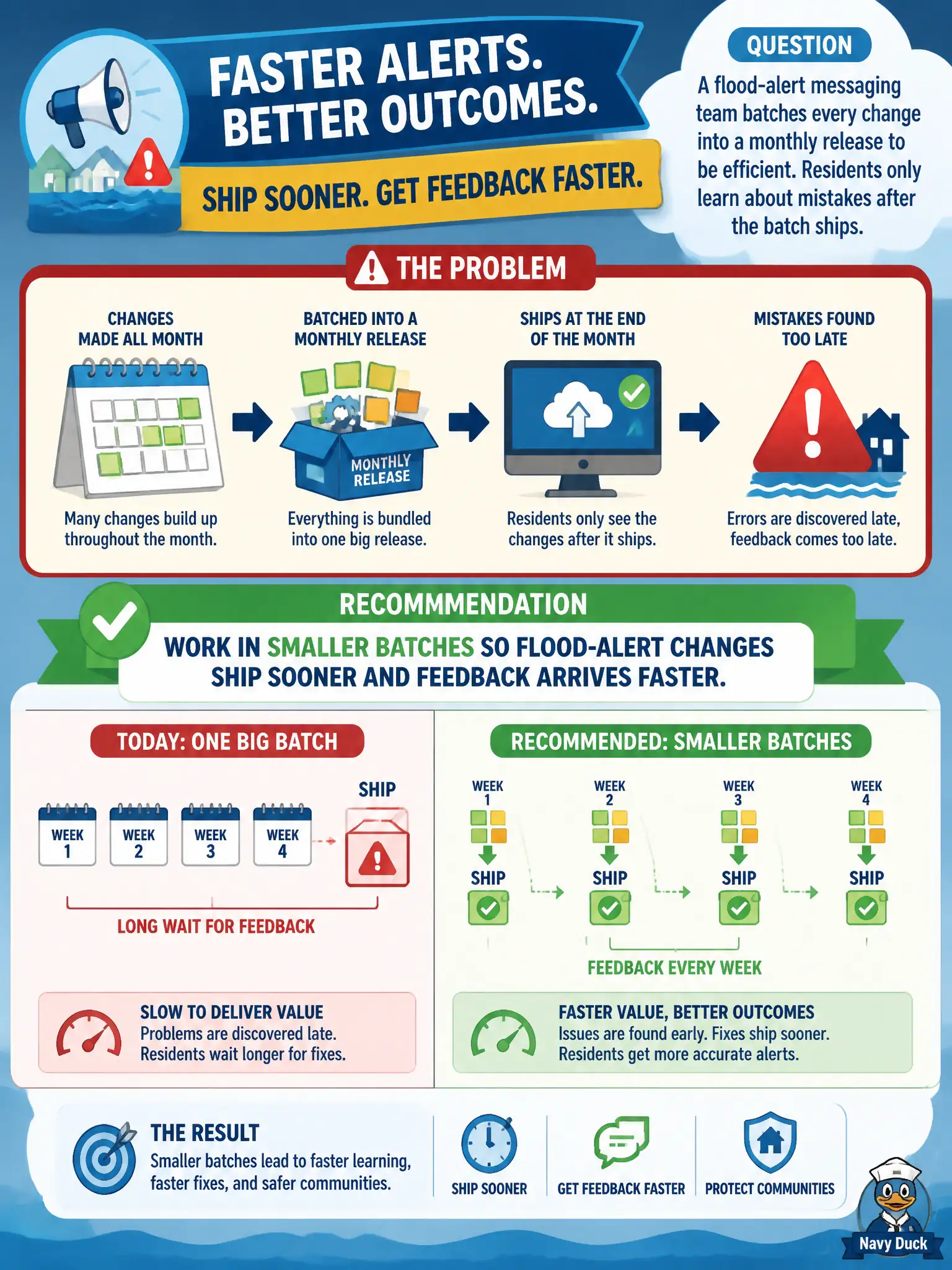
A flood-alert messaging team batches every change into a monthly release to be efficient. Residents only learn about mistakes after the batch ships. What should the Scrum Master/Team Coach recommend?
Select an answer to reveal the explanation.
Short Explanation
Holding every flood warning for a monthly drop is like saving up all the sirens for the first of the month: efficient on paper, late in a storm. Smaller batches get a real message out and a real reaction back. That is how the team learns before the next crest.
Full Explanation
Smaller batches accelerate learning and delivery. Batching every flood-alert messaging change into a monthly release may look efficient on a calendar, yet residents only discover defects after a large drop ships—late feedback when weather risk is time-sensitive. The Scrum Master/Team Coach should recommend smaller batches so alert changes reach production sooner, feedback arrives faster, and the civic messaging system improves before the next crest.
Keeping the monthly batch and lengthening review fails by concept: more ceremony on a large batch still delays learning and concentrates release risk. Holding flood-alert work until the next PI to enlarge the batch fails by concept by maximizing inventory and postponing public-safety feedback. Measuring efficiency only as utilization of the release engineer fails by concept because busy release staff can coexist with slow, risky delivery of resident-facing alerts.
Exam caveat: SAFe flow guidance prefers reducing batch size to improve flow time and feedback; utilization of specialists is not a proxy for value delivery. Some compliance gates remain, but they should be risk-based and frequent—not an excuse for month-long civic messaging batches.
Operational check: split the next flood-alert change set into shippable increments, release at least one smaller batch with monitoring, capture defect/feedback latency versus the old monthly drop, and coach the team to keep batch size limits visible on the workflow.