
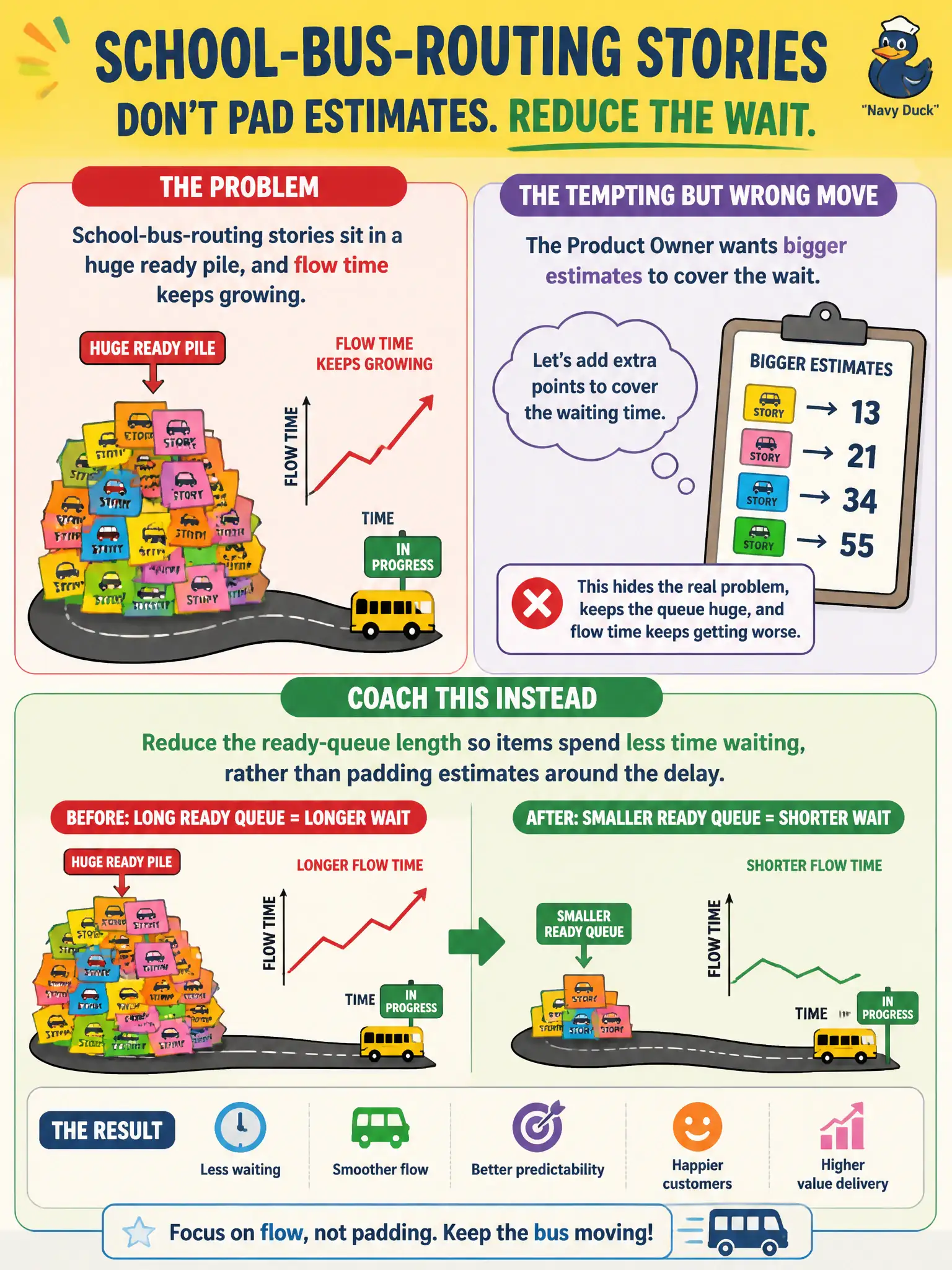
School-bus-routing stories sit in a huge ready pile, and flow time keeps growing. The Product Owner wants bigger estimates to cover the wait. What should the Scrum Master/Team Coach coach?
Select an answer to reveal the explanation.
Short Explanation
A line of buses at one stop does not get shorter because you add minutes to the timetable; the kids still wait. Shrink the pile of work sitting in ready, and flow time drops. Padding estimates just writes the delay into the plan.
Full Explanation
Flow time includes waiting in ready. A huge ready pile of school-bus-routing stories means items age before developers even start; padding estimates around that wait writes delay into commitments without shortening the line residents feel. The Scrum Master/Team Coach should coach reducing ready-queue length—tighter readiness, smaller batches pulled in, and finishing before restocking—so wait time drops and routing value reaches schools sooner.
Padding every estimate with average ready-queue wait fails by concept: it normalizes systemic delay as if estimation were the problem. Splitting the ready pile into extra columns fails by concept because cosmetic column proliferation turns waiting into fake progress without reducing queue time. Deleting resident-facing routing stories until the pile is empty fails by concept: it discards public-service outcomes to clean a metric rather than improving intake and pull policies.
Exam caveat: SAFe emphasizes reducing queue and wait as primary flow levers; estimate inflation is not a flow fix. Ready queues are useful buffers only when short and intentional—not when they become unmanaged inventory of civic work.
Operational check: count items and age in Ready for school-bus-routing work, set a ready WIP or pull policy with the Product Owner, stop restocking until older items start, and confirm median flow time falls as the ready pile shrinks rather than as estimates grow.