
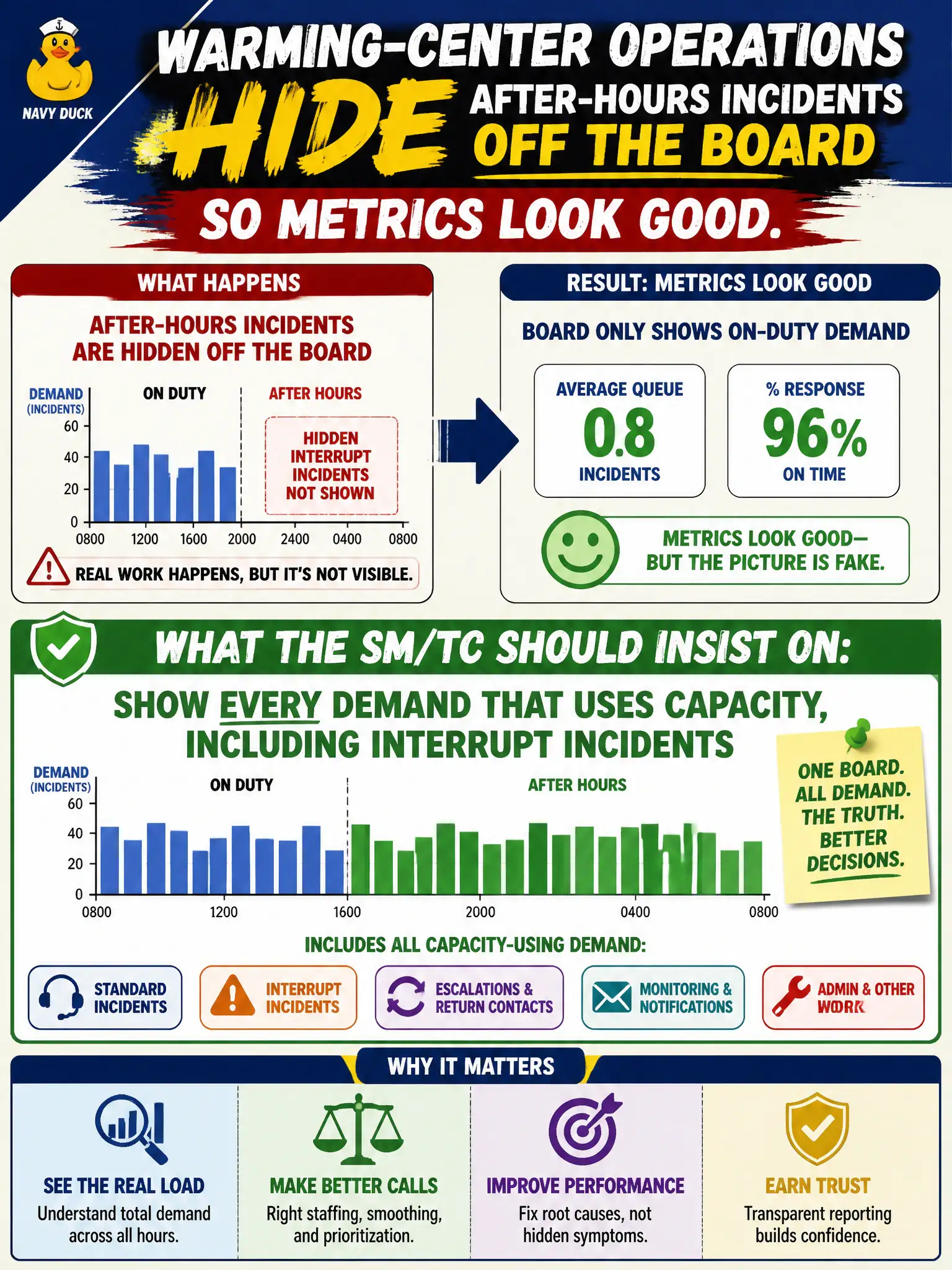
Warming-center operations hide after-hours incidents off the board so metrics look good. What should the SM/TC insist on?
Select an answer to reveal the explanation.
Short Explanation
Hiding night incidents is stuffing laundry in the closet before guests arrive. Those tickets still use people. If it burns capacity, it belongs on the board.
Full Explanation
After-hours incidents that use capacity must appear on the board: show every demand that uses capacity, including interrupt incidents. Hiding night incidents is stuffing laundry in the closet before guests arrive. Those tickets still use people; if it burns capacity, it belongs in the visualization for broadband, utilities, or public-safety adjacent teams.
Keeping after-hours work off the board and reporting it only in a confidential memo fails because memos are not pull systems. Counting hidden incidents as stretch PI Objectives fails because stretch language should not launder unplanned load. Visualizing only weekday planned work because nights are "operations, not Agile" fails because operations capacity on an ART is still capacity.
Exam caveat: unplanned work is first-class demand in flow systems. Operational check: capture night incidents on the shared board (or linked visible queue), include them in WIP and flow metrics, adjust capacity forecasts, and stop memo-only reporting of interrupt load. Night-incident visibility keeps capacity forecasts honest for utilities and connectivity services citizens rely on after hours. Night-incident visibility keeps capacity forecasts honest for utilities and connectivity services citizens rely on after hours.