
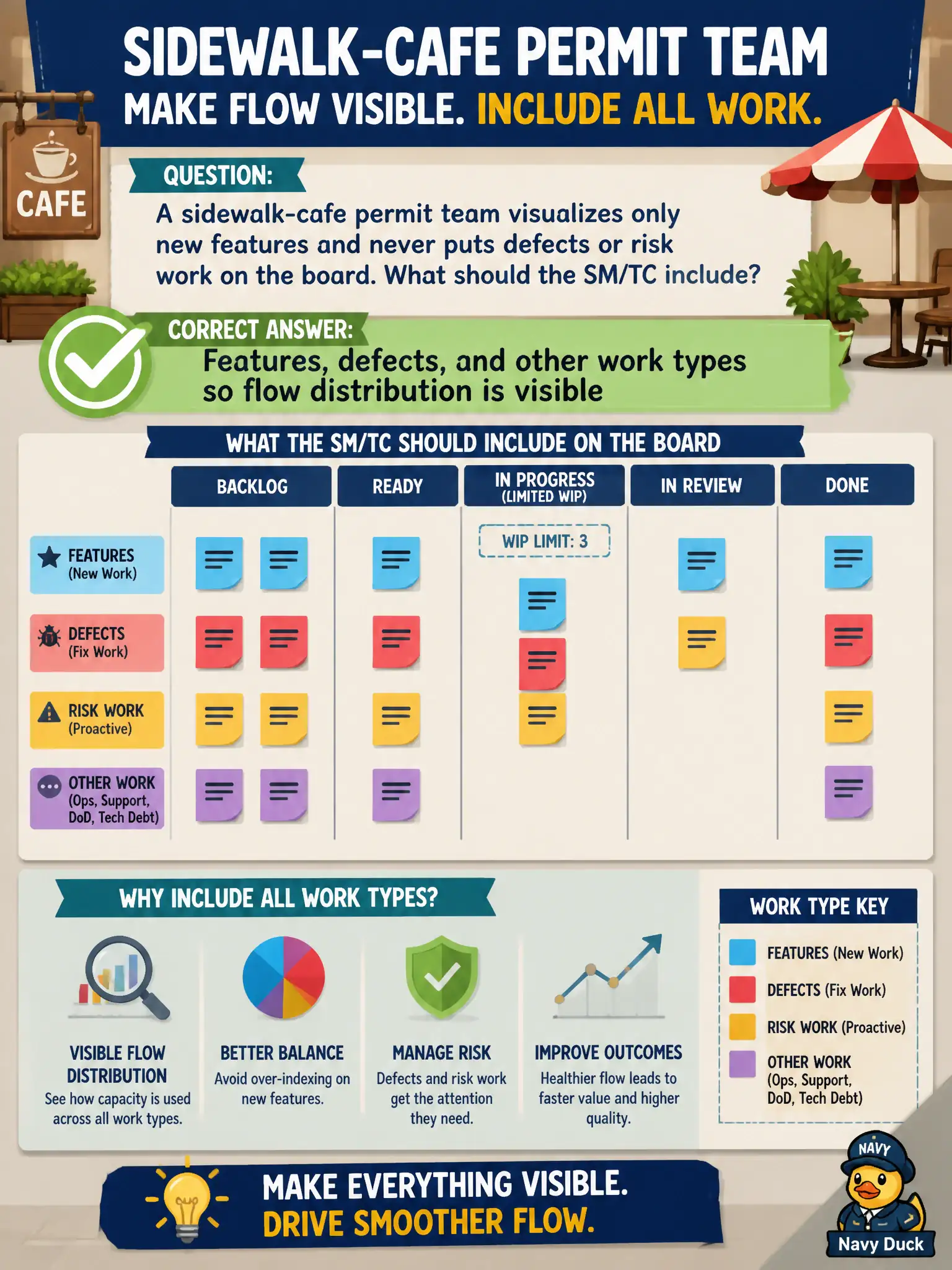
A sidewalk-cafe permit team visualizes only new features and never puts defects or risk work on the board. What should the SM/TC include?
Select an answer to reveal the explanation.
Short Explanation
A board of only new cafe features is a menu that hides the dishes being sent back. Defects and risk still eat capacity. Show the mix or “we shipped features” is a half-story.
Full Explanation
Boards should show Features, defects, and other work types so flow distribution is visible. A board of only new cafe or service features is a menu that hides the dishes being sent back. Defects and risk still eat capacity that residents experience as quality; distribution makes that trade-off inspectable.
Showing Features only because defects belong in a separate help-desk tool forever fails because separate tools hide capacity competition. Showing defects only after the PI so the board stays a feature showcase fails because delayed visibility prevents mid-PI adaptation. Leaving risk work as a footnote in the iteration review slide deck only fails because footnotes are not workflow management.
Exam caveat: flow distribution is a core flow metric family input—what kinds of work moved. Operational check: represent features, defects, and other types on the board or with clear tags, review distribution regularly, and adjust intake policies when defect load crowds out intended civic outcomes. Distribution reviews help Product Owners defend outcome mix when defect load silently consumes a PI. Distribution reviews help Product Owners defend outcome mix when defect load silently consumes a PI.