
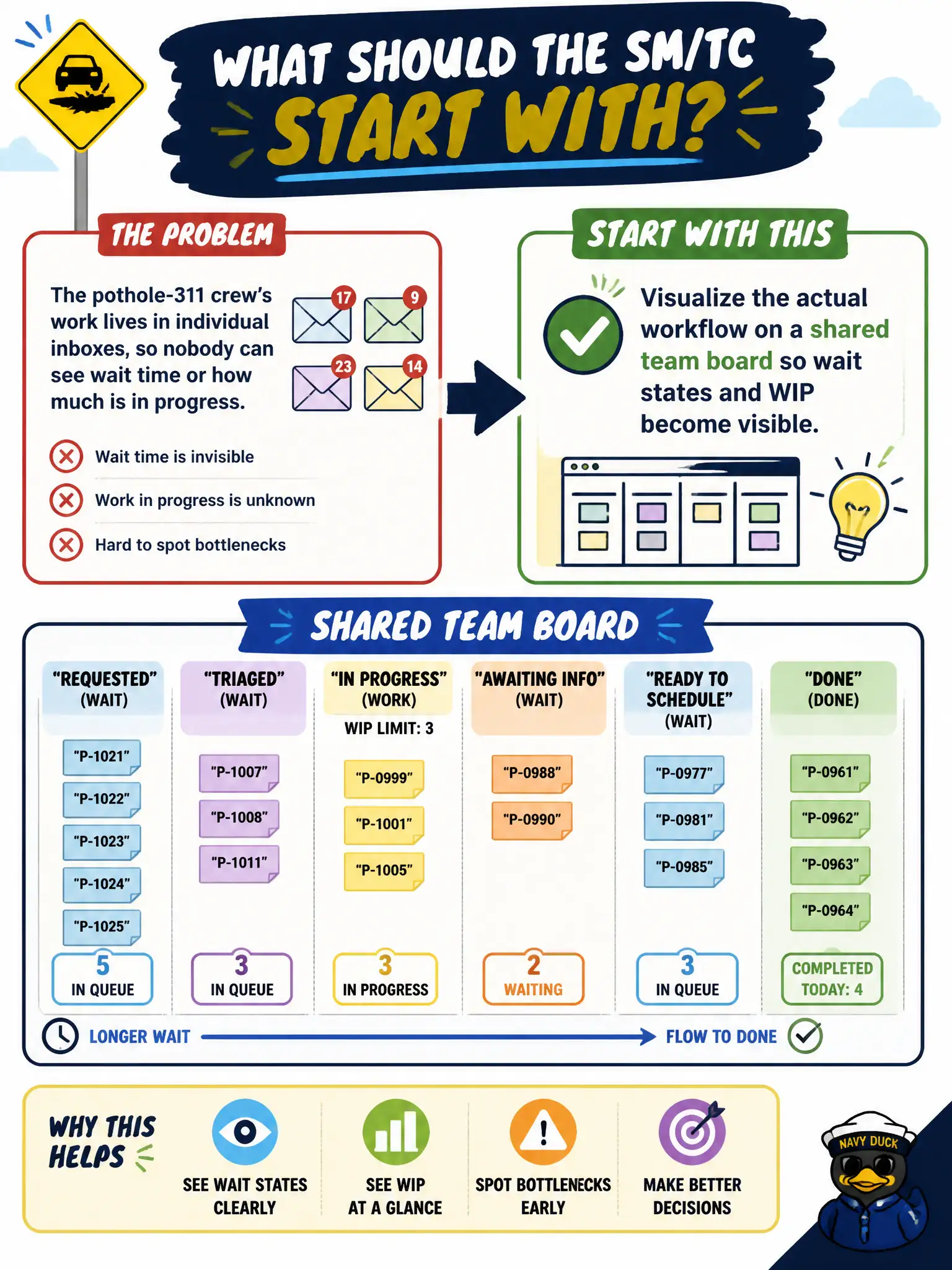
The pothole-311 crew’s work lives in individual inboxes, so nobody can see wait time or how much is in progress. What should the SM/TC start with?
Select an answer to reveal the explanation.
Short Explanation
Work stuck in private inboxes is like traffic with the streetlights off. You cannot manage wait time you cannot see. Put the real pothole workflow on a shared board first.
Full Explanation
When citizen requests or work orders hide in private inboxes, the SM/TC should visualize the actual workflow on a shared team board so wait states and WIP become visible. Work stuck in private inboxes is like traffic with the streetlights off: you cannot manage wait time you cannot see. Shared visualization is the first move toward flow management for municipal service work.
Mandating a citywide SLA dashboard before any team board exists fails because enterprise reporting without team visualization still leaves local waits invisible to the people who pull work. Assigning each inbox owner a personal utilization target fails because utilization of hidden work does not expose queues or handoffs. Converting every inbox item into story points so velocity can be reported fails because points on invisible work create metrics without transparency.
Exam caveat: see the work before optimizing SLAs or velocity narratives. Operational check: map the real states requests pass through, put them on a shared board the whole team uses daily, stop relying on private inboxes as the system of record, and only then layer service metrics on visible flow. Shared boards are how municipal service teams reclaim waits that private inboxes hide from both staff and residents.