
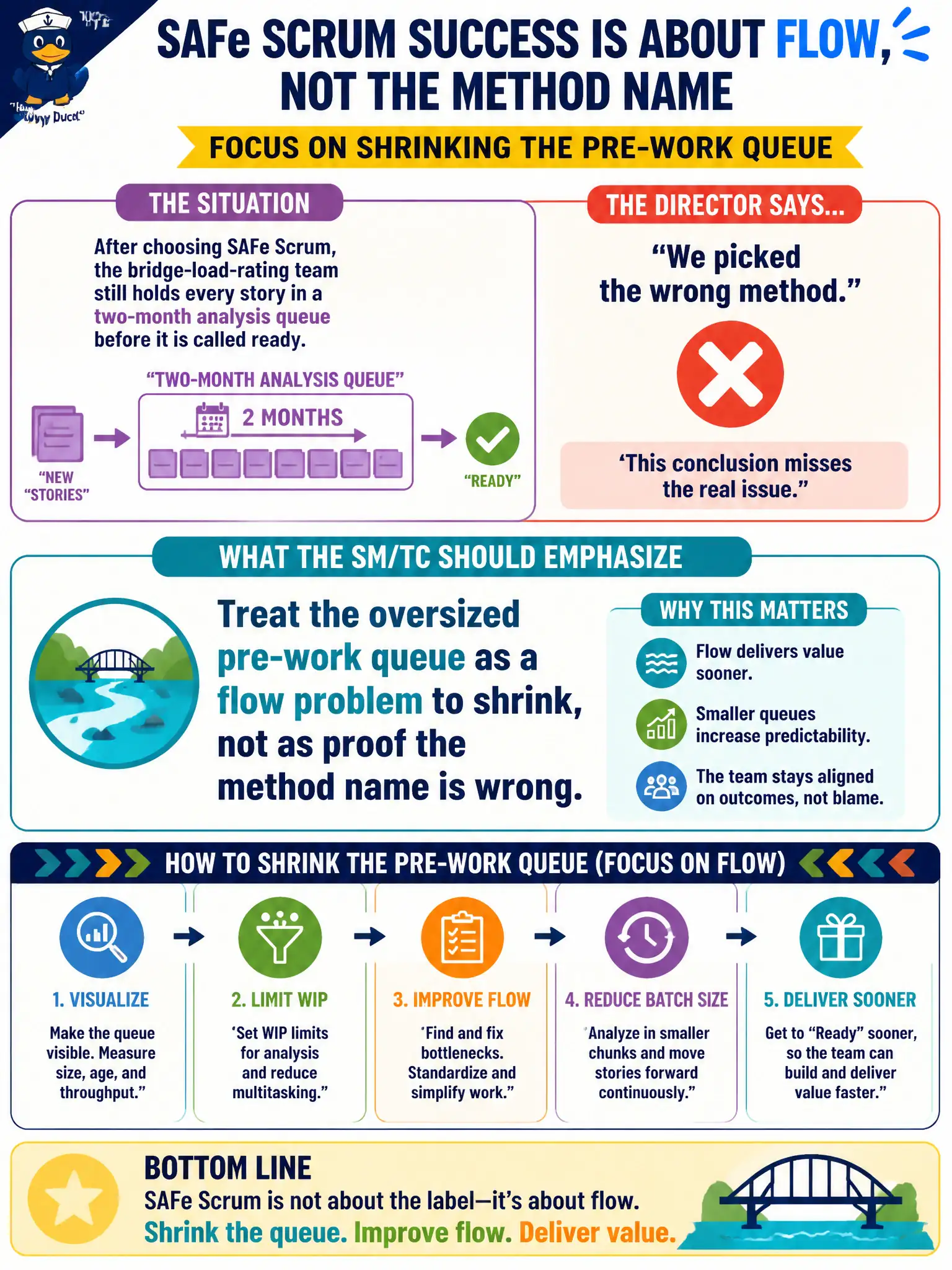
After choosing SAFe Scrum, the bridge-load-rating team still holds every story in a two-month analysis queue before it is called ready. A director says they picked the wrong method. What should the SM/TC emphasize?
Select an answer to reveal the explanation.
Short Explanation
A two-month analysis pile is a traffic jam, not a brand-name problem. Scrum or Kanban, giant queues still stall flow. Shrink the pre-work batch instead of swapping the logo on the board.
Full Explanation
An oversized pre-work or analysis queue on a permitting or similar team should be treated as a flow problem to shrink, not as proof the method name is wrong. A two-month analysis pile is a traffic jam under Scrum or Kanban; renaming the method does not clear the queue. Coaches attack queue size, batch size, and readiness policies rather than chasing a brand-name cure.
Switching immediately to Kanban because any analysis queue proves Scrum cannot work fails because giant queues stall flow under either method. Lengthening the iteration so the analysis queue fits inside the timebox fails because stretching the timebox hides the queue instead of reducing it. Moving analysis off the ART so Scrum teams only see ready stories fails because exporting the jam does not fix upstream flow and weakens transparency.
Exam caveat: method fit matters, but queue reduction is a flow intervention independent of the logo on the board. Operational check: measure analysis wait time and WIP, split work thinner, clarify ready policies, shrink the pre-work queue deliberately, and only then reconsider method if arrival patterns still misfit Scrum planning. Queue reduction protects applicants whether the team later confirms Scrum or Team Kanban as the better long-term fit.