
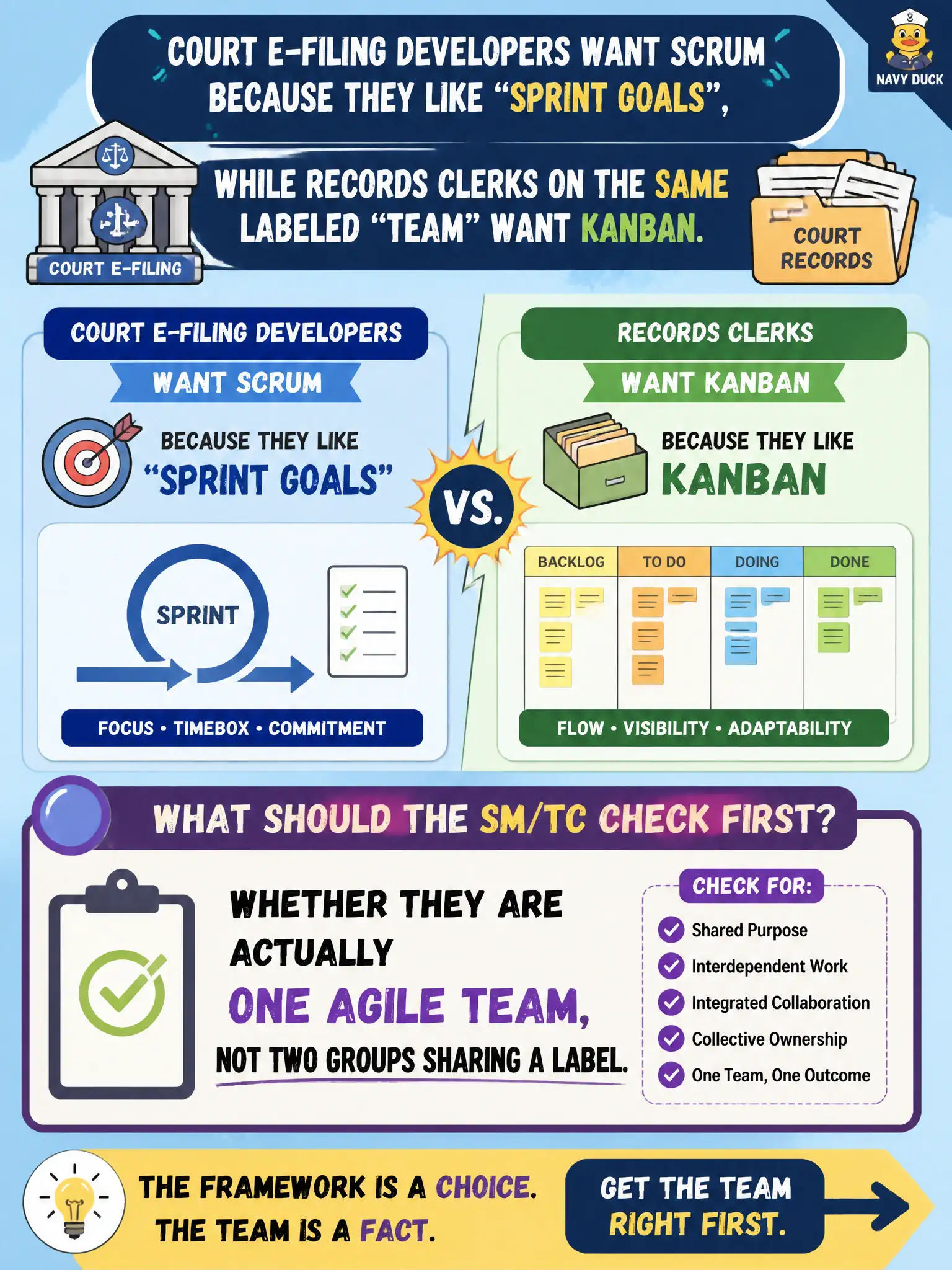
Court e-filing developers want Scrum because they like Sprint Goals, while records clerks on the same labeled “team” want Kanban. What should the SM/TC check first?
Select an answer to reveal the explanation.
Short Explanation
When developers and clerks want different methods, the first question is not 'Scrum or Kanban?' It is 'are we even one team?' A shared label on a court org chart is not an Agile Team. Sort the design, then pick the method.
Full Explanation
When developers and clerks on a court case-management effort want different methods, the first question is whether they are actually one Agile Team, not two groups sharing a label—not which method the administrator prefers. Method arguments often mask a team-design problem. One team shares goals, backlog, and Done; two groups sharing a name are not yet ready for a single method decision.
Choosing based on which method the court administrator prefers fails because preference ends the argument without resolving team identity or work fit. Waiting for the RTE to assign a method at PI Planning fails because train facilitation should not substitute for team design clarity. Splitting the difference with Scrum events in the morning and Kanban in the afternoon fails because a schizophrenic day papered over two groups is not one team method.
Exam caveat: decide "are we one team?" before "Scrum or Kanban?" Operational check: test whether developers and clerks share one backlog, one goal, and one Definition of Done; if not, redesign team boundaries; if yes, then choose a method from work-arrival evidence together as a working agreement. Court case-management groups that are not yet one team will thrash through method debates forever; design the team first, then select Scrum or Team Kanban.