
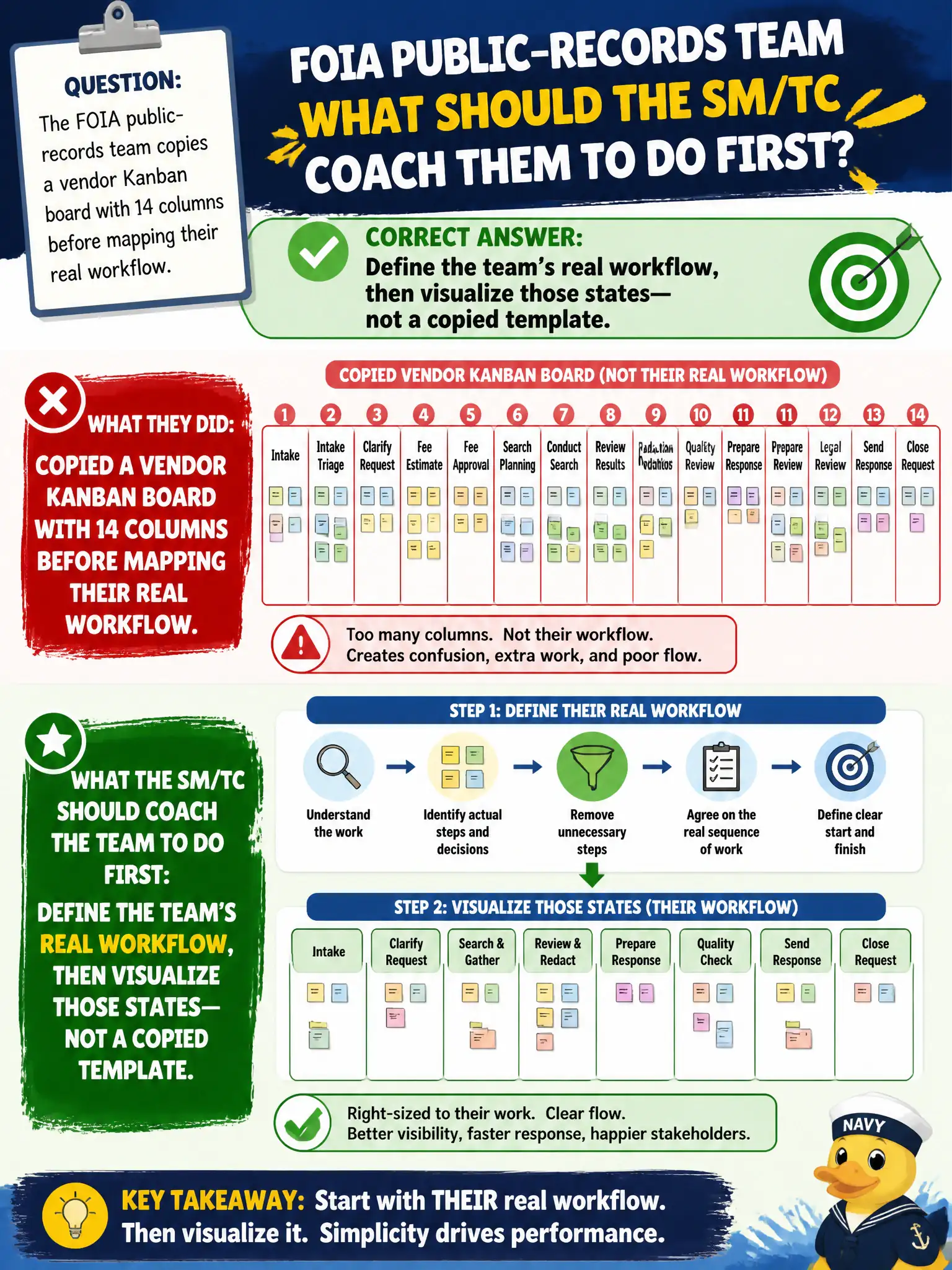
The FOIA public-records team copies a vendor Kanban board with 14 columns before mapping their real workflow. What should the SM/TC coach them to do first?
Select an answer to reveal the explanation.
Short Explanation
Copying a 14-column vendor board is hanging someone else's kitchen layout in the records office. First walk the real FOIA path — intake, redaction, legal, release — then put those steps on the wall. Templates are not the workflow.
Full Explanation
For FOIA or records teams copying a 14-column vendor board, the SM/TC should define the team's real workflow, then visualize those states—not a copied template. Hanging someone else's kitchen layout in the records office creates fake precision and unused columns. First walk how requests actually move; then name the states that matter.
Keeping all 14 columns so the vendor template remains "complete" fails because completeness of a template is not fidelity to the work. Collapsing forever to To Do / Doing / Done and never adding states fails because real wait states (legal review, redaction, approval) stay invisible. Hiring a tool admin to automate copied columns before talking to clerks fails because tooling the wrong model encodes waste.
Exam caveat: start from actual workflow, then tool; do not reverse that order. Operational check: shadow clerks through a real request, agree on the few states that describe movement and waits, build the board to match, and add columns later only when evidence shows a missing state—not because a vendor pack included one. FOIA and records requests typically include distinctive wait states; visualizing those waits is how coaches expose the real civic delay residents experience.