
Improvement items from the building-permits ART problem-solving workshop have no owners. How should the Scrum Master / Team Coach establish ownership without acting as a people manager?
Select an answer to reveal the explanation.
Short Explanation
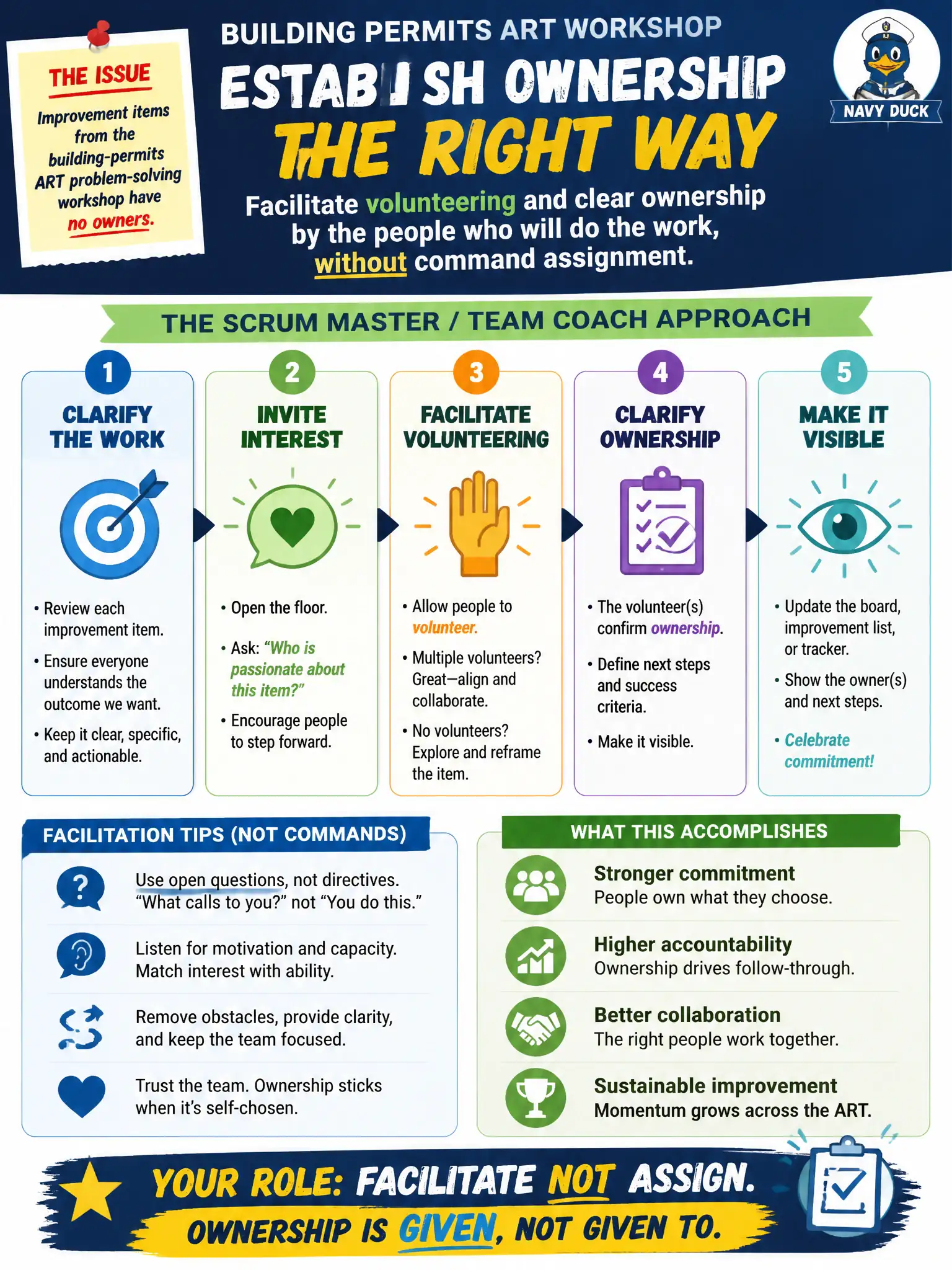
Ownerless improvement items are orphaned sticky notes. Permits work still needs a name on the card. Facilitate volunteering; do not assign like a foreman or dump it on the RTE.
Full Explanation
Improvement items need clear ownership by people who will do the work, facilitated through volunteering—not command assignment by a coach acting as people manager. Building-permits workshops that leave items ownerless stall. The Scrum Master / Team Coach establishes ownership without becoming the assigner of record from a utilization roster. RTE dumping every item upward also fails team ownership.
Assigning owners from a utilization roster the coach maintains as people manager crosses out of the coaching stance. Leaving items ownerless so nobody is blamed guarantees stalls. Putting every item on the RTE so teams stay clear removes the people who must change the work.
Exam caveat: facilitate ownership; do not command it as a line manager. Operational check: end permits problem-solving with a named volunteer owner on each improvement item.
Municipal ARTs feel problem-solving workshop quality as clearer permits, fairer housing intake, steadier water billing, and fewer blame cycles in public service. Facilitate evidence-based causes, restated problems, owned experiments, and follow-through into iteration events so residents experience the improvement. Re-check the improvement backlog at the next team sync.