
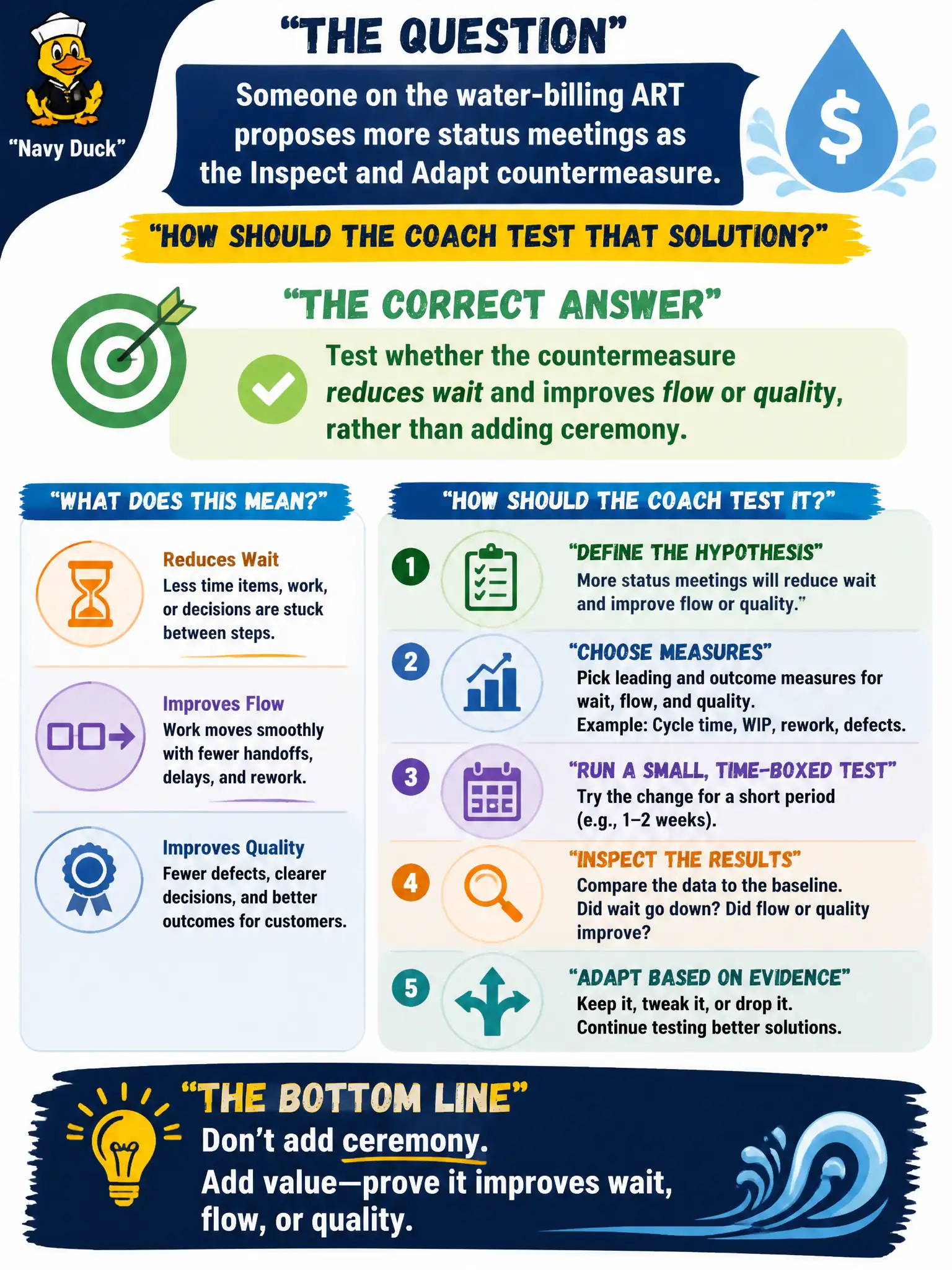
Someone on the water-billing ART proposes more status meetings as the Inspect and Adapt countermeasure. How should the coach test that solution?
Select an answer to reveal the explanation.
Short Explanation
More status meetings are extra weigh-ins, not a smaller wait for a water bill. Ask whether the idea cuts queue time or just adds ceremony. If it does not improve flow or quality, it is not a countermeasure.
Full Explanation
Countermeasures should reduce wait and improve flow or quality—not default to more status meetings. On a water-billing ART, “more status meetings” as an I&A solution often adds ceremony without fixing causes. The coach tests whether the proposal changes flow metrics or merely increases reporting. Visibility without shorter waits fails residents.
Accepting more status meetings because visibility “always” improves flow confuses reporting with flow design. Adding a daily executive standup on top intensifies the anti-pattern. Replacing the problem-solving workshop with a standing status hour deletes root-cause work.
Exam caveat: evaluate solutions against flow/quality outcomes, not meeting count. Operational check: ask which wait or defect the water-billing meetings would remove—and reject them if none.
Municipal ARTs feel problem-solving workshop quality as clearer permits, fairer housing intake, steadier water billing, and fewer blame cycles in public service. Facilitate evidence-based causes, restated problems, owned experiments, and follow-through into iteration events so residents experience the improvement. Re-check the improvement backlog at the next team sync. Re-check the improvement backlog at the next team sync.