
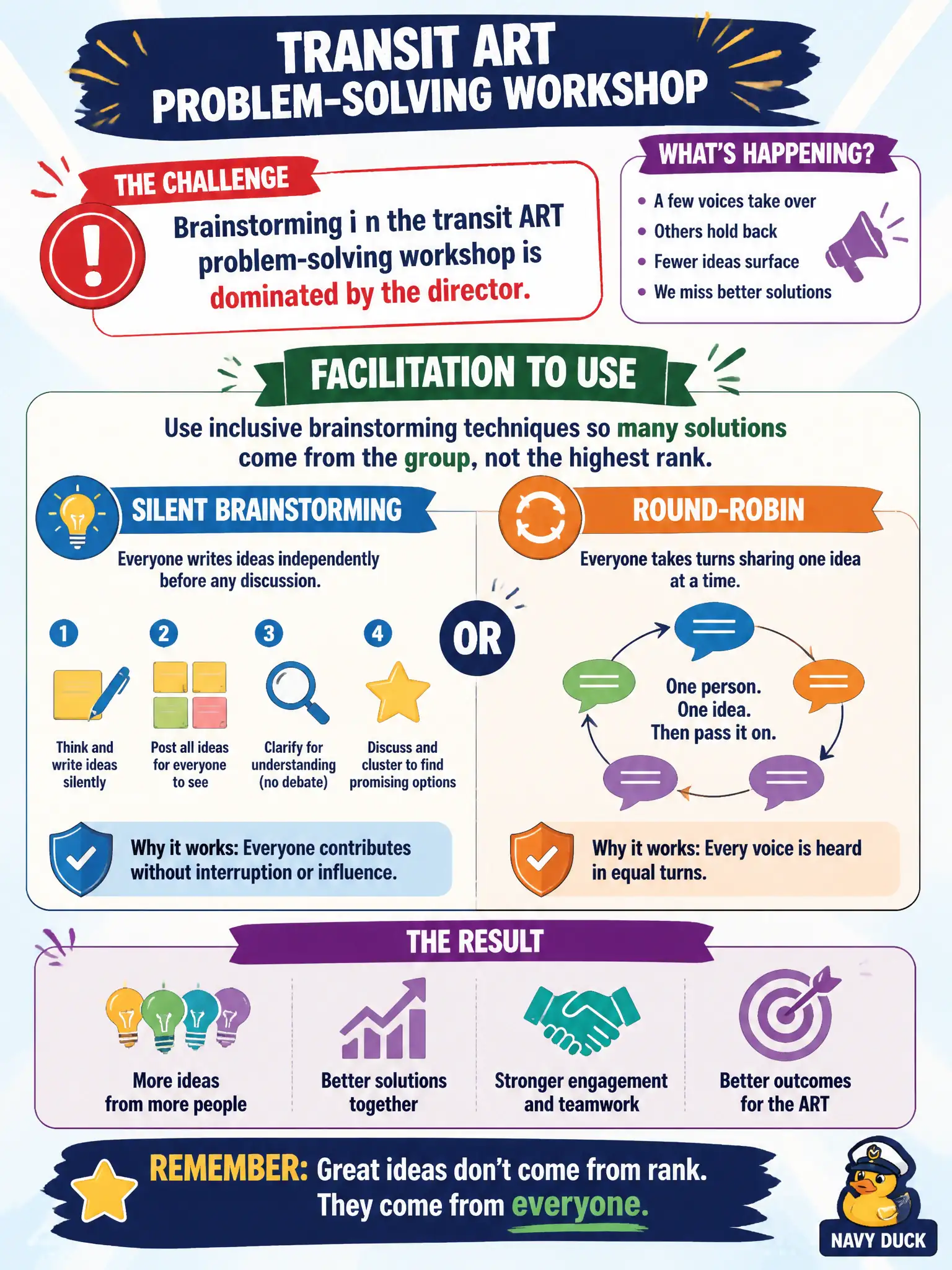
Brainstorming in the transit ART problem-solving workshop is dominated by the director. What facilitation should the Scrum Master / Team Coach use?
Select an answer to reveal the explanation.
Short Explanation
If the director talks first, everyone else is just nodding at the head of the table. Silent brainstorm or round-robin pulls ideas from the whole transit group. Rank should not win the whiteboard.
Full Explanation
Brainstorming should surface many solutions from the group, not only the highest rank. When a transit ART director dominates, use silent brainstorming or round-robin so operators and builders contribute. Facilitation equalizes airtime and improves solution quality for riders. Rank-based idea monopolies shrink the option set.
Letting the director dictate the short list so the workshop finishes on time sacrifices diversity of thought. Asking only managers to speak because they “represent” teams filters out frontline knowledge. Ending brainstorming after the first idea the director likes is premature convergence.
Exam caveat: facilitation techniques exist to counter hierarchy in workshops. Operational check: start transit brainstorming silent, then share, before any director prioritization.
Municipal ARTs feel problem-solving workshop quality as clearer permits, fairer housing intake, steadier water billing, and fewer blame cycles in public service. Facilitate evidence-based causes, restated problems, owned experiments, and follow-through into iteration events so residents experience the improvement. Re-check the improvement backlog at the next team sync. Re-check the improvement backlog at the next team sync.