
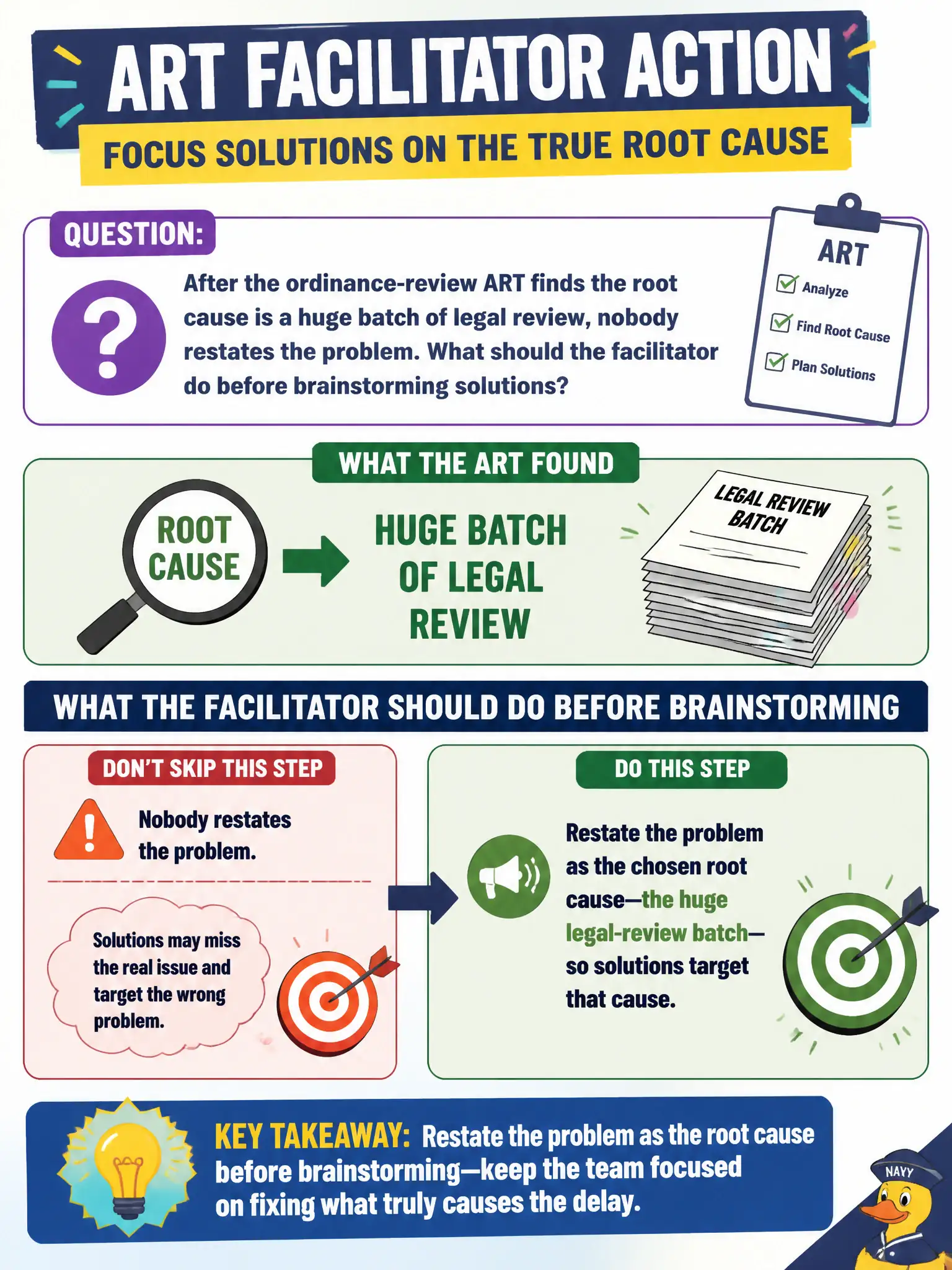
After the ordinance-review ART finds the root cause is a huge batch of legal review, nobody restates the problem. What should the facilitator do before brainstorming solutions?
Select an answer to reveal the explanation.
Short Explanation
If the cause is a giant legal batch, keep talking about "ordinance delays" and people will invent a new portal. Restate the problem as that batch. Then brainstorm how to shrink it.
Full Explanation
Once the root cause is known—a huge batch of legal review on an ordinance ART—restate the problem as that cause before brainstorming solutions. Otherwise solutions drift from the finding. The facilitator makes the restatement visible so experiments target batch size, not unrelated tooling. Civic ordinance flow improves when solutions match causes.
Brainstorming tools immediately while treating restatement as optional paperwork invites mismatch. Keeping the original problem statement after the root cause is known ignores the analysis. Writing the batch-size finding in the parking lot and generating unrelated solutions wastes the workshop.
Exam caveat: restatement links cause analysis to solutioning. Operational check: on the ordinance ART, rewrite the problem as “legal-review batch size” before any solution list starts.
Municipal ARTs feel problem-solving workshop quality as clearer permits, fairer housing intake, steadier water billing, and fewer blame cycles in public service. Facilitate evidence-based causes, restated problems, owned experiments, and follow-through into iteration events so residents experience the improvement. Re-check the improvement backlog at the next team sync.