
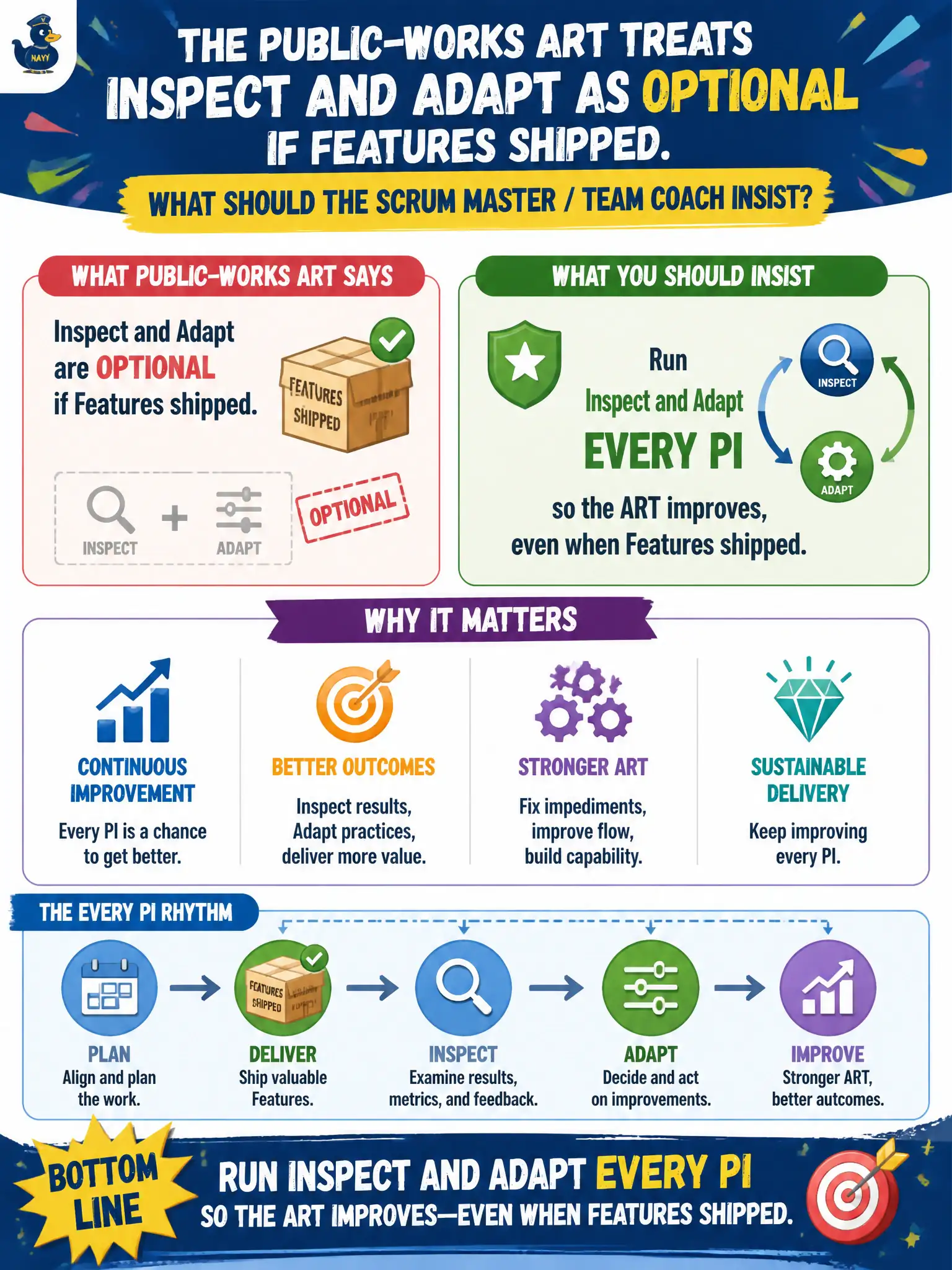
The public-works ART treats Inspect and Adapt as optional if Features shipped. What should the Scrum Master / Team Coach insist?
Select an answer to reveal the explanation.
Short Explanation
Shipping Features and skipping I&A is a road crew that paves and never walks the joints. Delivery is not the same as improvement. Run Inspect and Adapt every PI, including the ones that looked successful.
Full Explanation
Inspect and Adapt runs every PI so the ART improves—even when Features shipped. A public-works ART that treats I&A as optional after delivery skips measurement, demo learning, and problem-solving. The Scrum Master / Team Coach insists on the event because success still hides systemic drag residents will feel next PI. Shipping is not the same as improving.
Skipping I&A whenever Features shipped removes the improvement cadence after “good” PIs—when learning is easiest. Replacing I&A with an emailed Feature list eliminates inspection together. Holding I&A only for teams that missed Objectives turns the event into punishment theater.
Exam caveat: I&A is cadence-based, not failure-triggered. Operational check: schedule I&A on the calendar before the PI ends and keep it when Features are green.
Municipal ARTs feel Inspect and Adapt choices as safer shelter intake, fairer elections, cleaner water data, and clearer permits for the public. Keep facilitation transparent, include the whole Agile Team, and verify improvement items enter real backlogs with owners and check dates. After the event, confirm the next iteration planning agenda references the agreed experiments so civic delivery actually changes.