
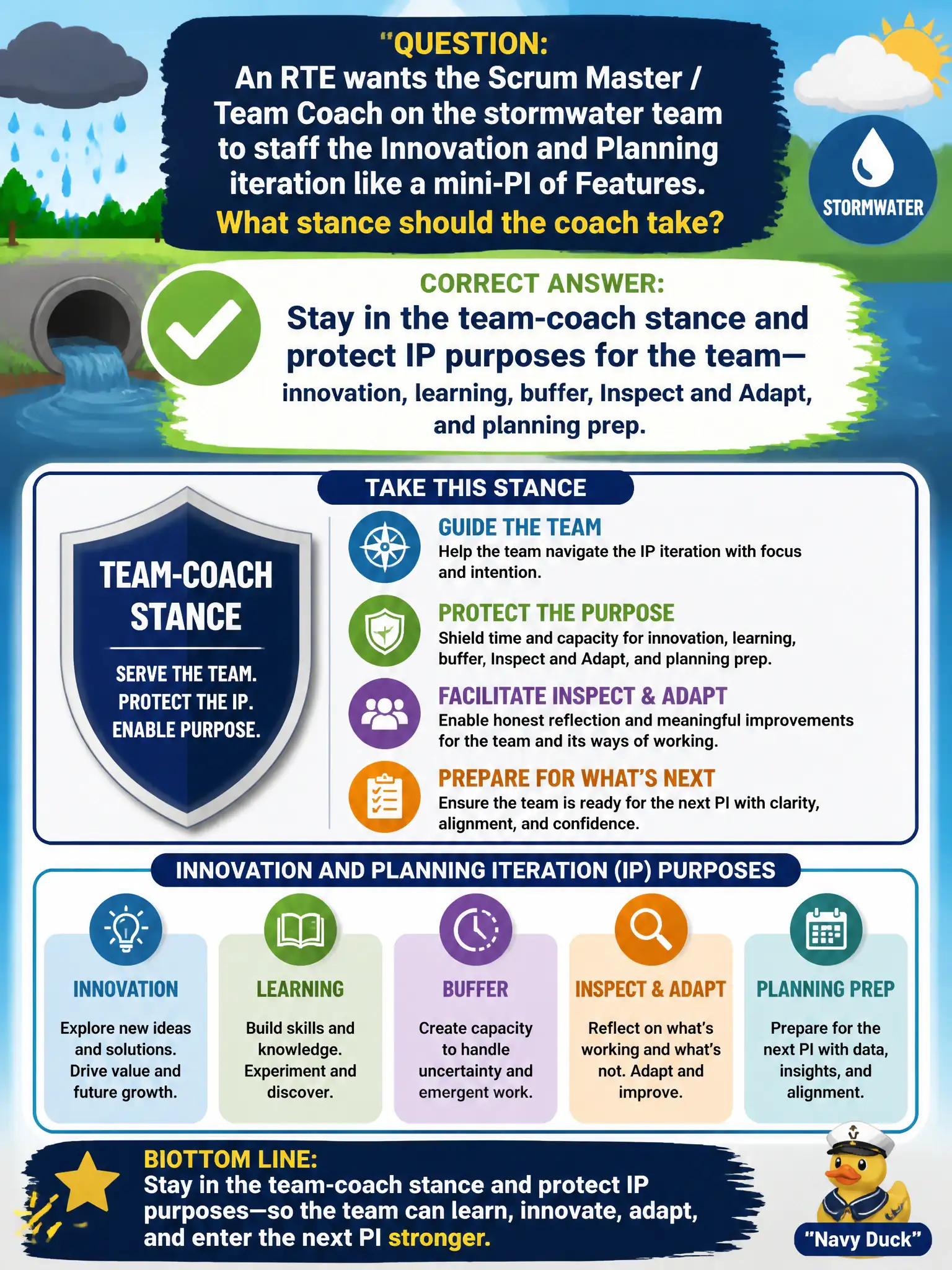
An RTE wants the Scrum Master / Team Coach on the stormwater team to staff the Innovation and Planning iteration like a mini-PI of Features. What stance should the coach take?
Select an answer to reveal the explanation.
Short Explanation
An RTE turning stormwater IP into a mini-Feature factory is using the spare week as another production line. The coach's job is the team's IP purposes, not extra Feature staffing. Hold the line on innovation, learning, buffer, I&A, and planning prep.
Full Explanation
The SM/TC stays in the team-coach stance for IP: protect innovation, learning, buffer, Inspect and Adapt, and planning prep for the stormwater team. An RTE request to staff IP like a mini-PI of Features pulls the coach into delivery management of the buffer. Collaborating with the RTE does not mean surrendering IP purposes. Civic capital and maintenance work still need slack and improvement time.
Staffing IP as extra Feature delivery because the RTE “owns team calendars” misstates roles and IP intent. Converting every IP day into Feature refinement owned by the Product Owner crowds out innovation and I&A prep. Escalating to cancel IP so Features continue without a buffer deletes predictability.
Exam caveat: coach the team’s IP purposes; do not become an extra delivery manager for IP. Operational check: publish stormwater IP purposes with the RTE and refuse Feature-only staffing of the buffer.
Municipal ARTs feel Inspect and Adapt and IP choices as safer shelter intake, fairer elections, cleaner water data, and clearer permits for the public. Keep facilitation transparent, include the whole Agile Team, and verify improvement items enter real backlogs with owners and check dates. After the event, confirm the next iteration planning agenda references the agreed experiments.