
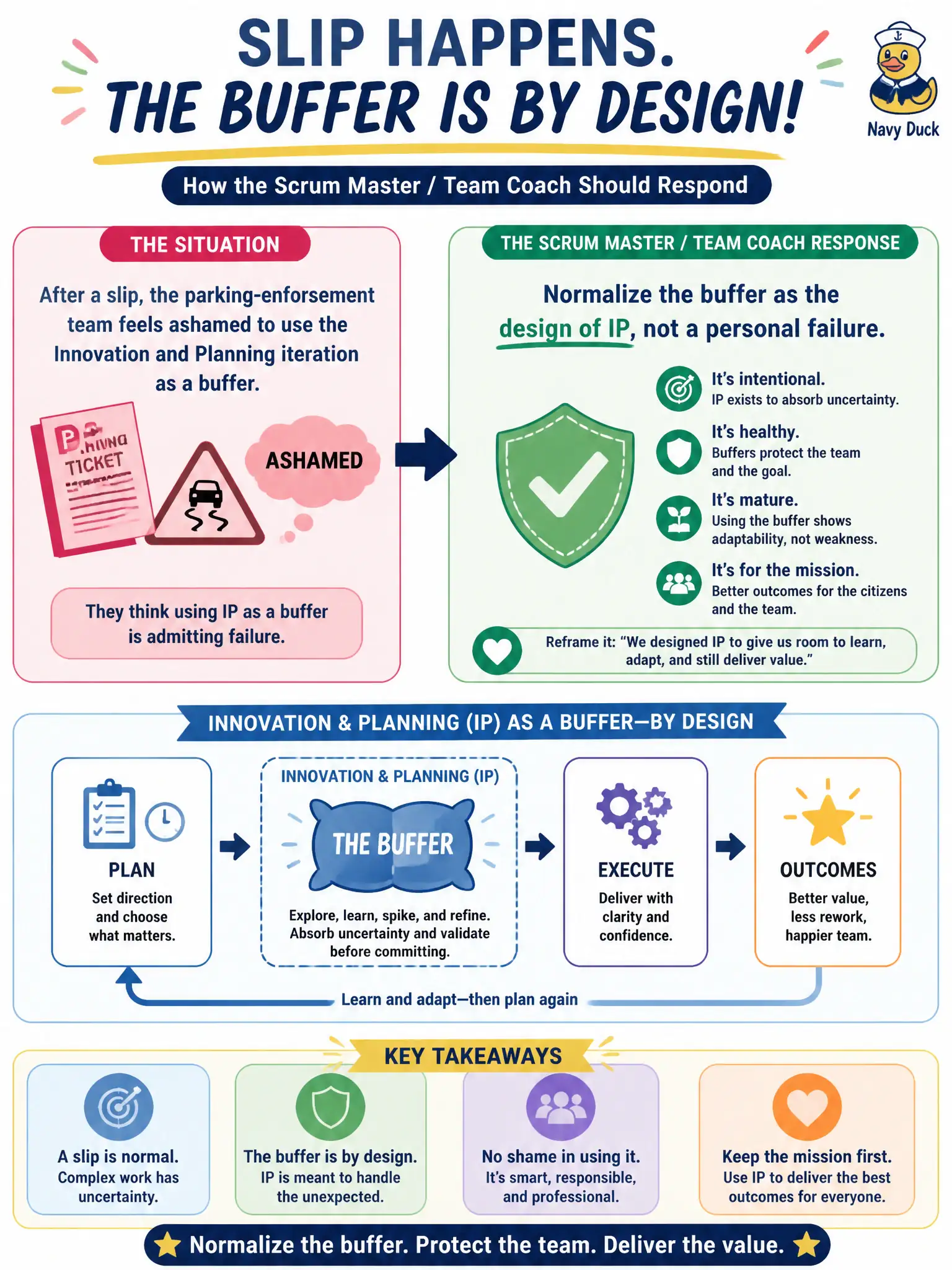
After a slip, the parking-enforcement team feels ashamed to use the Innovation and Planning iteration as a buffer. How should the Scrum Master / Team Coach respond?
Select an answer to reveal the explanation.
Short Explanation
Using the IP buffer after a parking-ticket slip is using the spare tire you packed on purpose. Shame is the wrong story. The buffer is the design, not a report card.
Full Explanation
The IP buffer is a design feature, not a personal failure. After a slip, a parking-enforcement team ashamed to use IP as buffer needs normalization: SAFe plans that slack so variability does not cascade. The Scrum Master / Team Coach reframes buffer use as responsible system design, then still protects learning and I&A inside IP. Shame-driven overtime recreates burnout without fixing flow.
Recording the slip as a utilization miss and freezing IP learning punishes empiricism. Requiring overtime so the team never touches the buffer destroys the buffer’s purpose. Hiding unfinished work from the RTE so the buffer is invisible breaks transparency.
Exam caveat: using IP buffer after variability is expected; hiding work is not. Operational check: show parking leadership how IP buffer absorbed risk without canceling learning—and keep both visible.
Municipal ARTs feel Inspect and Adapt and IP choices as safer shelter intake, fairer elections, cleaner water data, and clearer permits for the public. Keep facilitation transparent, include the whole Agile Team, and verify improvement items enter real backlogs with owners and check dates. After the event, confirm the next iteration planning agenda references the agreed experiments.