
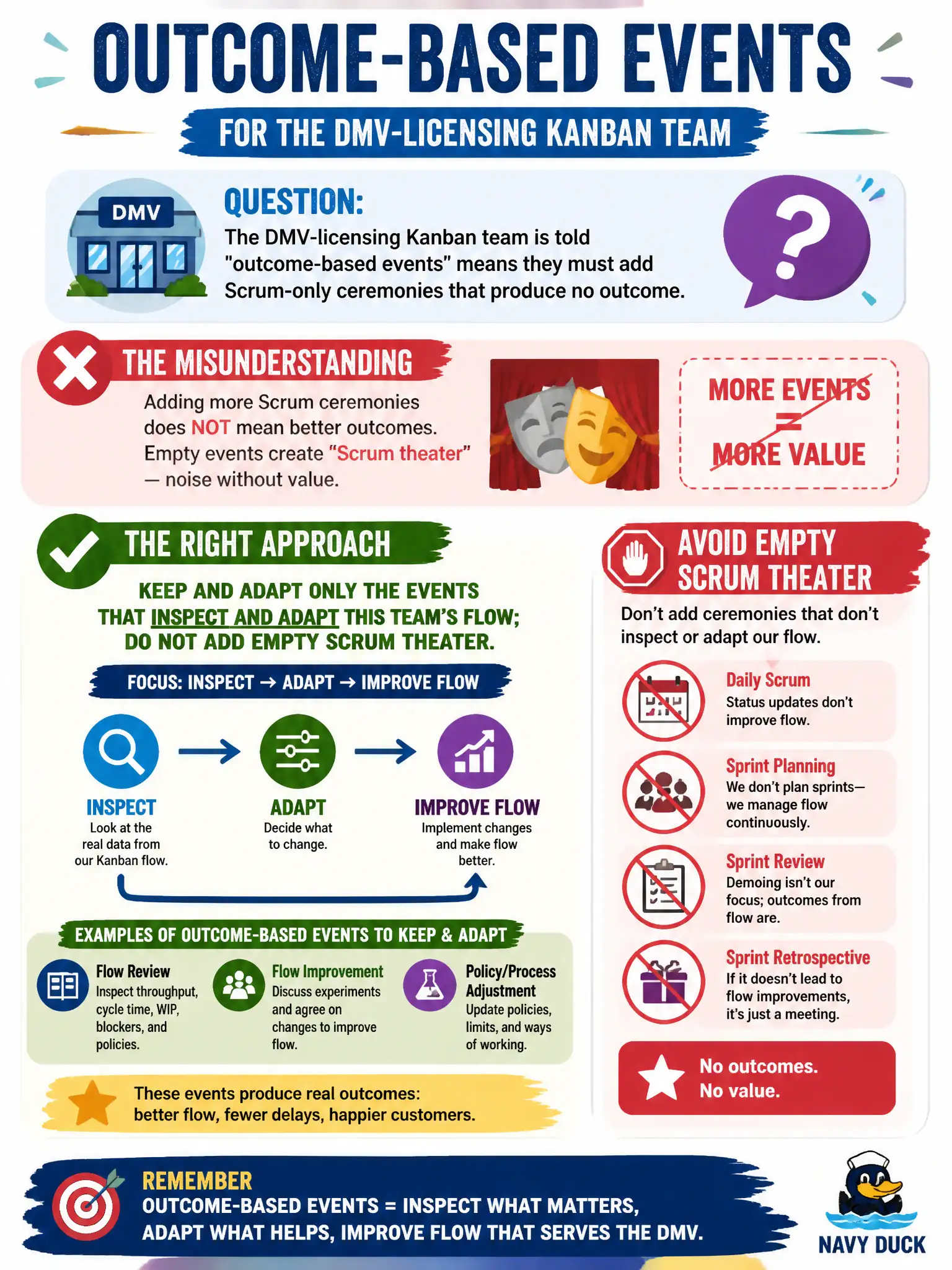
The DMV-licensing Kanban team is told "outcome-based events" means they must add Scrum-only ceremonies that produce no outcome. What should the Scrum Master / Team Coach keep?
Select an answer to reveal the explanation.
Short Explanation
Bolting a Scrum script onto a DMV Kanban board is putting a conductor on a subway that already has a dispatcher. Outcome-based means keep the sessions that inspect this team's flow. Empty Scrum theater is not a promotion.
Full Explanation
Outcome-based events mean keeping the inspections that improve this team’s flow—not adding empty Scrum theater to a DMV-licensing Kanban team. The Scrum Master / Team Coach adapts events to how licensing work arrives and flows, preserving ART cadence without forcing Sprint Goals that add no inspection value. Residents in licensing lines benefit from flow visibility, not from ceremonies copied for compliance.
Installing full Scrum Iteration Planning and a Sprint Goal even when they add no flow inspection creates cargo-cult overhead. Dropping all events because “Kanban never inspects on ART cadence” abandons shared train rhythm. Copying the RTE’s ART Sync agenda onto the team board as the only event mis-scales ART coordination to the team.
Exam caveat: Kanban teams still inspect and adapt; they need not clone every Scrum ceremony. Operational check: list which DMV events actually change WIP, policies, or readiness—keep those; drop theater.
In municipal ARTs, residents experience these coaching choices as faster or slower public services—licensing lines, housing decisions, water bills, snow routes, and emergency response—so keep events and buffers tied to inspect-and-adapt outcomes. Record the decision, the owner, and the next inspection date so the team can verify civic impact.