
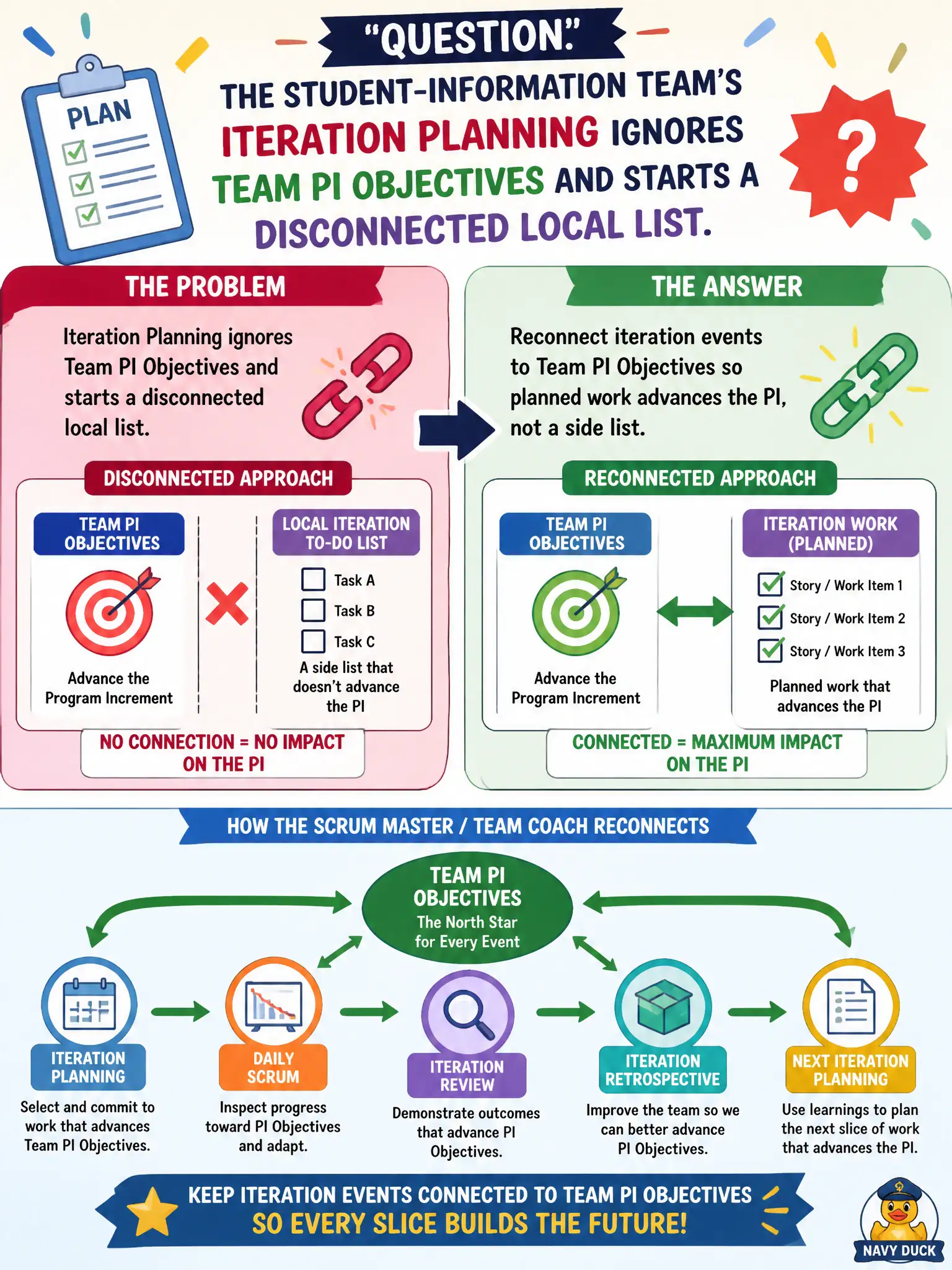
The student-information team's Iteration Planning ignores Team PI Objectives and starts a disconnected local list. What should the Scrum Master / Team Coach reconnect?
Select an answer to reveal the explanation.
Short Explanation
Planning a student-information sprint like a private to-do pad ignores the PI map the ART already drew. Team events exist to move Team PI Objectives, not a side list. Point the plan back at those objectives or the iteration is sightseeing.
Full Explanation
Iteration events should advance Team PI Objectives, not a disconnected local list. When a student-information team ignores PI Objectives in Iteration Planning, school-year outcomes drift while clerks stay busy. The Scrum Master / Team Coach reconnects planning to the PI Objectives so each iteration contributes to what the ART committed for students and families. Side lists create shadow portfolios.
Ranking stories by clerk overtime hours optimizes fatigue signals over educational outcomes. Replacing PI Objectives with a director’s weekly steering list breaks PI alignment. Letting the team ignore PI Objectives until Inspect and Adapt postpones the reconnect too late.
Exam caveat: team cadence serves PI intent; localism without Objectives fails SASM event questions. Operational check: open student-info Iteration Planning by reading Team PI Objectives, then select work that advances them.
In municipal ARTs, residents experience conflict outcomes as delayed permits, missed benefits, unsafe shelter conditions, or opaque public data—so the Scrum Master / Team Coach keeps facilitation tied to service flow, safety, and transparent inspection rather than positional wins. Document the chosen frame or strategy, the evidence used, and the next check date so the team can see whether the intervention improved civic delivery.