
Grants-management Product Owners secretly use AI to rewrite Team PI Objectives without the team. What should the SM/TC coach?
Select an answer to reveal the explanation.
Short Explanation
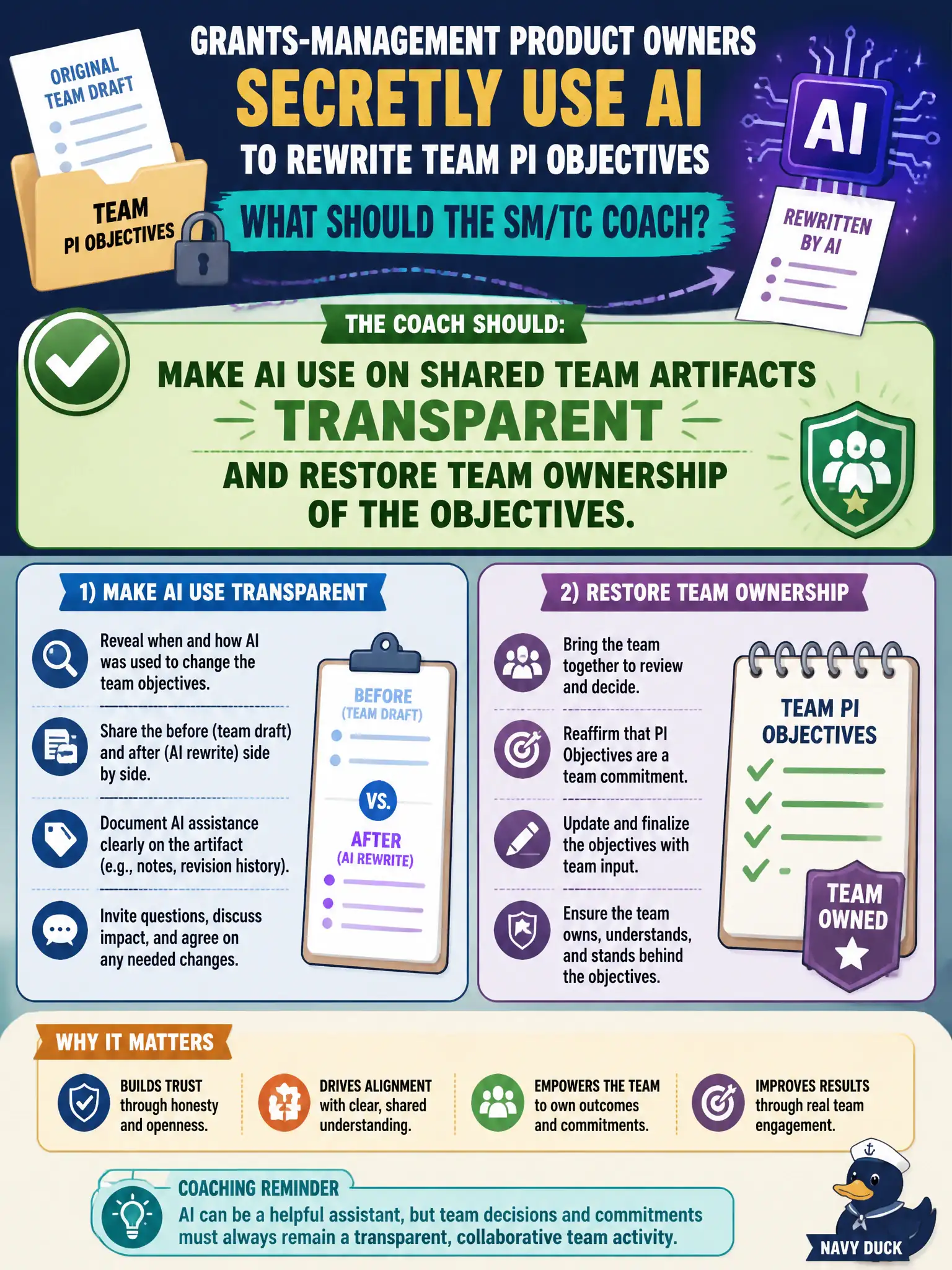
If someone quietly swaps the grants team's PI Objectives overnight, that is not 'professional polish' — it is a closed-door rewrite. AI on shared artifacts has to be visible, and the team still owns the objectives. Shine a light, then put the wording back in the room.
Full Explanation
When grants-management Product Owners secretly use AI to rewrite Team PI Objectives without the team, the SM/TC should make AI use on shared team artifacts transparent and restore team ownership of the objectives. Quiet overnight swaps are closed-door rewrites, not professional polish. Transparency and team ownership outrank cleaner prose for civic planning integrity.
Accepting rewritten objectives because the wording sounds more professional fails because tone never outranks transparency or the team's plan. Treating PI Objectives as Product Owner documents the team does not need to see fails because Team PI Objectives are the team's commitments, not PO-private papers. Escalating the rewrite as an RTE planning-facilitation failure and stopping PO coaching fails because this is a team-level transparency and ownership coaching issue, not an RTE ownership problem.
Exam caveat: responsible AI on shared artifacts requires visible collaboration, not secret edits. Operational check: surface the secret rewrite, restore a team conversation to reclaim objective wording, agree that AI edits to shared artifacts are visible, and coach the PO on collaborative use rather than abandoning that coaching relationship.