
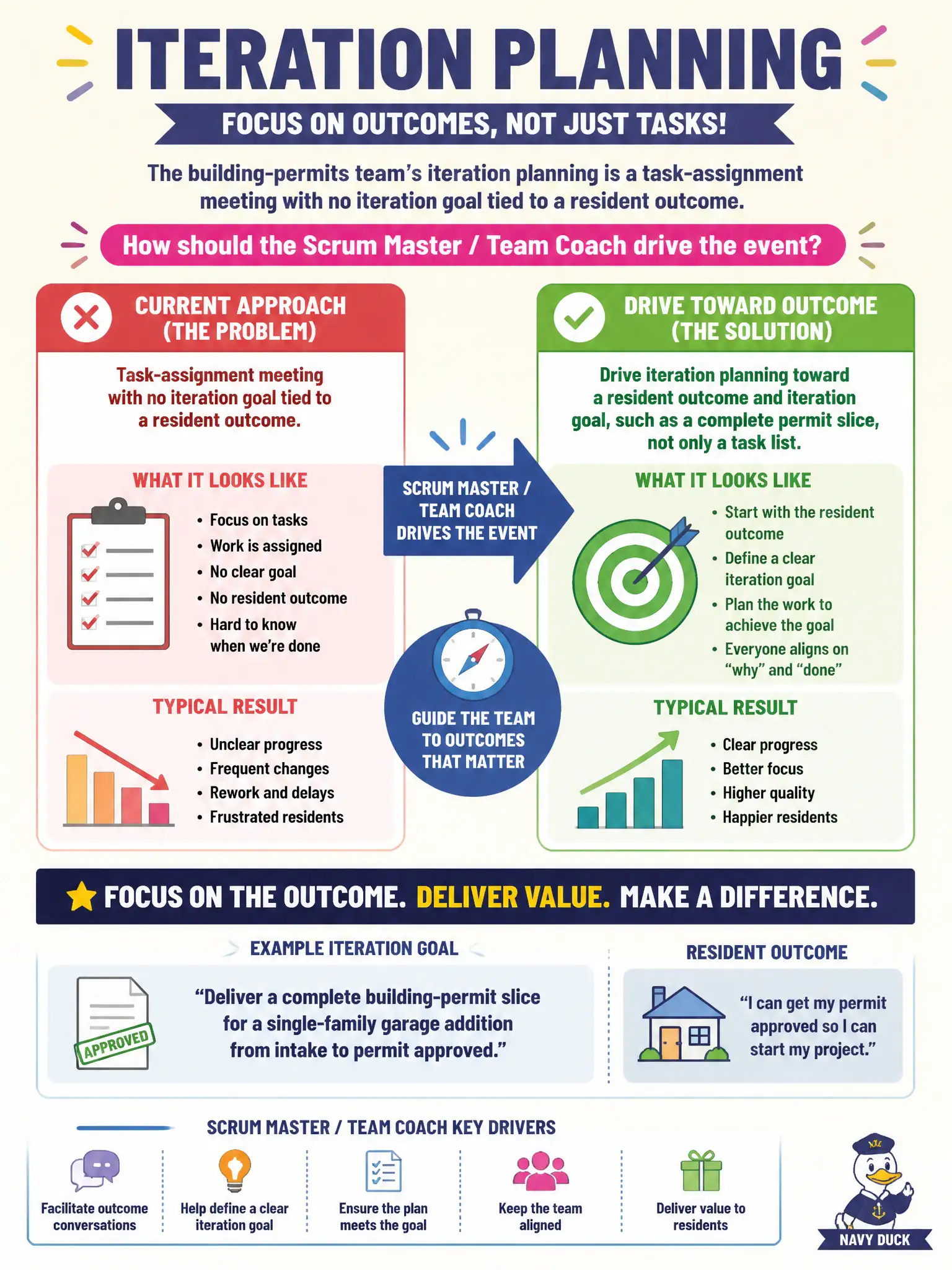
The building-permits team’s iteration planning is a task-assignment meeting with no iteration goal tied to a resident outcome. How should the Scrum Master / Team Coach drive the event?
Select an answer to reveal the explanation.
Short Explanation
A pile of assigned inspection tickets is a chore chart, not a plan. Residents care whether a permit slice actually finishes. The coach points planning at that outcome, not at who got which task.
Full Explanation
Iteration Planning should produce a shared iteration goal tied to a resident outcome, not only a task-assignment list. On a building-permits team, clerks need a complete permit slice or similar outcome they can inspect together. The Scrum Master / Team Coach drives the event toward that goal so planning creates focus and a testable increment for applicants, rather than a utilization sheet of named tickets.
Keeping pure task assignment without a resident-tied goal fragments the iteration into busywork. Skipping planning and pulling whatever is on top abandons intentional selection of value. Turning planning into a utilization forecast for the bureau measures staffing theater, not outcomes.
Exam caveat: SAFe team events exist to advance outcomes on the ART cadence, not to allocate tasks alone. Operational check: end permits Iteration Planning by stating the iteration goal in resident terms and confirming the team can demo progress against it.
In municipal ARTs, residents experience conflict outcomes as delayed permits, missed benefits, unsafe shelter conditions, or opaque public data—so the Scrum Master / Team Coach keeps facilitation tied to service flow, safety, and transparent inspection rather than positional wins. Document the chosen frame or strategy, the evidence used, and the next check date so the team can see whether the intervention improved civic delivery.