
Zoning-board workflow coaches generate several facilitation-option agendas with AI. How should they use those options?
Select an answer to reveal the explanation.
Short Explanation
AI is the copier that spits out three zoning-hearing agendas before coffee — useful, and not in charge. The team still picks which hearing style they will actually run. Do not let the copier chair the meeting.
Full Explanation
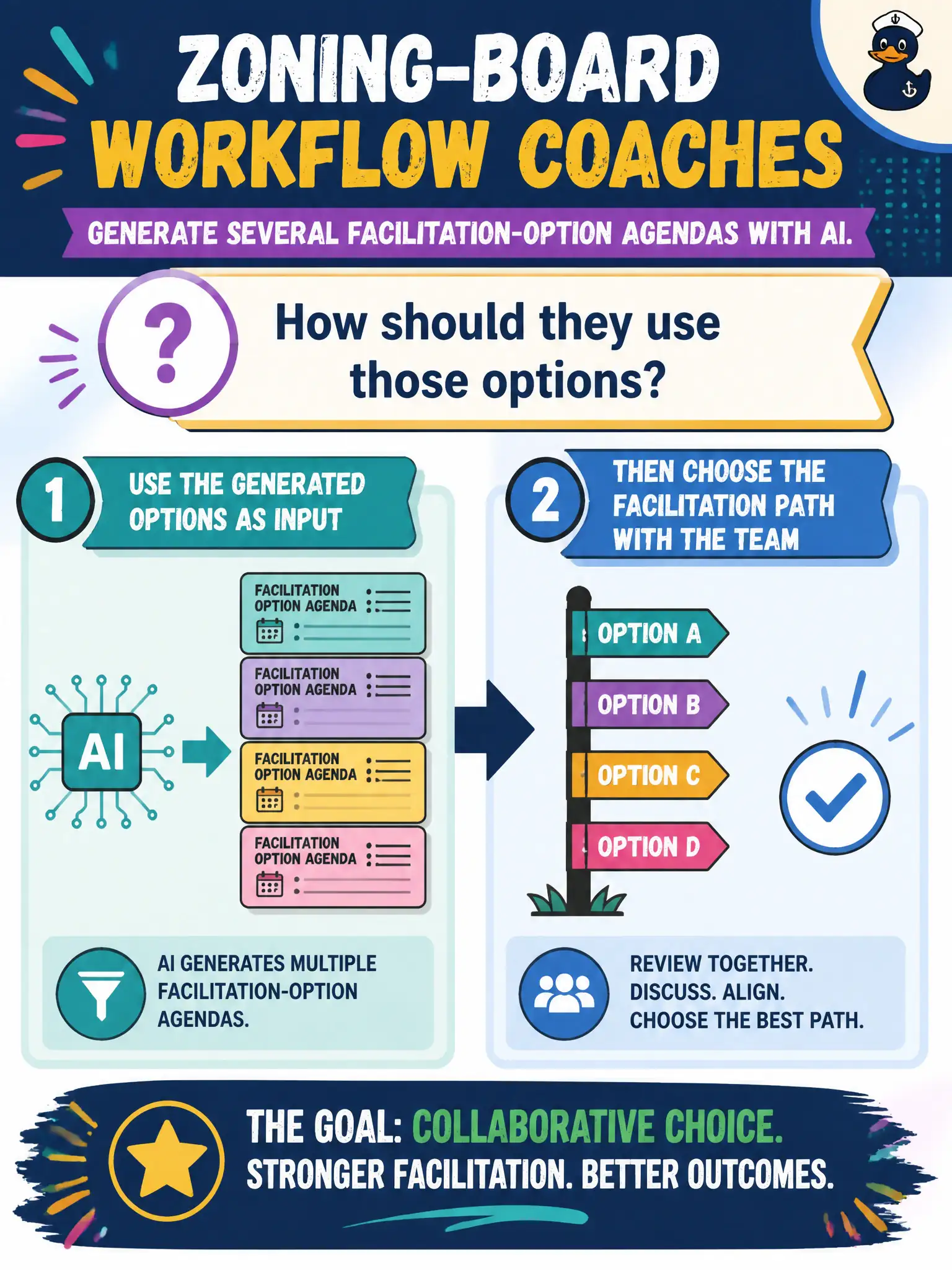
Zoning-board workflow coaches who generate several facilitation-option agendas with AI should use those options as input, then choose the facilitation path with the team. Option generation is a strong AI pattern: it surfaces designs under time pressure, while humans still decide which hearing style they will actually run. The copier that spits out three agendas is useful and not in charge.
Running every generated agenda in the same iteration fails because parallel experiments on facilitation form overload the team and muddy what worked. Letting the model rank agendas and auto-select the top one fails because ranking is not a substitute for team ownership of how it collaborates. Handing agendas to the city attorney to pick the legally safest path fails because legal review is not the default owner of team facilitation design.
Exam caveat: generate options, then decide with people—do not outsource the choice to the model or to the wrong role. Operational check: present two or three AI-drafted agenda options, facilitate selection with the zoning team, run the chosen path, and inspect whether the event achieved its purpose before iterating the design. In zoning and other civic hearing workflows, facilitation quality is a public-trust issue: rushed or model-chosen agendas can silence residents and staff who need a workable path.