
During PI Planning, the flood-map team and the alert-notification team sit in different buildings with no shared board. What should the Scrum Master / Team Coach ensure?
Select an answer to reveal the explanation.
Short Explanation
Flood maps that never meet the alert team are a siren with no map and a map with no siren. PI Planning is when those dependencies should be on a shared board, not guessed across parking lots. Move seats or screens until the handshake is visible.
Full Explanation
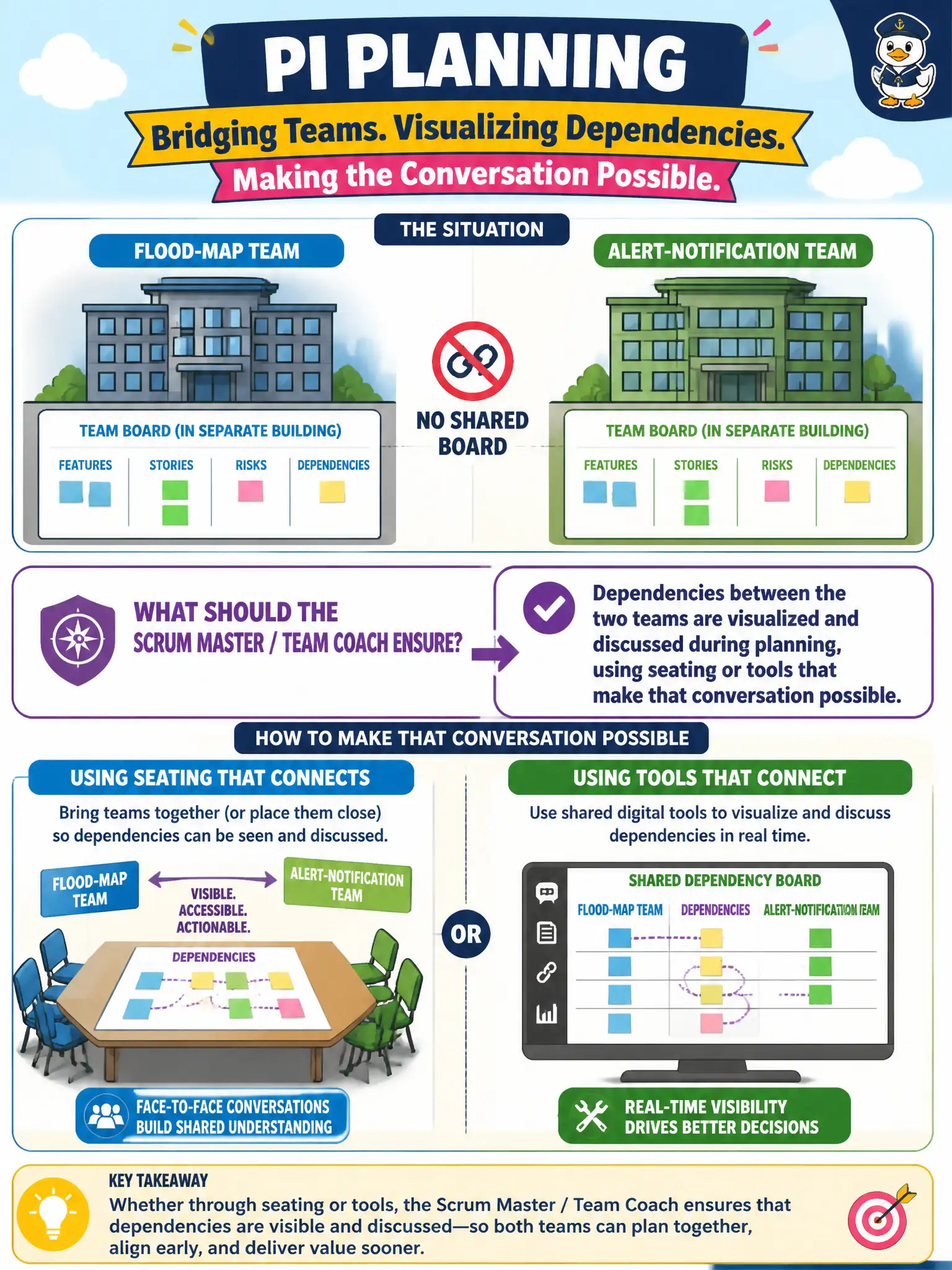
During PI Planning, flood-map and alert-notification teams that sit in different buildings with no shared board still need their dependencies visualized and discussed, using seating or tools that make that conversation possible. Maps without alerts and alerts without maps fail residents during flood events; planning is when those handshakes should be explicit. Planning each building in isolation and emailing dependencies on the last day of the PI discovers coupling too late to adjust capacity. Letting the coach memorize both plans makes the coach the only person who knows the handshake and recreates a single point of failure. Skipping dependency talk because the products "feel different" ignores the resident outcome that joins them. Exam caveat: SASM expects dependency visualization and discussion in PI Planning even across physical separation; coach-as-memory and end-of-PI email are not substitutes. Operational check: create a shared dependency board (physical or digital) visible to both buildings, seat or virtually connect the flood-map and alert planners for the dependency portion of PI Planning, record named handoffs with owners and timing, and confirm during the first iterations that those dependencies are being worked rather than rediscovered in incident response. Keep the visualization living through the PI, not only on planning day.