
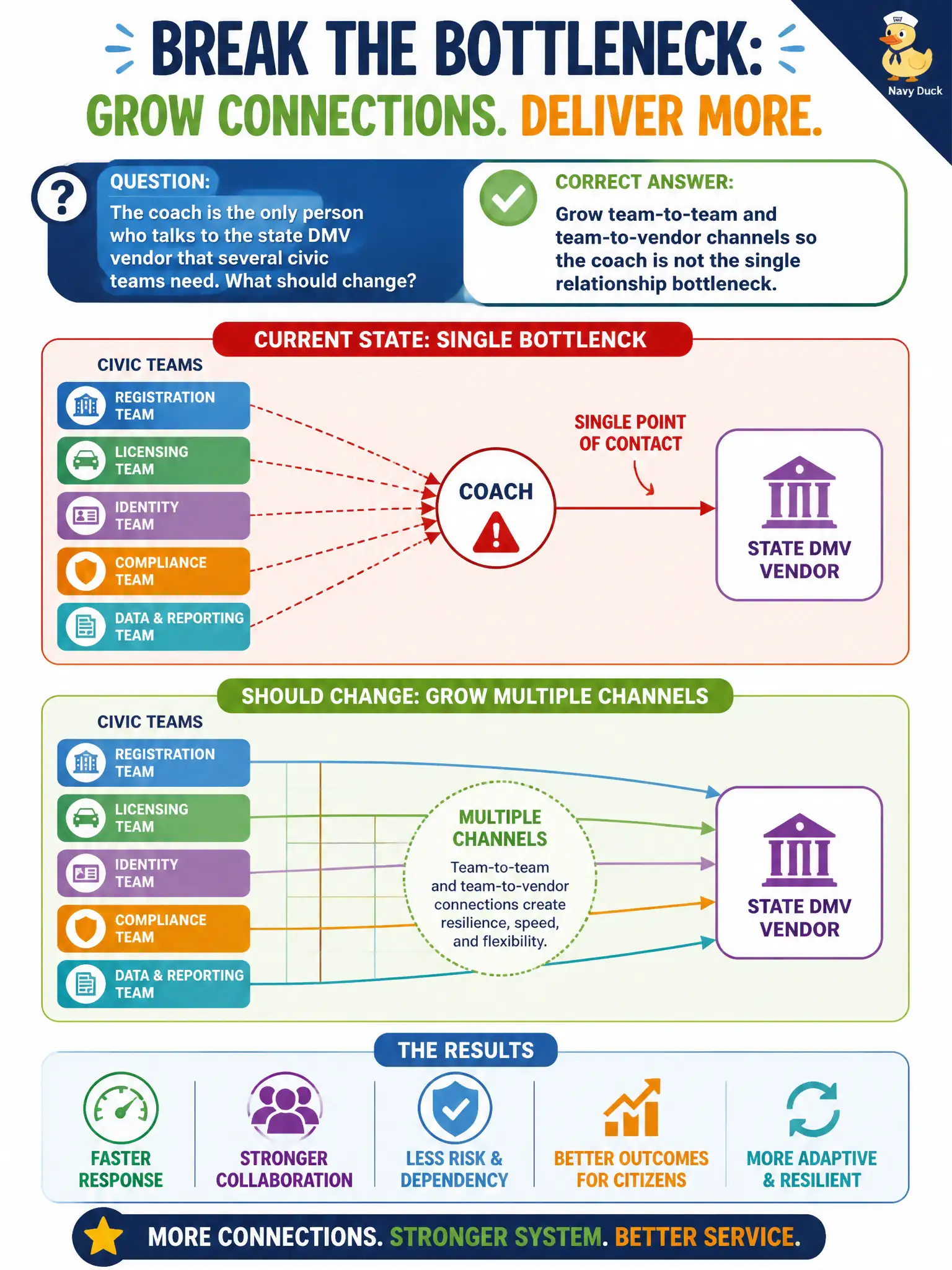
The coach is the only person who talks to the state DMV vendor that several civic teams need. What should change?
Select an answer to reveal the explanation.
Short Explanation
Hoarding the DMV vendor number is hiding the only spare key to the fleet yard. When the coach is on leave, license work stops. Open the channel so teams can talk to the vendor—and to each other—without a gatekeeper.
Full Explanation
When the coach is the only person who talks to a state DMV vendor that several civic teams need, the relationship must broaden into team-to-team and team-to-vendor channels so the coach is not the single bottleneck. Exclusive coach control of vendor answers concentrates knowledge and stops license-related work when the coach is unavailable. Banning teams from contacting the vendor and routing everything through a legal hold may be appropriate for narrow privileged matters, but as a blanket collaboration pattern it freezes learning and creates artificial delay. Moving the vendor contract under the RTE so train-level secrecy replaces coach secrecy merely relocates the single throat to choke without empowering the teams that consume the interface. Growing shared channels lets teams ask operational questions, share answers across teams, and keep the coach facilitating rather than gatekeeping. Exam caveat: SASM builds high-performing multi-team collaboration by removing coach-as-bottleneck relationship patterns; it is not coach exclusivity, not universal legal-hold routing, and not RTE secrecy as the cure. Operational check: publish an agreed vendor contact path and FAQ for the DMV interface, invite at least two team representatives into the next vendor working session, capture decisions where all consuming teams can see them, and verify a team can resolve a routine question without the coach as intermediary. Reassess privileged topics separately so openness does not violate real legal constraints.