
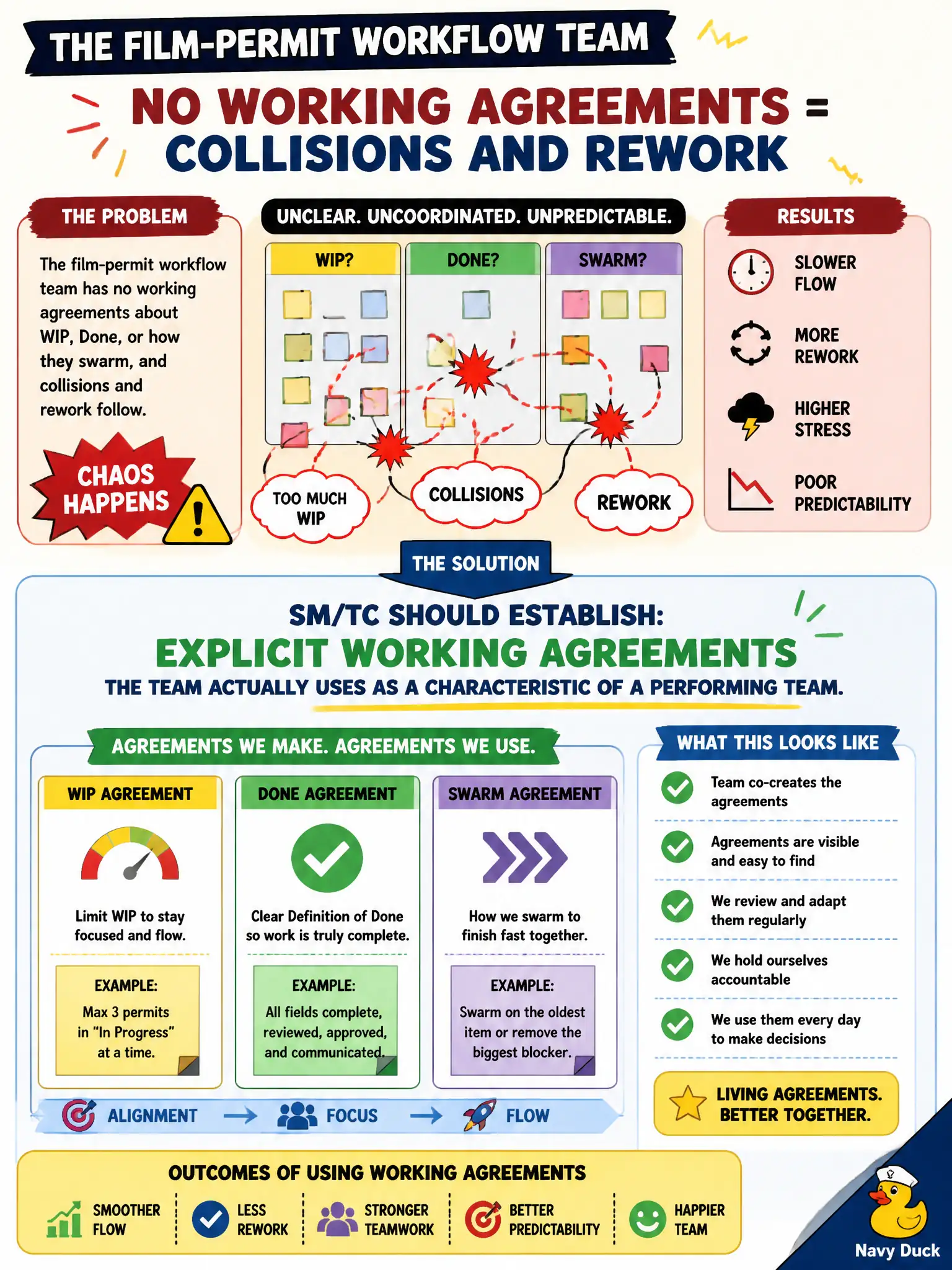
The film-permit workflow team has no working agreements about WIP, Done, or how they swarm, and collisions and rework follow. What should the SM/TC establish?
Select an answer to reveal the explanation.
Short Explanation
A film-permit team with no working agreements is a set with no call sheet—people collide and scenes get reshot. Write the few rules they will actually use: WIP, Done, and how they swarm. A binder on a shelf is not an agreement.
Full Explanation
Explicit working agreements the team actually uses characterize performing teams. A film-permit workflow team without agreements on WIP, Done, or swarming experiences collisions and rework—predictable when norms stay vague under public-event deadline pressure. The Scrum Master/Team Coach should establish concise, inspected working agreements so collaboration rules are shared and improvable for permit applicants, filmmakers, and city staff.
A forty-page methodology binder nobody opens fails by concept: unread bureaucracy is not an agreement and cannot guide daily film-permit flow. Informal we-all-know norms that stay unwritten fails by concept because newcomers and stress collapse unstated norms exactly when collisions hurt most. Director-issued rules the team is forbidden to inspect fails by concept by removing team ownership and relentless improvement—the opposite of a high-performing SAFe team.
Exam caveat: SAFe teams create and evolve working agreements as part of high performance; the test is use and inspection, not document length. Agreements should cover collaboration mechanics (WIP, Done, swarming) relevant to film-permit flow and remain lightweight enough to revisit in retrospectives.
Operational check: draft short working agreements covering WIP limits, Definition of Done, and swarming; post them on the team board; apply for two iterations; retrospectively tune them with evidence from collisions/rework; and verify those incidents decline while the team still owns the agreements.